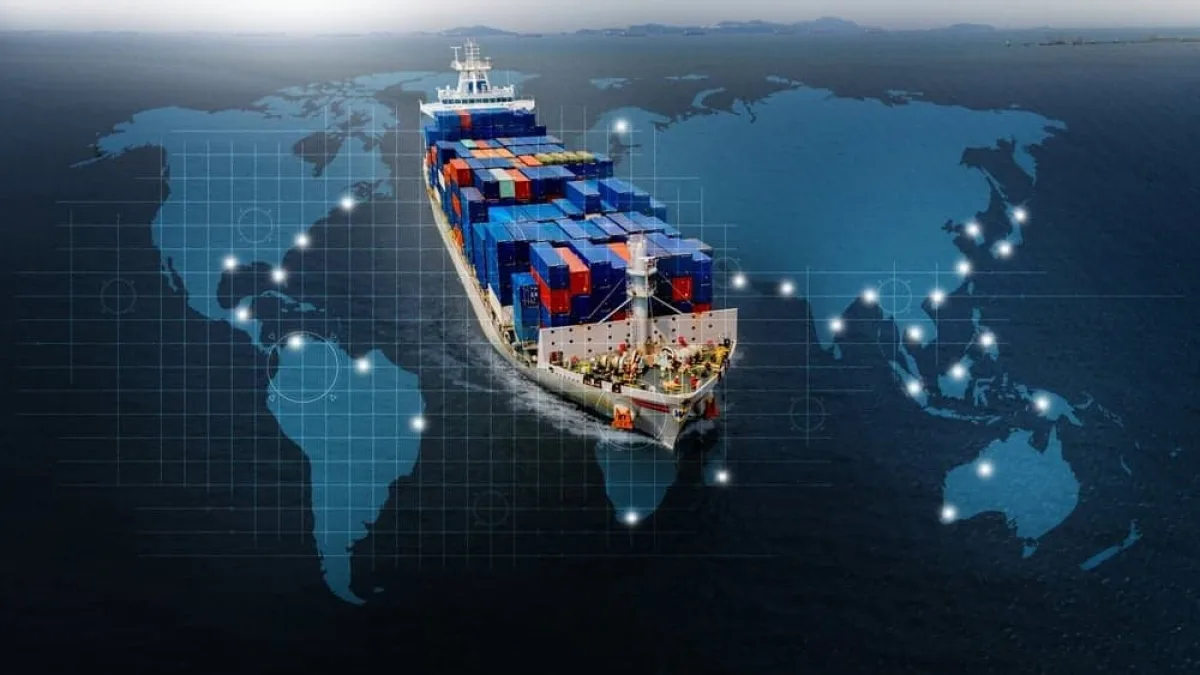
In 2026, Artificial Intelligence (AI) is revolutionizing the maritime logistics industry by enabling smarter ports, more efficient cargo handling, predictive fleet management, and sustainable shipping operations. As global trade volumes continue to increase, shipping companies, port authorities, and logistics providers are adopting AI-powered technologies to reduce delays, optimize routes, improve cargo visibility, and lower operational costs. By integrating Machine Learning (ML), Internet of Things (IoT) sensors, Computer Vision, cloud computing, edge computing, digital twins, and predictive analytics, AI is creating highly connected smart maritime logistics ecosystems.
One of the most important applications of AI is real-time cargo tracking. IoT sensors installed on containers continuously monitor location, temperature, humidity, vibration, and security conditions during transit. AI analyzes this data to provide accurate shipment visibility, detect anomalies, and alert operators when cargo conditions deviate from acceptable thresholds.
Port operations optimization has become significantly more advanced through AI-powered analytics. Machine learning evaluates vessel schedules, berth availability, crane performance, yard congestion, weather conditions, and truck traffic to optimize docking assignments and cargo handling operations. This helps ports reduce turnaround times and improve throughput capacity.
Fleet management is another major benefit of AI in maritime logistics. Intelligent systems analyze fuel consumption, engine performance, navigation data, maintenance records, and weather forecasts to optimize vessel operations. AI can recommend speed adjustments, route changes, and maintenance schedules that improve efficiency while reducing costs.
Predictive maintenance is helping shipping companies manage engines, propulsion systems, generators, pumps, refrigeration units, and other critical equipment. AI analyzes vibration, temperature, pressure, and performance data to detect potential failures before they occur, reducing unplanned downtime and costly repairs.
Route optimization has become increasingly sophisticated through AI-powered navigation systems. Machine learning considers ocean currents, weather patterns, fuel prices, port congestion, piracy risk zones, and delivery deadlines to determine the most efficient shipping routes for each voyage.
Computer Vision is improving port safety and cargo inspections. AI-powered cameras can identify container damage, monitor crane operations, detect unauthorized access, and verify cargo handling procedures in real time. Automated visual inspections help reduce human error and improve operational safety.
Digital Twin technology is enabling ports and shipping operators to create virtual replicas of terminals, vessels, cargo yards, and logistics networks. AI uses these digital twins to simulate operational scenarios, evaluate infrastructure upgrades, predict bottlenecks, and optimize resource allocation before implementing physical changes.
Edge computing supports time-sensitive maritime applications by processing sensor and camera data directly on vessels and within port facilities. Navigation systems, safety monitoring platforms, and cargo management systems can make immediate decisions even when connectivity to cloud services is limited.
Cloud computing complements edge systems by providing centralized analytics, fleet-wide monitoring, long-term data storage, and AI model training. Operators can access real-time dashboards showing vessel locations, cargo status, fuel efficiency, equipment health, and port performance across global operations.
Cybersecurity has become a major priority as maritime infrastructure becomes more connected. AI-powered security platforms monitor vessel networks, port systems, IoT devices, cloud environments, and communication channels for suspicious activity. Automated threat detection helps protect critical shipping operations from cyberattacks.
Sustainability is one of the greatest advantages of AI-driven maritime logistics. By optimizing routes, reducing idle time in ports, improving fuel efficiency, and supporting alternative fuel management, AI helps shipping companies lower greenhouse gas emissions and comply with increasingly strict environmental regulations.
Despite its many benefits, AI in maritime logistics still faces challenges including infrastructure modernization costs, interoperability between shipping systems, regulatory compliance, data sharing across stakeholders, workforce training, and cybersecurity risks. However, advances in AI software, satellite connectivity, cloud platforms, and smart port technologies continue to accelerate adoption worldwide.
Looking toward the future, AI-powered maritime logistics will integrate with autonomous vessels, blockchain-based trade documentation, drone-assisted inspections, quantum optimization, and fully connected global supply chain ecosystems. These innovations will create more transparent, efficient, and resilient shipping networks capable of adapting to real-time market and environmental conditions.
AI in Smart Maritime Logistics 2026 represents a major milestone in the digital transformation of global shipping and port operations. By combining artificial intelligence, predictive analytics, IoT sensors, computer vision, digital twins, cloud computing, edge computing, and intelligent automation, organizations can improve cargo visibility, optimize fleet performance, reduce operational costs, strengthen supply chain resilience, enhance sustainability, and build smarter maritime logistics networks for the future.