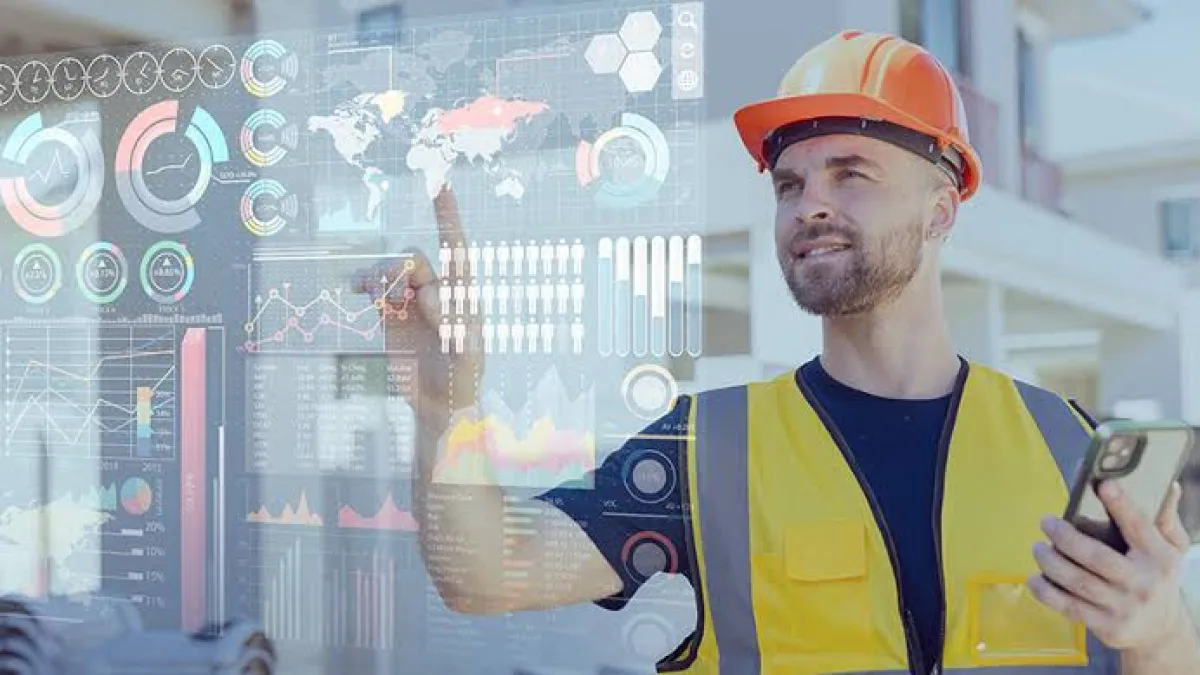
Artificial Intelligence is reshaping the construction industry by enabling intelligent project planning, automated safety monitoring, predictive equipment maintenance, resource optimization, and real-time progress tracking. By integrating machine learning, computer vision, IoT sensors, cloud computing, edge computing, digital twins, and advanced analytics, construction companies can reduce delays, improve worker safety, lower costs, and support sustainable building practices.
Key Transformations in Construction Management
Planning
Intelligent Project Planning
AI analyzes schedules, labor availability, material deliveries, weather forecasts, and site conditions to optimize construction timelines and resource allocation.
Safety
Automated Safety Monitoring
Computer vision systems detect missing PPE, unsafe worker behavior, restricted-area violations, and potential hazards in real time.
Equipment
Predictive Equipment Maintenance
AI monitors cranes, excavators, loaders, generators, and other machinery to predict failures before they disrupt construction activities.
Progress
Smart Progress Tracking
AI compares actual site progress with BIM models and project schedules to identify delays and optimize corrective actions.
AI-Powered Construction Capabilities
Computer Vision Site Monitoring
Real-Time Detection
Detect missing helmets, vests, and safety gear
Monitor hazardous zones and restricted access
Identify structural defects during construction
Track equipment movement and site activity
Predictive Analytics
Operational Reliability
AI forecasts project delays, predicts material shortages, identifies high-risk activities, and supports proactive decision-making across construction projects.
Digital Twin Construction Simulation
Virtual Project
Contractors create virtual replicas of buildings, infrastructure, and job sites to simulate construction sequences, logistics, and safety scenarios before implementation.
Cloud & Edge Integration
Hybrid Intelligence
Edge systems process time-sensitive sensor and camera data locally while cloud platforms provide centralized analytics, multi-site monitoring, and AI model training.
Technology Architecture
Technology | Role in Smart Construction |
|---|---|
Machine Learning | Predict delays and optimize scheduling |
Computer Vision | Monitor safety and inspect construction quality |
IoT Sensors | Track equipment performance and site conditions |
Edge Computing | Enable real-time safety and operational decisions |
Cloud Computing | Provide centralized project analytics |
Digital Twins | Simulate construction workflows and infrastructure |
Business Benefits
Safety
Safer Sites
Real-time hazard detection and alerts
Delays
Fewer Delays
Smarter planning and resource management
Costs
Lower Costs
Reduced downtime and material waste
Quality
Better Quality
Continuous inspection and compliance tracking
Sustainability Impact
Reduce material waste through optimized planning
Lower fuel consumption from construction equipment
Improve energy efficiency in temporary site operations
Support sustainable building and infrastructure development
Challenges in 2026
Integration with legacy construction management systems
Cybersecurity protection for connected job-site infrastructure
Data interoperability across contractors and suppliers
Regulatory compliance for AI-assisted safety monitoring
Workforce training and digital transformation management
Future Outlook
Over the next few years, AI-powered construction management will increasingly integrate with autonomous construction equipment, robotic site inspections, blockchain-based project documentation, advanced digital twins, and fully connected smart city infrastructure platforms. These innovations will create safer, more efficient, and more sustainable construction ecosystems capable of adapting dynamically to changing project requirements and environmental conditions.