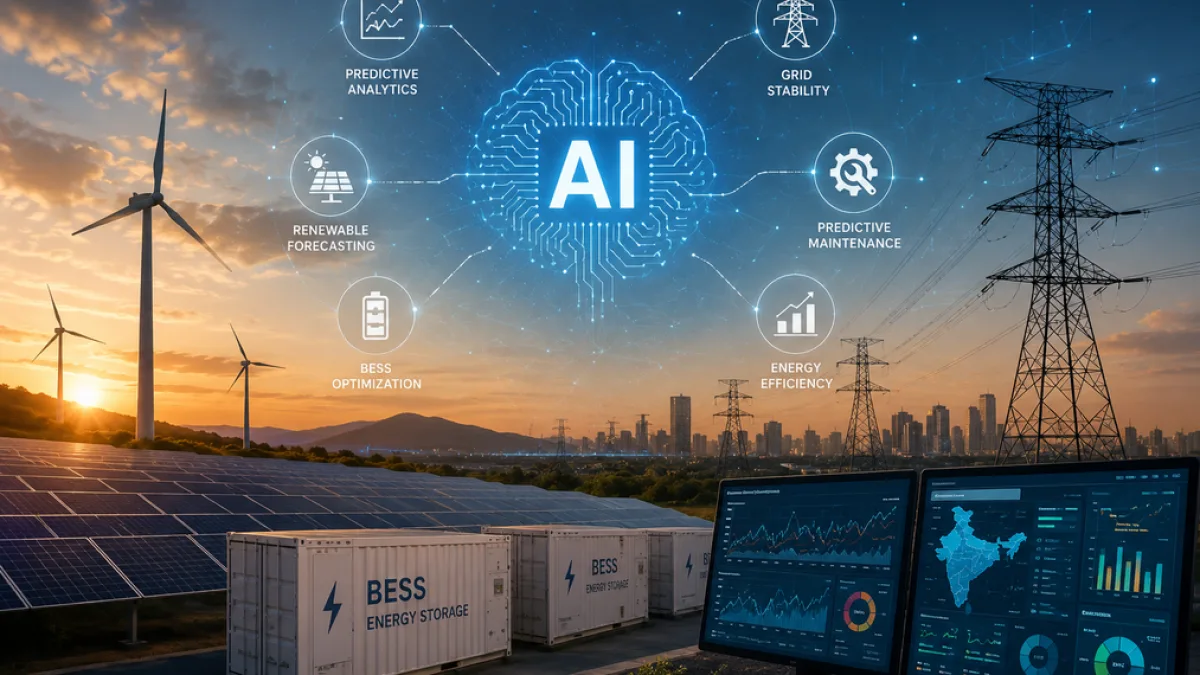
Artificial Intelligence is reshaping energy storage by enabling intelligent battery management, predictive maintenance, real-time grid balancing, renewable energy optimization, and advanced demand forecasting. By integrating machine learning, IoT sensors, cloud computing, edge computing, digital twins, and advanced analytics, utilities and energy providers can improve battery lifespan, reduce operational costs, enhance grid reliability, and accelerate the transition to clean energy.
Key Transformations in Energy Storage
Battery
Intelligent Battery Optimization
AI analyzes charge cycles, temperature, voltage, and usage patterns to maximize battery performance and extend operational life.
Grid
Smart Grid Stabilization
AI balances energy supply and demand in real time to support frequency regulation, peak shaving, and load management.
Maintenance
Predictive Battery Maintenance
Machine learning detects early signs of degradation, overheating, cell imbalance, and potential failures before they impact operations.
Renewables
Renewable Energy Integration
AI optimizes charging and discharging schedules to store excess solar and wind energy for later use.
AI-Powered Energy Storage Capabilities
Real-Time Battery Monitoring
Continuous Visibility
Track voltage, current, and temperature continuously
Monitor state of charge and state of health
Detect abnormal performance patterns
Optimize charging and discharging behavior
Predictive Analytics
Operational Reliability
AI forecasts energy demand, predicts battery degradation, identifies high-risk components, and supports proactive maintenance planning.
Digital Twin Energy Storage
Virtual Simulation
Utilities create virtual replicas of battery farms, microgrids, and storage networks to test operational strategies before implementation.
Cloud & Edge Integration
Hybrid Intelligence
Edge systems process time-sensitive battery data locally while cloud platforms provide centralized analytics, fleet-wide monitoring, and AI model training.
Technology Architecture
Technology | Role in Smart Energy Storage |
|---|---|
Machine Learning | Predict demand and optimize battery usage |
IoT Sensors | Monitor battery performance and conditions |
Edge Computing | Enable real-time charging decisions |
Cloud Computing | Provide centralized analytics and reporting |
Digital Twins | Simulate storage operations and upgrades |
Predictive Analytics | Optimize maintenance and energy allocation |
Business & Utility Benefits
Battery Life
Longer Lifespan
Optimized charging and thermal management
Reliability
Higher Reliability
Fewer unexpected storage failures
Costs
Lower Costs
Reduced maintenance and energy waste
Sustainability
Cleaner Energy
Better renewable energy utilization
Sustainability Impact
Increase the use of renewable energy by storing excess generation
Reduce reliance on fossil-fuel peaking plants
Improve overall energy efficiency across the grid
Support the development of resilient microgrids and smart cities
Challenges in 2026
Integration with legacy grid infrastructure
Cybersecurity protection for connected storage systems
Data interoperability across energy platforms
Battery recycling and end-of-life management
Initial investment costs for large-scale storage deployments
Future Outlook
Over the next few years, AI-powered energy storage systems will increasingly integrate with autonomous microgrids, vehicle-to-grid networks, blockchain-based energy trading, advanced digital twins, and fully connected smart energy ecosystems. These innovations will create more resilient, efficient, and sustainable power systems capable of adapting dynamically to changing energy demand and renewable generation patterns.