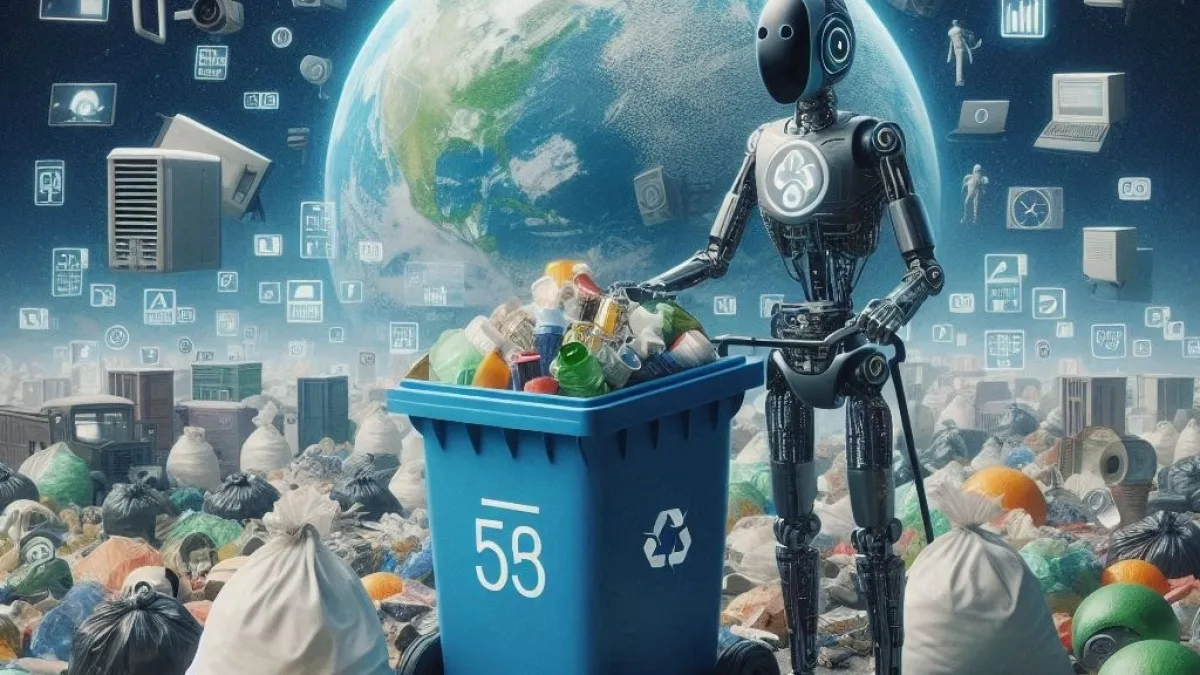
Artificial Intelligence is reshaping waste management by enabling intelligent collection scheduling, automated recycling sorting, predictive waste forecasting, route optimization, and real-time monitoring of urban waste systems. By integrating machine learning, computer vision, IoT sensors, cloud computing, edge computing, digital twins, and advanced analytics, municipalities and waste service providers can reduce operational costs, improve recycling rates, lower fuel consumption, and support circular economy initiatives.
Key Transformations in Waste Management
Collection
Intelligent Collection Optimization
AI analyzes bin fill levels, traffic conditions, population density, weather patterns, and historical waste generation to optimize collection schedules.
Recycling
Automated Recycling Sorting
Computer vision systems identify plastics, metals, paper, glass, and organic materials with high accuracy to improve recycling efficiency.
Maintenance
Predictive Equipment Maintenance
AI monitors collection vehicles, compactors, conveyors, shredders, and sorting machinery to predict failures before they disrupt operations.
Forecasting
Smart Waste Forecasting
AI predicts residential, commercial, industrial, and event-based waste generation to support capacity planning and resource allocation.
AI-Powered Waste Management Capabilities
Computer Vision Monitoring
Real-Time Detection
Identify recyclable materials automatically
Detect contamination in recycling streams
Monitor illegal dumping activities
Assess container fill levels visually
Predictive Analytics
Operational Reliability
AI forecasts waste generation trends, predicts equipment failures, identifies high-demand collection zones, and supports proactive operational planning.
Digital Twin Waste Systems
Virtual Simulation
Municipalities create virtual replicas of collection routes, transfer stations, recycling facilities, and landfill operations to test improvements before implementation.
Cloud & Edge Integration
Hybrid Intelligence
Edge systems process sensor and camera data locally for immediate decisions, while cloud platforms provide city-wide analytics, reporting, and AI model training.
Technology Architecture
Technology | Role in Smart Waste Management |
|---|---|
Machine Learning | Forecast waste generation and optimize routes |
Computer Vision | Automate recycling sorting and contamination detection |
IoT Sensors | Monitor bin fill levels and equipment health |
Edge Computing | Enable real-time operational decisions |
Cloud Computing | Provide centralized analytics and reporting |
Digital Twins | Simulate collection and processing operations |
Business & Municipal Benefits
Fuel
Lower Fuel Use
Optimized collection routes reduce mileage
Recycling
Higher Recovery
More accurate material sorting
Costs
Reduced Costs
Smarter staffing and maintenance planning
Environment
Cleaner Cities
Faster response to overflow and dumping
Sustainability Impact
Reduce landfill waste through improved recycling accuracy
Lower greenhouse gas emissions from collection vehicles
Optimize energy usage in recycling facilities
Support circular economy and material recovery initiatives
Challenges in 2026
Integration with existing municipal waste systems
Cybersecurity protection for connected infrastructure
Data interoperability across service providers
Public participation and contamination reduction
Initial investment costs for smart infrastructure
Future Outlook
Over the next few years, AI-powered waste management will increasingly integrate with autonomous collection vehicles, robotic recycling facilities, blockchain-based material traceability, advanced digital twins, and fully connected smart city sustainability platforms. These innovations will create more efficient, transparent, and environmentally responsible waste management ecosystems capable of adapting dynamically to urban growth and changing consumption patterns.