

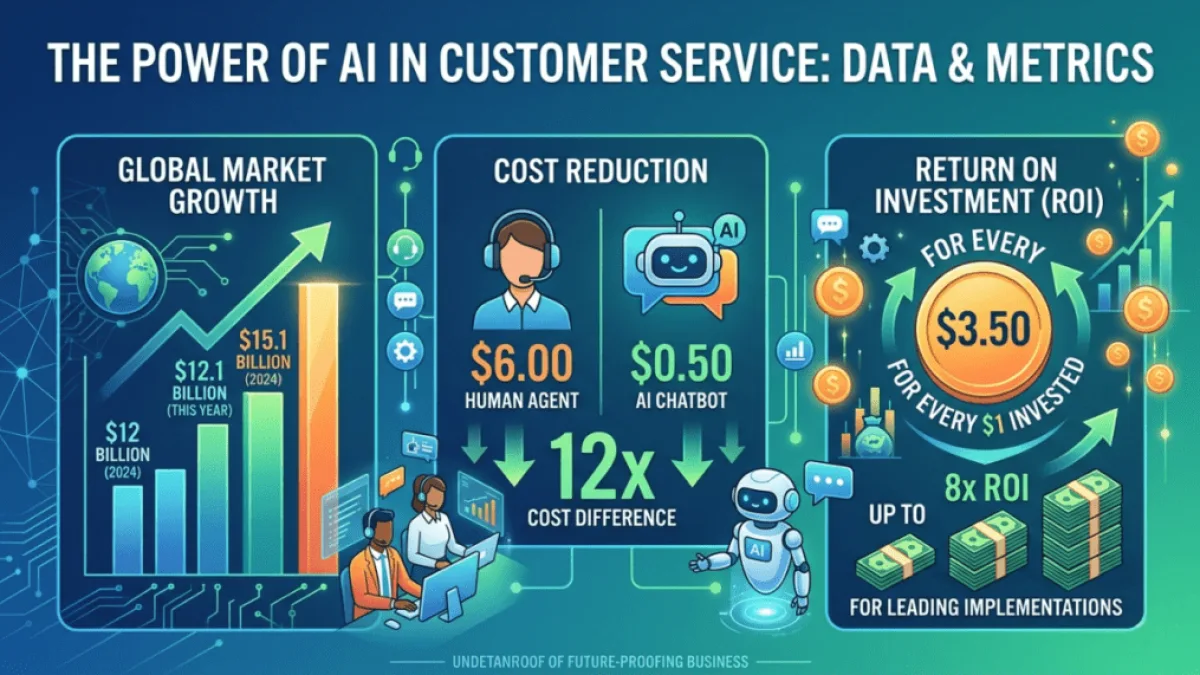
Customer service has undergone a remarkable transformation over the past decade. In 2026, artificial intelligence (AI) has become one of the most important technologies driving this evolution. Businesses of all sizes are adopting AI-powered customer service solutions to provide faster responses, personalized experiences, and round-the-clock support. Rather than replacing human agents entirely, AI is working alongside customer service teams to improve efficiency, reduce operational costs, and increase customer satisfaction.
Today's customers expect immediate assistance whenever they need help. Waiting several hours—or even minutes—for a response can negatively impact customer loyalty. AI-powered chatbots and virtual assistants solve this problem by providing instant responses to common questions, processing requests, and guiding users through various services without requiring human intervention.
Modern AI customer service systems are built using Natural Language Processing (NLP), machine learning, and generative AI technologies. These systems understand customer intent, analyze conversations, and respond in a natural, conversational manner. Unlike earlier chatbots that relied on predefined scripts, AI assistants in 2026 can understand context, remember previous interactions, and provide more accurate answers.
One of the greatest advantages of AI customer support is its availability. Human support teams typically operate during business hours, but AI assistants can work 24 hours a day, seven days a week. Customers receive immediate assistance regardless of their location or time zone, improving overall service quality and customer trust.
AI is also transforming customer support through personalization. By analyzing customer history, purchase records, browsing behavior, and previous interactions, AI systems can recommend products, suggest solutions, and deliver highly customized experiences. Personalized support increases customer engagement while improving conversion rates and long-term loyalty.
Voice AI has become another important development in customer service. AI-powered voice assistants can answer phone calls, understand spoken language, verify customer identities, and resolve many common issues without transferring calls to human representatives. This significantly reduces waiting times while improving service efficiency.
Businesses are increasingly integrating AI across multiple communication channels, including websites, mobile apps, email, live chat, messaging platforms, and social media. Customers receive consistent support regardless of which platform they choose, creating a seamless omnichannel experience.
AI also helps customer service teams behind the scenes. Instead of spending time searching through documentation, human agents receive AI-generated recommendations, suggested replies, and relevant knowledge base articles during live conversations. This allows agents to resolve complex issues more quickly while maintaining high service quality.
Sentiment analysis is becoming one of AI's most valuable capabilities. AI systems can detect whether customers are frustrated, satisfied, confused, or angry by analyzing their language and communication patterns. When necessary, conversations can be automatically escalated to experienced human agents before the situation becomes more serious.
Predictive customer service is another growing trend. Rather than waiting for customers to report problems, AI analyzes system performance and customer behavior to identify potential issues before they occur. Companies can proactively notify customers about delivery delays, account issues, subscription renewals, or technical problems, reducing complaints and improving customer satisfaction.
AI-powered translation has made international customer support much easier. Businesses can now communicate with customers in multiple languages without maintaining large multilingual support teams. Real-time translation removes language barriers and enables companies to serve global audiences more effectively.
Data analytics also plays a major role in AI customer service. Every customer interaction provides valuable insights into common questions, recurring issues, product feedback, and customer expectations. AI analyzes these datasets to help businesses improve products, optimize support processes, and make better strategic decisions.
Despite these advantages, AI customer service still requires human involvement. Complex technical issues, emotionally sensitive situations, legal concerns, and unique customer requests often require experienced human agents. The most successful organizations combine AI automation with skilled customer service professionals to deliver the best possible experience.
Security and privacy remain essential considerations. AI systems process large amounts of customer information, making strong encryption, secure authentication, regulatory compliance, and responsible data management critical components of every customer service platform.
Small businesses are benefiting from AI just as much as large enterprises. Affordable cloud-based AI solutions allow startups and small companies to provide enterprise-level customer support without investing heavily in large support teams or expensive infrastructure.
Looking toward the future, AI customer service will become even more intelligent through emotional recognition, predictive assistance, autonomous problem resolution, and deeper integration with business systems. Customers will enjoy faster, more personalized, and more proactive support than ever before.
Artificial intelligence is not replacing customer service—it is redefining it. By combining automation, intelligence, and human expertise, businesses can deliver exceptional customer experiences while improving efficiency and reducing operational costs. As AI technology continues to evolve, customer service will become one of the strongest competitive advantages for organizations across every industry.
Title
