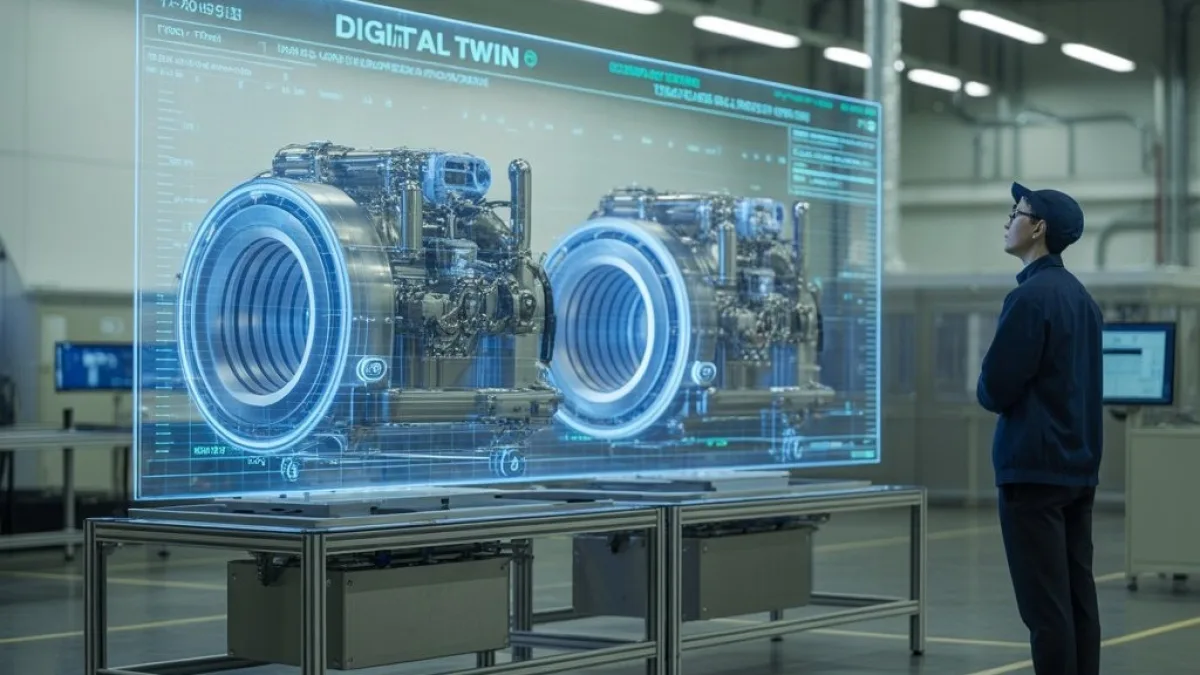
Digital transformation has entered a new phase in 2026 with the rapid adoption of Digital Twin technology. A Digital Twin is a virtual representation of a physical object, system, process, or even an entire city that continuously receives real-time data from sensors, IoT devices, artificial intelligence, and cloud platforms. Unlike traditional computer simulations that provide static models, Digital Twins evolve dynamically alongside their real-world counterparts, enabling organizations to monitor performance, predict failures, optimize operations, and make better business decisions.
The increasing availability of IoT sensors, high-speed 5G networks, edge computing, artificial intelligence, and cloud computing has accelerated Digital Twin adoption across nearly every industry. Companies no longer rely only on historical reports to understand equipment performance. Instead, Digital Twins continuously collect operational data, analyze system behavior, and provide accurate predictions that help organizations improve efficiency while reducing costs.
Manufacturing remains one of the largest users of Digital Twin technology. Modern factories create digital replicas of production lines, industrial machines, robotic systems, and supply chain operations. Engineers monitor equipment performance in real time, detect abnormalities before breakdowns occur, and simulate process improvements without interrupting production. Predictive maintenance powered by Digital Twins helps manufacturers reduce downtime, extend equipment lifespan, and significantly lower maintenance expenses.
The automotive industry is also embracing Digital Twins to improve vehicle design, testing, and manufacturing. Before producing physical prototypes, engineers build virtual models of vehicles to simulate crash tests, aerodynamics, battery performance, fuel efficiency, and structural durability. This reduces development costs while accelerating product innovation. Electric vehicle manufacturers also use Digital Twins to monitor battery health throughout the vehicle's lifecycle and improve long-term reliability.
Healthcare organizations are beginning to develop Digital Twins of patients using medical imaging, wearable device data, genetic information, and electronic health records. These virtual patient models help physicians simulate treatment options, predict disease progression, and personalize medical care. Researchers believe patient-specific Digital Twins could dramatically improve precision medicine by allowing doctors to evaluate therapies before applying them in real clinical settings.
Smart cities are becoming another major application for Digital Twin technology. Municipal governments create virtual models of transportation systems, public infrastructure, utility networks, traffic patterns, water distribution, and environmental conditions. By analyzing real-time information, city planners can optimize traffic flow, reduce congestion, improve emergency response, monitor air quality, and manage energy consumption more efficiently.
Energy companies use Digital Twins to improve the operation of power plants, wind farms, solar facilities, and electrical grids. Virtual models continuously analyze equipment performance, weather conditions, electricity demand, and infrastructure health. This enables utility providers to predict maintenance needs, improve renewable energy integration, and maintain reliable power delivery while reducing operational costs.
The construction industry is transforming through Digital Twin technology as well. Engineers create virtual replicas of buildings, bridges, airports, and industrial facilities throughout the entire construction lifecycle. Building managers continue using these Digital Twins after construction is complete to monitor structural health, energy efficiency, heating and cooling systems, occupancy levels, and long-term maintenance requirements.
Supply chain management has become more resilient with Digital Twins. Businesses create digital models of warehouses, shipping routes, inventory systems, and supplier networks. AI-powered simulations identify bottlenecks, forecast disruptions, optimize inventory levels, and recommend alternative logistics strategies before operational problems affect customers.
Artificial intelligence significantly enhances Digital Twin capabilities by continuously analyzing incoming data and generating predictive insights. Machine learning algorithms recognize patterns that humans might overlook, helping organizations anticipate equipment failures, optimize resource allocation, improve production schedules, and increase overall operational efficiency. Instead of reacting to problems after they occur, businesses can prevent them before they impact operations.
Cloud computing provides the scalable infrastructure necessary for Digital Twin deployment. Large volumes of sensor data are securely stored, processed, and analyzed through cloud platforms, allowing organizations to monitor assets located across multiple facilities worldwide. Meanwhile, edge computing reduces latency by processing critical information closer to connected devices, enabling faster real-time decision-making.
Environmental sustainability is another important benefit of Digital Twins. Organizations use virtual simulations to reduce energy consumption, minimize material waste, optimize manufacturing processes, and lower carbon emissions. Smart buildings automatically adjust lighting, heating, ventilation, and cooling systems based on occupancy and environmental conditions, improving efficiency while supporting sustainability goals.
Cybersecurity plays a crucial role in Digital Twin ecosystems because connected devices continuously exchange sensitive operational information. Strong encryption, secure authentication, continuous monitoring, network segmentation, and regular software updates help protect Digital Twin platforms from cyber threats while maintaining the integrity of operational data.
Small and medium-sized businesses are increasingly adopting Digital Twin solutions through cloud-based subscription services. Previously limited to large enterprises because of high infrastructure costs, Digital Twin technology has become more affordable and accessible, enabling organizations of all sizes to improve operational performance through data-driven decision-making.
Despite its enormous potential, Digital Twin implementation still presents challenges. Organizations must integrate data from multiple systems, ensure sensor accuracy, maintain cybersecurity, manage large datasets, and develop skilled workforces capable of interpreting Digital Twin analytics. However, ongoing improvements in AI, cloud platforms, and IoT technologies continue making implementation easier and more cost-effective.
Looking toward the future, Digital Twins are expected to become even more intelligent through deeper integration with generative AI, autonomous robotics, advanced simulation platforms, and quantum computing. Entire factories, transportation networks, hospitals, and smart cities may eventually operate alongside continuously evolving digital replicas capable of predicting future events with remarkable accuracy.
Digital Twins in 2026 represent far more than sophisticated computer models—they are becoming intelligent decision-making platforms that connect the physical and digital worlds. By combining real-time data, artificial intelligence, cloud computing, and predictive analytics, Digital Twins are helping organizations improve efficiency, reduce costs, enhance sustainability, and accelerate innovation across virtually every major industry.