Autonomous drones have rapidly evolved from simple remote-controlled flying devices into highly intelligent aerial systems capable of making real-time decisions with minimal human intervention. In 2026, advances in Artificial Intelligence (AI), computer vision, machine learning, edge computing, LiDAR sensors, GPS navigation, and 5G connectivity are transforming drones into essential tools across multiple industries. Governments, technology companies, emergency services, and businesses are increasingly relying on autonomous drones to improve efficiency, reduce operational costs, and perform tasks that were once difficult, dangerous, or impossible.
Unlike conventional drones that require continuous manual control, autonomous drones use sophisticated AI algorithms to analyze their environment, avoid obstacles, plan optimal flight paths, and complete missions independently. Equipped with high-resolution cameras, thermal imaging systems, radar, ultrasonic sensors, and real-time mapping technology, these drones can safely navigate complex environments while adapting to changing weather conditions and unexpected obstacles.
One of the most significant applications of autonomous drones is in logistics and package delivery. E-commerce companies are investing heavily in drone delivery networks capable of transporting small packages directly to customers within minutes. AI optimizes flight routes, monitors battery levels, predicts weather conditions, and ensures safe landings, making same-day and even same-hour deliveries increasingly practical. Autonomous drone delivery also reduces traffic congestion and lowers transportation costs compared to traditional delivery vehicles.
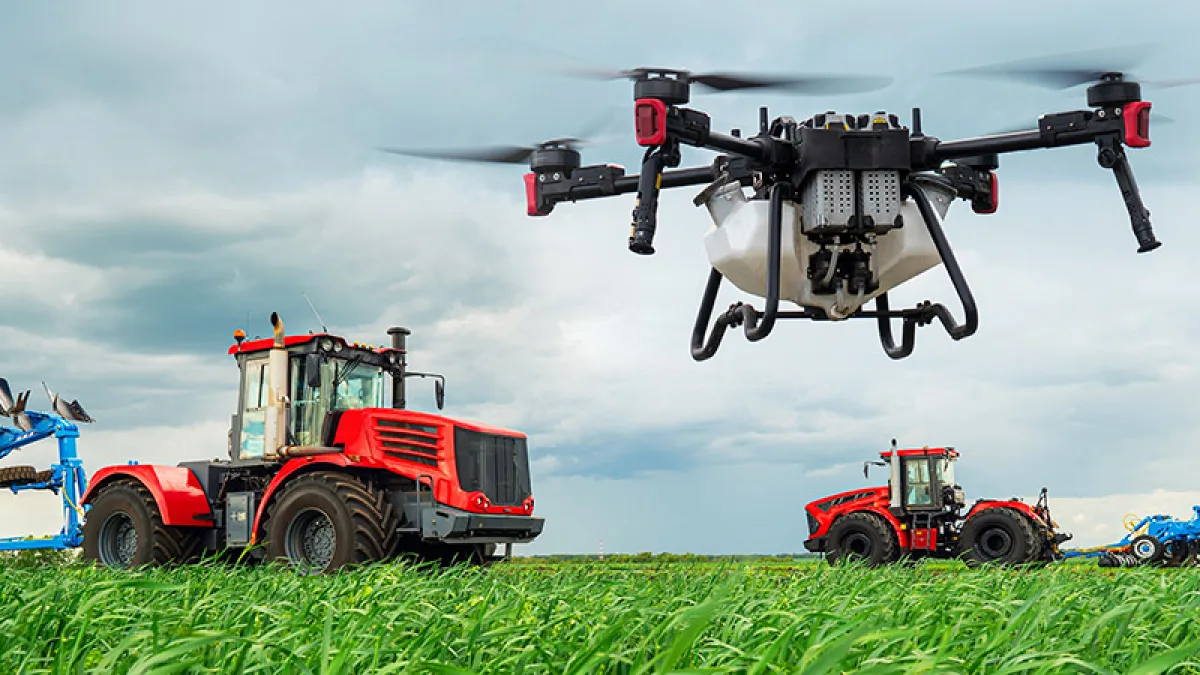
Agriculture has become another major beneficiary of drone technology. AI-powered agricultural drones monitor crop health, detect plant diseases, measure soil moisture, analyze nutrient levels, and identify pest infestations using multispectral imaging. Farmers receive real-time recommendations that help improve crop yields while reducing water usage, fertilizer application, and pesticide consumption. Precision agriculture powered by autonomous drones is making farming more sustainable and environmentally friendly.
Infrastructure inspection is being transformed by intelligent drone systems. Utility companies use autonomous drones to inspect power lines, wind turbines, solar farms, oil pipelines, bridges, railways, and communication towers. Instead of sending workers into hazardous environments, drones capture detailed images and sensor data that AI analyzes to detect structural damage, corrosion, overheating, or equipment failures before they become critical problems. Predictive maintenance reduces downtime while improving public safety.
Emergency response teams increasingly depend on autonomous drones during natural disasters such as floods, earthquakes, wildfires, and hurricanes. Drones equipped with thermal cameras locate missing people, assess damage, deliver emergency supplies, and provide real-time aerial intelligence to rescue teams. Their ability to quickly access dangerous or inaccessible areas significantly improves disaster response and saves lives.
Healthcare organizations are also exploring drone technology for medical logistics. Autonomous drones transport blood samples, vaccines, emergency medications, laboratory specimens, and medical equipment between hospitals, clinics, and rural healthcare centers. AI-powered route planning ensures fast and reliable deliveries, especially in regions where road infrastructure is limited or traffic delays are common.
Public safety agencies use autonomous drones for search-and-rescue operations, crowd monitoring, traffic management, and environmental surveillance. During large public events, AI drones help identify safety risks, monitor traffic flow, and provide emergency responders with live aerial information. Fire departments also use thermal imaging drones to locate hotspots, monitor wildfire spread, and improve firefighter safety.
Construction companies have integrated autonomous drones into project management workflows. Drones create high-resolution 3D maps, monitor construction progress, calculate material volumes, inspect building structures, and verify engineering accuracy. AI compares captured data with digital building models to identify deviations, reducing costly construction errors and improving project timelines.
Environmental conservation organizations are deploying autonomous drones to monitor forests, wildlife populations, coastal ecosystems, glaciers, and protected natural areas. AI automatically identifies illegal logging activities, detects pollution, tracks endangered species, and analyzes environmental changes using aerial imagery collected over large geographic regions.
Artificial Intelligence serves as the brain of modern autonomous drones. Computer vision enables drones to recognize roads, buildings, people, vehicles, and obstacles. Machine learning algorithms improve navigation accuracy through continuous experience, while edge AI processors perform real-time decision-making directly onboard without relying entirely on cloud connectivity. This allows drones to operate safely even in areas with limited internet access.
5G technology is accelerating drone capabilities by enabling low-latency communication between drones, cloud platforms, and control centers. High-speed connectivity supports real-time video streaming, collaborative drone fleets, remote operations, and AI-assisted mission coordination. Multiple autonomous drones can work together efficiently to complete large-scale inspection, mapping, or delivery operations.
Battery technology continues improving, allowing drones to remain airborne longer while carrying heavier payloads. Manufacturers are developing hydrogen-powered drones, advanced lithium batteries, and solar-assisted charging systems that significantly extend flight endurance and operational range.
Cybersecurity remains an essential consideration as drone networks become increasingly connected. Manufacturers implement encrypted communication protocols, secure authentication systems, AI-powered threat detection, and regular software updates to protect drones from hacking, signal interference, and unauthorized access.
Governments worldwide are updating aviation regulations to safely integrate autonomous drones into national airspace. Remote identification systems, geofencing technology, automated collision avoidance, and unmanned traffic management (UTM) platforms help ensure drones operate safely alongside traditional aircraft while protecting public safety and privacy.
Despite rapid progress, several challenges remain. Airspace regulation, battery limitations, adverse weather conditions, privacy concerns, infrastructure investment, and public acceptance continue influencing the pace of widespread adoption. However, continuous advancements in AI, sensor technology, robotics, and wireless communication are steadily addressing these limitations.
Looking ahead, autonomous drones are expected to become a core component of future smart cities. They will integrate with artificial intelligence, autonomous vehicles, smart traffic systems, digital twins, IoT infrastructure, and cloud computing to create highly connected urban environments. From delivering medical supplies and monitoring infrastructure to supporting emergency services and environmental protection, intelligent drones will play an increasingly important role in everyday life.
Autonomous Drones in 2026 represent far more than flying cameras—they are becoming intelligent aerial platforms capable of transforming logistics, agriculture, healthcare, public safety, infrastructure management, environmental conservation, and countless other industries. By combining AI, automation, robotics, and advanced sensing technologies, autonomous drones are helping build a smarter, safer, and more efficient future.