Digital transformation has accelerated rapidly over the past decade, but one of the most revolutionary technologies gaining momentum in 2026 is the AI Digital Twin. Originally developed for industrial engineering and aerospace applications, digital twins have evolved into intelligent virtual replicas capable of simulating real-world systems, predicting future outcomes, and optimizing operations using Artificial Intelligence (AI), Machine Learning (ML), Internet of Things (IoT), cloud computing, edge computing, and real-time analytics.
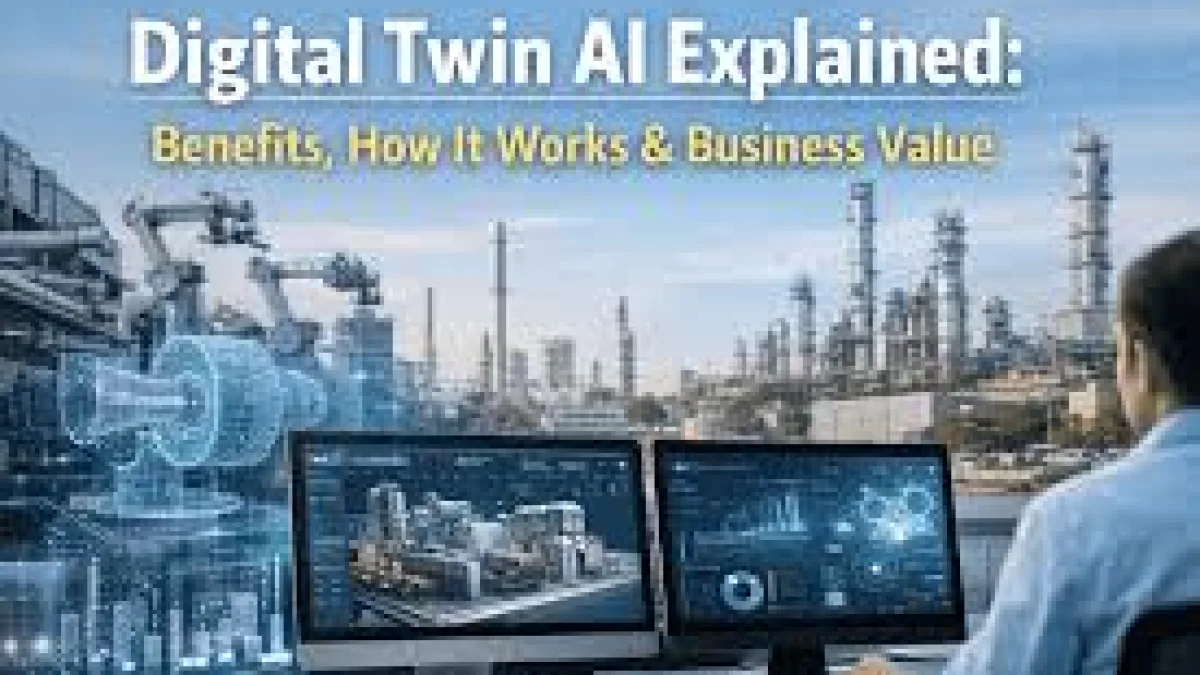
A Digital Twin is a virtual model of a physical object, machine, process, building, or even an entire city. Unlike static 3D models, digital twins continuously receive live data from sensors installed on physical assets. AI analyzes this incoming information, allowing the virtual model to mirror real-world conditions in real time while predicting future performance and identifying potential problems before they occur.
One of the biggest advantages of AI Digital Twins is predictive decision-making. Instead of waiting for equipment failures or operational issues, organizations can simulate different scenarios within the virtual environment. Engineers can test solutions digitally before applying them in the real world, reducing downtime, minimizing risks, and saving significant operational costs.
Manufacturing is one of the industries benefiting the most from Digital Twin technology. Modern smart factories create digital replicas of production lines, robotic systems, machinery, and supply chains. AI continuously monitors machine performance, detects early signs of wear, predicts maintenance schedules, and optimizes production workflows. This predictive maintenance approach helps manufacturers reduce equipment failures while improving productivity and product quality.
The automotive industry is using Digital Twins throughout vehicle design and production. Engineers simulate engine performance, battery efficiency, aerodynamics, crash safety, and manufacturing processes before building physical prototypes. Electric vehicle manufacturers use AI-powered digital twins to improve battery lifespan, thermal management, and charging performance while reducing development time.
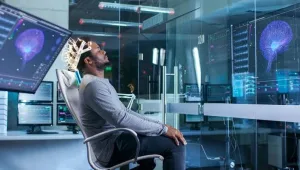
Healthcare is experiencing a major transformation through Digital Twin technology. Researchers are developing virtual models of patients using medical imaging, genetic information, wearable health devices, and electronic health records. These patient-specific digital twins allow doctors to simulate treatment plans, predict disease progression, personalize medications, and improve surgical planning. AI helps physicians make more informed clinical decisions while reducing treatment risks.
Hospitals are also building Digital Twins of entire healthcare facilities. These virtual environments optimize patient flow, emergency response planning, equipment allocation, staff scheduling, and energy consumption. During public health emergencies, digital simulations help administrators prepare for increased patient demand and improve hospital efficiency.
Smart cities are increasingly adopting Digital Twin platforms to improve urban planning and infrastructure management. Governments create virtual models of roads, bridges, transportation systems, water networks, energy grids, and public buildings. AI analyzes traffic patterns, predicts infrastructure failures, optimizes public transportation, and improves emergency response planning. Urban planners can evaluate future construction projects before they begin, reducing costs and improving sustainability.
Energy companies are deploying Digital Twins to monitor power plants, renewable energy farms, transmission networks, and battery storage systems. AI predicts equipment failures, optimizes electricity generation, balances grid demand, and increases renewable energy efficiency. Wind farms use digital twins to improve turbine performance based on weather forecasts and operational data.
Oil and gas companies rely on Digital Twins to monitor drilling equipment, offshore platforms, pipelines, and refineries. Virtual simulations help engineers identify safety risks, optimize production, and reduce environmental impact while lowering maintenance costs.
The aviation industry has embraced Digital Twin technology for aircraft maintenance and fleet management. Airlines continuously monitor engine performance, structural integrity, fuel efficiency, and flight operations using AI-powered digital replicas. Predictive maintenance reduces unexpected mechanical failures while improving passenger safety and operational reliability.
Construction companies use Digital Twins throughout the lifecycle of buildings and infrastructure projects. AI-powered virtual models monitor construction progress, compare completed work with design plans, identify structural issues, and optimize project scheduling. After construction, building managers continue using digital twins to monitor energy consumption, HVAC systems, lighting, and maintenance requirements.
Retail businesses are also beginning to adopt Digital Twin technology. Virtual replicas of stores help retailers analyze customer movement, optimize product placement, improve inventory management, and evaluate store layouts before implementing physical changes. AI-generated insights enhance customer experiences while increasing sales performance.
Supply chain management has become significantly more efficient through Digital Twins. Organizations simulate transportation routes, warehouse operations, inventory levels, supplier performance, and logistics networks. AI identifies potential disruptions caused by weather, geopolitical events, or transportation delays and recommends alternative strategies to maintain operational continuity.
Artificial Intelligence serves as the intelligence layer behind Digital Twin platforms. Machine learning algorithms continuously learn from historical and real-time data, improving prediction accuracy over time. AI identifies patterns that human analysts might overlook, enabling organizations to make faster and more informed decisions.
The Internet of Things provides the data foundation for Digital Twins. Millions of connected sensors collect information on temperature, pressure, vibration, humidity, location, energy consumption, and equipment status. Edge computing processes time-sensitive information locally while cloud platforms store large datasets and support advanced AI analytics.
Cybersecurity has become increasingly important as Digital Twins connect critical infrastructure to digital systems. Organizations implement encryption, identity management, secure IoT communication, and AI-driven threat detection to protect digital twin environments from cyberattacks and unauthorized access.
Environmental sustainability is another major benefit. Digital Twins help reduce waste, improve energy efficiency, optimize resource utilization, lower carbon emissions, and support circular economy initiatives. Organizations can evaluate environmental impacts through simulations before implementing operational changes.
Despite rapid progress, Digital Twins still face challenges. High implementation costs, data integration complexity, interoperability between software platforms, cybersecurity concerns, and the need for skilled professionals continue influencing adoption. However, advances in AI, cloud computing, IoT, and high-speed connectivity are steadily overcoming these barriers.
Looking ahead, Digital Twins are expected to become the digital foundation for Industry 5.0, autonomous systems, smart cities, precision healthcare, renewable energy, and intelligent infrastructure. As AI becomes more sophisticated, Digital Twins will evolve from monitoring systems into autonomous decision-support platforms capable of continuously optimizing complex operations without human intervention.
AI Digital Twins in 2026 represent far more than virtual models—they are becoming intelligent digital ecosystems that bridge the physical and digital worlds. By combining artificial intelligence, IoT, cloud computing, predictive analytics, and real-time simulation, Digital Twins are transforming industries, improving operational efficiency, reducing costs, and helping organizations build a smarter, more sustainable future.