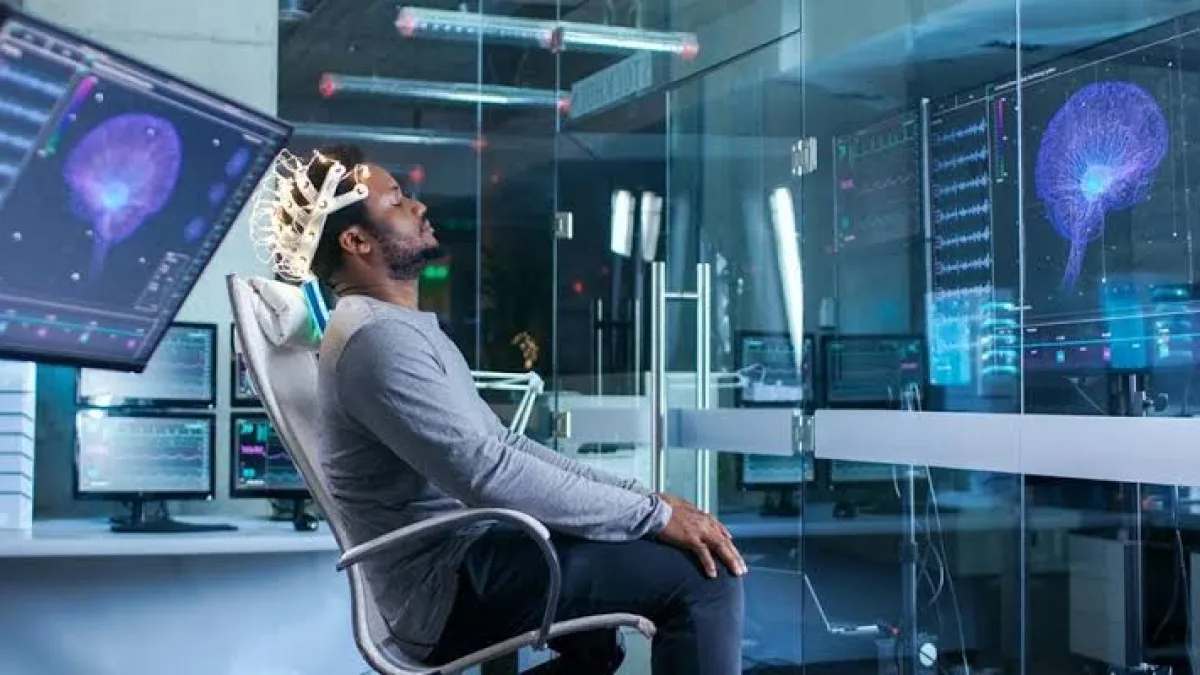
Brain-Computer Interfaces (BCIs) have rapidly evolved from experimental laboratory research into one of the most exciting technologies of 2026. By creating a direct communication pathway between the human brain and digital devices, BCIs are opening new possibilities in healthcare, education, accessibility, robotics, gaming, and artificial intelligence. Researchers, technology companies, and medical institutions are investing heavily in neural technologies that could fundamentally change how humans interact with computers.
A Brain-Computer Interface is a system that captures brain activity, processes neural signals using advanced algorithms, and translates those signals into commands that control computers, robotic devices, or other digital systems. Unlike traditional interfaces that rely on keyboards, touchscreens, or voice commands, BCIs allow users to interact with technology using their thoughts.
Artificial Intelligence is at the core of modern Brain-Computer Interfaces. AI-powered machine learning models analyze complex neural signals generated by the brain, filtering out background noise while identifying meaningful patterns. As users continue using the system, AI continuously learns and improves its accuracy, enabling faster and more reliable communication between the brain and machines.
Healthcare remains the most important application of Brain-Computer Interfaces. Patients suffering from paralysis, spinal cord injuries, ALS, stroke, or severe neurological disorders can use BCIs to communicate, control wheelchairs, operate robotic arms, or type messages simply by thinking. These technologies are providing new independence for people who previously had limited ability to interact with the world.
One of the most promising medical applications is restoring movement. Researchers are developing advanced BCIs that connect brain signals directly to robotic prosthetic limbs or functional electrical stimulation systems. This allows patients to regain partial movement by bypassing damaged nerves and transmitting commands directly from the brain to external devices.
Speech restoration is another breakthrough area. AI-powered Brain-Computer Interfaces can decode neural activity associated with speech and convert it into synthesized voice or text. Patients who have lost the ability to speak due to neurological diseases may soon communicate naturally using only their brain activity.
Mental health research is also benefiting from BCI technology. Scientists are exploring how neural interfaces can help monitor depression, anxiety, PTSD, epilepsy, and sleep disorders. By analyzing brain activity in real time, AI systems may assist healthcare professionals in developing more personalized treatment plans.
Education is another field expected to benefit significantly. Future learning platforms may use Brain-Computer Interfaces to monitor student engagement, cognitive workload, and learning efficiency. AI-driven educational systems could automatically adjust lessons based on a student's attention level, making learning more personalized and effective.
Gaming and virtual reality industries are rapidly exploring Brain-Computer Interfaces to create immersive experiences. Players may eventually control game characters, interact with virtual environments, or manipulate digital objects using only neural signals. Combined with augmented reality and AI, BCIs could redefine digital entertainment.
The workplace may also be transformed by neural technology. Professionals working in engineering, design, scientific research, and complex simulations could interact with advanced software much faster through thought-based control systems. Brain-controlled interfaces may reduce repetitive manual tasks while increasing productivity.
Manufacturing companies are investigating Brain-Computer Interfaces for controlling industrial robots and autonomous machinery. Instead of using handheld controllers, trained operators could manage robotic systems more efficiently through neural commands while maintaining greater precision.
Artificial Intelligence enhances BCIs through continuous adaptation. Deep learning algorithms recognize subtle changes in neural activity, allowing systems to become more accurate over time. Edge AI processors also enable faster signal processing directly on wearable devices, reducing delays and improving user experience.
Wearable Brain-Computer Interfaces are becoming increasingly popular. Lightweight EEG headsets allow researchers, students, and developers to experiment with brain signal monitoring without requiring invasive surgery. These non-invasive systems are expanding research while making BCI technology more accessible.
Cloud computing also plays an important role by storing anonymous neural datasets, supporting AI model training, and enabling collaborative neuroscience research across universities and hospitals worldwide. Secure cloud platforms accelerate innovation while supporting large-scale medical studies.
Privacy and cybersecurity are becoming major priorities as Brain-Computer Interfaces evolve. Neural data is highly sensitive, requiring strong encryption, secure authentication, and strict privacy protections. Governments and technology companies are developing ethical frameworks to ensure brain data remains protected from misuse.
Ethical considerations extend beyond privacy. Researchers continue debating informed consent, cognitive enhancement, neural data ownership, and responsible AI usage. International standards are expected to guide the development and deployment of Brain-Computer Interfaces as the technology becomes more widespread.
Challenges remain before BCIs achieve mass adoption. Improving signal accuracy, reducing hardware costs, increasing battery life, enhancing comfort, and ensuring long-term reliability are key engineering goals. Researchers are also working to improve wireless communication, miniaturize sensors, and develop more sophisticated AI algorithms.
Investment in Brain-Computer Interface technology continues growing as startups, medical companies, and global technology firms compete to develop next-generation neural devices. Collaboration between neuroscientists, AI engineers, software developers, and healthcare professionals is accelerating innovation across the industry.
Looking toward the future, Brain-Computer Interfaces are expected to integrate with robotics, smart homes, autonomous vehicles, augmented reality, virtual reality, wearable devices, and intelligent digital assistants. These systems may eventually enable seamless interaction between humans and machines, creating entirely new ways of working, learning, and communicating.
Brain-Computer Interfaces in 2026 represent one of the most revolutionary technologies of the modern era. By combining neuroscience, artificial intelligence, machine learning, robotics, wearable technology, and advanced computing, BCIs are helping build a future where human thought becomes a powerful interface for interacting with the digital world while improving healthcare, accessibility, and everyday life.