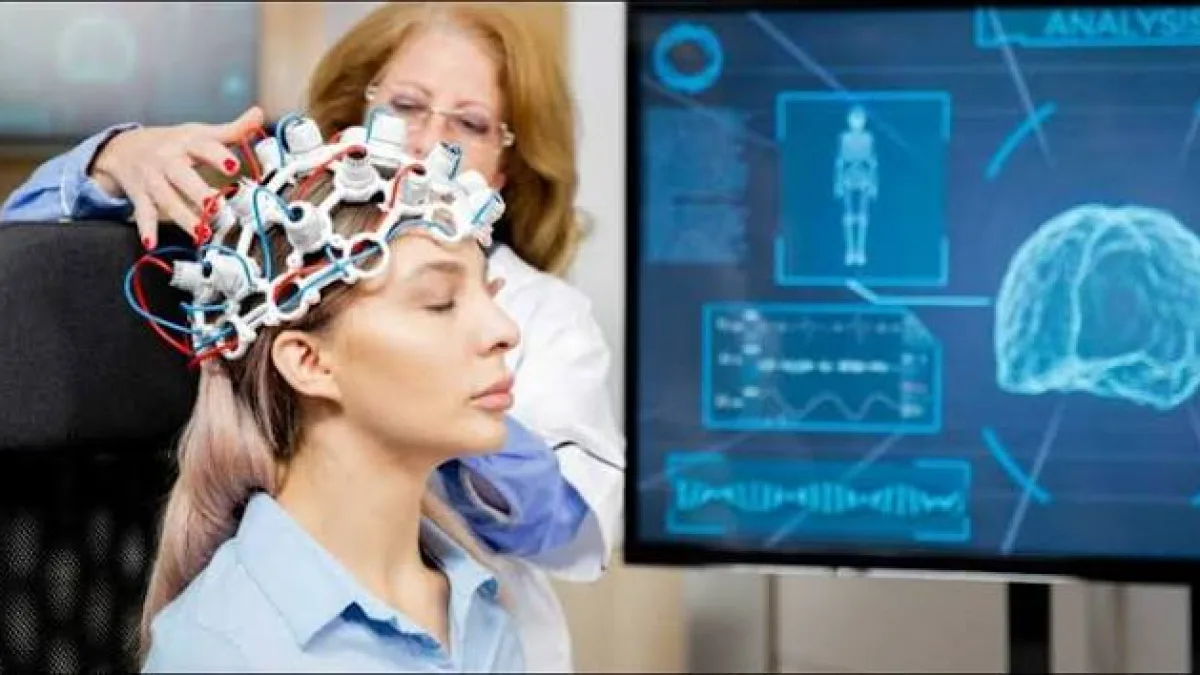
Brain-Computer Interfaces (BCIs) have rapidly evolved from experimental laboratory research into one of the most exciting technologies of 2026. By creating a direct communication pathway between the human brain and external devices, BCIs are opening new possibilities in healthcare, accessibility, robotics, gaming, education, and artificial intelligence. Scientists and technology companies are investing heavily in brain-interface technology with the goal of enabling people to control computers, prosthetic limbs, wheelchairs, and even smart homes using only their thoughts.
A Brain-Computer Interface works by detecting electrical signals generated by neurons in the brain. These signals are captured through sensors placed on the scalp or implanted directly into the brain. Advanced artificial intelligence algorithms then analyze the neural activity, interpret the user's intentions, and convert those signals into commands that control digital devices. This creates a direct connection between human thoughts and machines without requiring keyboards, touchscreens, or voice commands.
Healthcare remains the most important application of BCI technology. Patients suffering from paralysis due to spinal cord injuries, stroke, or neurological disorders are beginning to regain communication and independence through brain-controlled assistive devices. Individuals who cannot move or speak may use BCIs to type messages, control wheelchairs, operate robotic arms, or interact with computers using only brain activity. These innovations are dramatically improving quality of life for people living with severe physical disabilities.
Prosthetic technology has also advanced significantly through BCIs. Modern robotic limbs equipped with brain-computer interfaces allow users to control artificial hands and arms using natural thought patterns. AI continuously learns each user's neural signals, making movement more accurate, responsive, and intuitive over time. Future prosthetics are expected to provide both movement and sensory feedback, allowing users to feel pressure, texture, and temperature through artificial limbs.
Artificial intelligence plays a central role in BCI development. Machine learning algorithms continuously analyze complex neural signals, filter background noise, and improve interpretation accuracy. As AI models become more sophisticated, brain-computer interfaces can recognize increasingly detailed intentions while adapting to each individual's unique brain activity.
Communication technology is another area experiencing major transformation. Individuals with conditions such as ALS or locked-in syndrome often lose the ability to speak while remaining mentally aware. BCIs allow these patients to generate text, synthetic speech, or digital commands directly from brain signals, restoring communication with family members, caregivers, and healthcare professionals.
The gaming industry is exploring BCIs to create more immersive experiences. Instead of relying solely on traditional controllers, players may eventually interact with virtual environments using concentration, emotional responses, or mental commands. Combined with virtual reality and augmented reality, brain-controlled gaming could create highly personalized and interactive digital experiences.
Education may also benefit from brain-computer interface technology. Researchers are studying how BCIs can measure attention levels, cognitive workload, and learning progress in real time. Intelligent educational systems could adapt lesson difficulty based on a student's mental engagement, creating more personalized and effective learning environments.
Industrial applications are emerging as well. Workers operating complex machinery, drones, or robotic systems could eventually use BCIs to improve control precision while reducing physical effort. Brain-controlled robotics may become valuable in hazardous environments such as disaster response, nuclear facilities, underwater operations, and space exploration.
Smart home technology is becoming increasingly compatible with brain-computer interfaces. Users may control lighting, climate systems, security cameras, entertainment devices, and household appliances through neural commands, improving accessibility for individuals with mobility impairments while creating more intuitive home automation systems.
Mental health research is another promising field. Scientists are investigating whether BCIs can help detect early signs of depression, anxiety, epilepsy, Alzheimer's disease, Parkinson's disease, and other neurological conditions by monitoring changes in brain activity. Early diagnosis could improve treatment outcomes while supporting more personalized healthcare.
Non-invasive BCIs, which use wearable EEG headsets placed on the scalp, continue becoming more accurate, affordable, and comfortable for everyday use. Meanwhile, implantable BCIs provide higher signal quality for advanced medical applications but require surgical procedures and rigorous safety standards.
Cybersecurity and privacy have become important considerations as BCI technology advances. Brain-generated data contains highly sensitive personal information that must be protected through strong encryption, secure authentication, and strict regulatory oversight. Organizations developing BCIs are implementing advanced security measures to ensure users maintain full control over their neural data.
Ethical considerations are equally important. Researchers, governments, and technology companies are working to establish regulations that protect cognitive privacy, prevent unauthorized access to neural information, and ensure brain-computer interfaces are used responsibly. Transparent governance will be essential as the technology becomes more widely available.
Cloud computing and edge AI are accelerating BCI development by providing the computational resources needed to process enormous volumes of neural data. Edge computing reduces latency by analyzing brain signals locally, enabling faster responses for applications such as prosthetic control, robotics, and real-time communication.
Despite remarkable progress, Brain-Computer Interfaces still face technical challenges. Neural signals remain highly complex, individual brain patterns vary significantly, and long-term reliability continues to improve through ongoing research. Advances in AI, neuroscience, semiconductor technology, and biomedical engineering are expected to address many of these limitations over the coming years.
Governments, universities, healthcare organizations, and private technology companies continue investing heavily in BCI research because of its enormous potential to transform medicine and human-computer interaction. Clinical trials, improved neural sensors, and AI-powered signal processing are bringing commercial adoption closer to reality.
Looking ahead, Brain-Computer Interfaces may fundamentally redefine how humans interact with technology. Future systems could enable seamless communication between people and intelligent machines, advanced rehabilitation therapies, enhanced accessibility, and entirely new forms of digital interaction. As artificial intelligence and neuroscience continue advancing together, BCIs are expected to become one of the defining technologies of the next decade.
Brain-Computer Interfaces in 2026 represent far more than a scientific breakthrough—they mark the beginning of a future where the boundary between the human brain and digital technology becomes increasingly connected. By enabling direct communication between minds and machines, BCIs have the potential to revolutionize healthcare, accessibility, productivity, and the way people interact with the digital world.