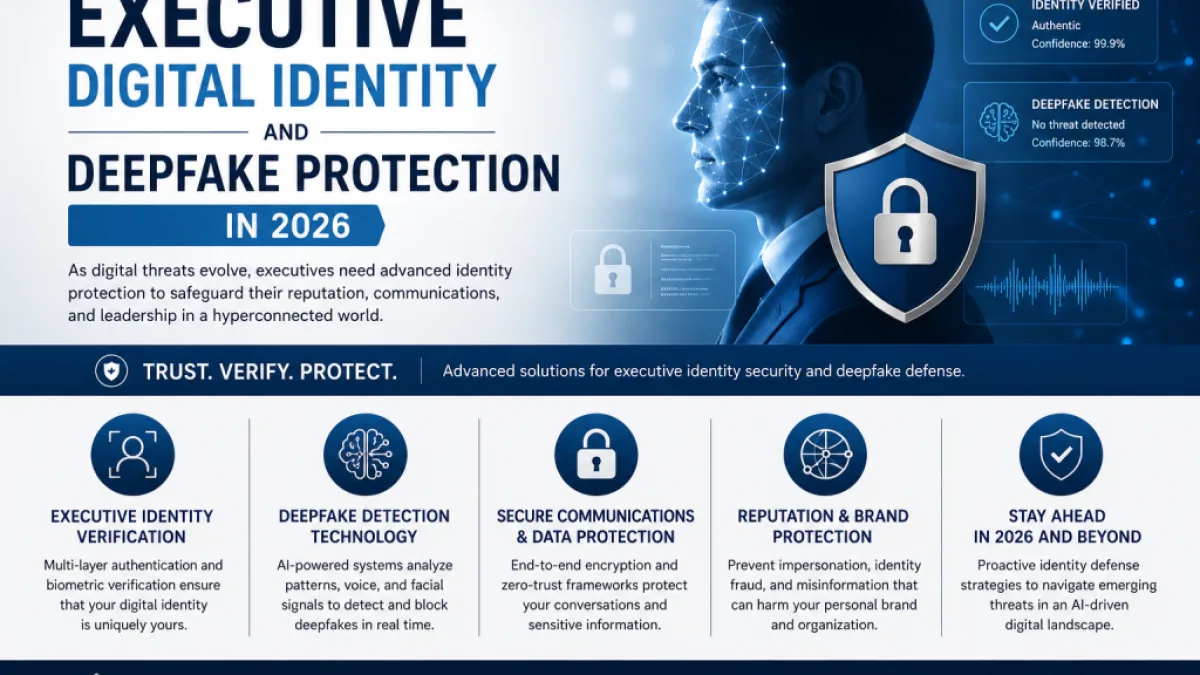
As the digital world continues to expand, online identity has become one of the most valuable assets for individuals, businesses, and governments. Every day, billions of people log into banking apps, e-commerce platforms, healthcare portals, government services, social media accounts, and enterprise systems. Managing dozens of usernames and passwords while protecting personal information has become increasingly difficult. At the same time, cybercriminals are launching more sophisticated phishing attacks, identity theft campaigns, account takeovers, and data breaches than ever before.
In 2026, Digital Identity has emerged as one of the most important technologies shaping the future of secure online interactions. By combining artificial intelligence, biometrics, blockchain, cryptography, passkeys, decentralized identity (DID), and zero-trust security, digital identity systems are replacing outdated password-based authentication with faster, safer, and more user-friendly solutions.
A digital identity is much more than a username and password. It is a secure collection of verified personal credentials that allows individuals to prove who they are online without repeatedly exposing sensitive personal information. Instead of creating separate identities for every website or application, users can securely authenticate themselves using trusted digital credentials.
One of the biggest drivers behind digital identity adoption is the growing number of cyberattacks targeting passwords. Weak passwords, password reuse, and phishing scams remain among the leading causes of account compromises. Modern authentication systems are replacing passwords with passkeys, biometric verification, and cryptographic authentication methods that are significantly more resistant to cyber threats.
Biometric authentication has become increasingly common across smartphones, laptops, tablets, banking applications, and enterprise systems. Facial recognition, fingerprint scanning, iris recognition, and voice authentication allow users to securely access services within seconds without remembering complex passwords. Since biometric information is unique to each individual, unauthorized access becomes much more difficult.
Artificial intelligence plays a crucial role in strengthening digital identity systems. AI continuously analyzes user behavior, login patterns, device characteristics, typing behavior, mouse movements, location history, and network activity. If unusual activity is detected—such as logging in from an unfamiliar country or using a suspicious device—the system can automatically request additional verification before granting access.
Another major innovation is Decentralized Identity (DID). Traditional identity systems often store sensitive personal information in centralized databases, making them attractive targets for hackers. Decentralized identity gives users full control over their digital credentials by allowing identity information to remain securely stored in encrypted digital wallets rather than centralized servers.
Blockchain technology provides additional security by enabling tamper-resistant verification of digital credentials. Instead of sharing complete identity documents, users can prove specific information—such as age, citizenship, or educational qualifications—without exposing unnecessary personal data. This concept, known as selective disclosure, significantly improves privacy.
Financial institutions are among the largest adopters of advanced digital identity technologies. Banks use biometric verification, AI-powered fraud detection, and digital identity verification to reduce financial fraud while simplifying customer onboarding. Opening a bank account, applying for loans, or authorizing financial transactions has become faster and more secure through digital identity solutions.
Healthcare organizations are also embracing secure digital identity systems. Patients can safely access electronic health records, schedule appointments, receive prescriptions, and communicate with healthcare providers using verified digital identities. Secure authentication helps protect sensitive medical information while reducing identity-related healthcare fraud.
Governments worldwide are implementing national digital identity programs that allow citizens to access public services online. Tax filing, driver's license renewals, passport applications, healthcare benefits, voting registration, and business licensing are increasingly available through secure digital identity platforms. These systems improve efficiency while reducing administrative costs and paperwork.
Businesses are adopting digital identity to improve customer experiences and strengthen cybersecurity. Employees use secure digital identities to access enterprise applications, cloud platforms, internal networks, and confidential business systems. Identity and Access Management (IAM) platforms ensure that employees only access resources appropriate to their roles, reducing insider threats.
E-commerce companies also benefit from digital identity by reducing payment fraud and fake account creation. AI-powered identity verification helps confirm customer legitimacy during online purchases while minimizing friction for legitimate users. Faster identity verification improves trust between businesses and consumers.
Cloud computing has accelerated digital identity adoption because organizations increasingly operate across multiple cloud platforms and remote work environments. Secure single sign-on (SSO), multi-factor authentication (MFA), and identity federation allow users to access multiple applications using one verified digital identity while maintaining strong security controls.
The rise of remote work has further increased the importance of digital identity. Employees now access corporate systems from home offices, mobile devices, and public networks. Modern identity platforms continuously verify users throughout each session rather than relying solely on initial login credentials, following the principles of Zero Trust Security.
Artificial intelligence is making identity verification faster and more accurate through automated document verification, facial matching, fraud detection, and risk scoring. Financial institutions, telecom companies, insurance providers, and online marketplaces increasingly use AI to verify identities within seconds while reducing manual review.
Privacy remains a central focus of digital identity development. Modern systems emphasize user consent, encrypted communication, data minimization, and transparency regarding how personal information is collected and used. Regulations such as GDPR and similar privacy frameworks encourage organizations to build privacy-first identity systems.
Despite rapid progress, digital identity also faces challenges. Balancing security with user convenience remains essential. Organizations must protect against biometric spoofing, identity fraud, synthetic identities, and evolving cyber threats while ensuring identity systems remain accessible to all users.
Technology companies continue investing heavily in passwordless authentication, decentralized identity standards, AI-powered identity verification, and secure digital wallets. Collaboration between governments, financial institutions, standards organizations, and cybersecurity experts is helping establish globally accepted identity frameworks that support interoperability and trust.
Looking toward the future, digital identity will become the foundation of nearly every online interaction. Whether accessing financial services, healthcare, education, government platforms, smart cities, autonomous vehicles, or the emerging metaverse, secure digital identity will enable trusted digital relationships while giving users greater control over their personal information.
Digital Identity in 2026 represents far more than a new authentication method—it marks the evolution of a safer, smarter, and more privacy-focused internet. By combining artificial intelligence, biometrics, blockchain, decentralized identity, and advanced cryptography, digital identity technologies are creating a future where online security, convenience, and user privacy work together to build greater trust across the digital world.