Smuggling is reportedly continuing unchecked through various border points in Sylhet. Alongside Indian cattle and buffalo, almost every type of product—from spices, sarees, three-piece outfits and motorcycles to smartphones—is entering Bangladesh illegally. Drugs and firearms are also allegedly being brought in under the cover of these goods. Human trafficking has also not stopped.
As a result, the government is losing substantial revenue, while the law-and-order situation is coming under threat. An investigation has revealed details of the smuggling network operating across the Sylhet border region.
According to the investigation, smugglers allegedly distribute money to political leaders and influential officials in the administration to ensure the smooth movement of contraband. An unwritten arrangement has reportedly developed among those involved.
More than Tk 10 million is allegedly entering the pockets of dishonest individuals every day from smuggling activities in Gowainghat, Kanaighat and Jaintapur alone.
Goods entering Bangladesh from India without such an alleged “arrangement” are sometimes seized. This year, the Border Guard Bangladesh (BGB) has seized more than Tk 2.06 billion worth of drugs and other smuggled goods, along with 1,281 cattle. However, sources said the seized goods represent only a small fraction of the total volume of smuggling.
Expatriates’ Welfare and Overseas Employment Minister Ariful Haque Chowdhury has also expressed anger over smuggling in Sylhet.
At a recent event, he said, “If the protectors themselves become the predators, where will ordinary people go?”
He warned that officials within the administration who pretend not to see smuggling networks would not be spared. He said they had been given one month to correct themselves and that strict action would be taken from August against those who failed to do so.
He also warned that licences would be permanently cancelled for those who used illegal benefits under the cover of licences or documents, while strict action would be taken against those inside the ministry who acted as intermediaries for smuggling.
How the Alleged Smuggling Network Operates
Across the border from Gowainghat, Jaintapur and Kanaighat is India’s Meghalaya state, including the Dawki region.
Large consignments of cattle and buffalo reportedly enter Bangladesh illegally through the Dawki border. Hajiganj in Gowainghat and Suraighat in Kanaighat are reportedly among the main routes.
The Bichanakandi and Gowainghat border areas, Hadarpar Bazar and Darbast Bazar in Haripur are also widely known as major smuggling points.
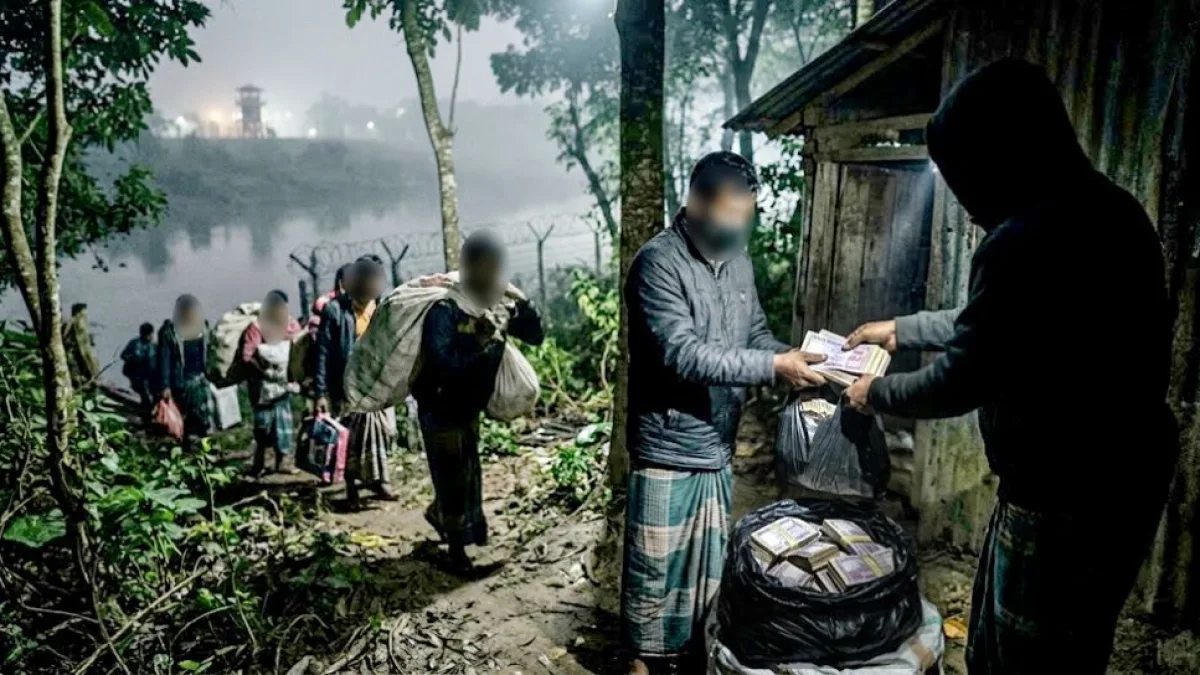
The network reportedly operates mainly between 2am and 4am.
According to the report, an average of around 500 cattle enter illegally through the Bichanakandi border each day, while around 300 cattle enter through the Jaintapur-Darbast route.
Those transporting cattle or other goods allegedly have to pay a fixed “line fee.” The report claims that Tk 3,000 is paid to corrupt officials of a law-enforcement agency for each pair of cattle, while Tk 4,000 is paid for each pair of buffalo.
Other goods reportedly incur payments based on the truck. Police at the local police station and Detective Branch are also allegedly paid separately.
According to the allegations, Tk 1,000 is paid to police for each cow and Tk 1,500 for each buffalo, while Detective Branch personnel allegedly receive Tk 100 per cow and Tk 200 per buffalo.
Human trafficking is also reportedly taking place regularly through the border.
Alleged Linemen and Smuggling Routes
The report alleges that human trafficking and the smuggling of Indian cigarettes, drugs, cumin, sugar and other goods take place through several border locations in Jaintapur, including Mokambari, Alubagan, Sripur, Minatila, Kathalbari, Kendriya Mandir, Rubber Bagan, Dibir Haor BOP, River Pillar, Kalinjibari, Jaliakhola, Noyagram, Nurul’s Tila, Abinash, Afifnagar, Bagchhara, Tumair, Jangabil, Balidara, Yangraja and Lambatila.
The report also names several alleged “linemen” who supposedly collect money and facilitate the movement of goods.
The allegations could not be independently verified.
Alleged Role of a ‘Lineman’ in Jaintapur
According to the investigation, a person named Alamin allegedly acts as a principal “lineman” for the Detective Branch in various border areas of Jaintapur.
The report claims that when vehicles carrying cattle cross the border and enter Bangladesh, Alamin allegedly sends messages assuring smugglers that the route is clear.
He and his associates allegedly stand at different road junctions and keep track of the number of cattle vehicles crossing each night before handing over the collected money.
A person named Farhan is also alleged to act as an intermediary between smugglers and police.
Illegal Cattle Becomes ‘Legal’ After Entering a Market
Indian cattle and buffalo allegedly brought into Bangladesh illegally are taken directly to local cattle markets.
After the animals are brought to the market, receipts are reportedly issued by local leaseholders in exchange for a fixed fee. Once the receipt is obtained, the illegally imported cattle effectively receive a form of legal status, allowing them to be transported to other parts of the country without further legal obstacles.
Radhanagar Market: A Key Transit Point
Radhanagar Market, located in East Jaflong Union of Gowainghat, is reportedly an important strategic point for smuggling.
The main smuggling points along the border and several Khasi communities are located close to the market.
The area around Radhanagar Market is reportedly a major transit route for Indian sugar, cosmetics and sarees entering Bangladesh illegally.
A large cattle market is usually held there every Sunday and Wednesday. The report alleges that a major network is active there to give Indian cattle and buffalo a legal identity as Bangladeshi animals.
The market is also reportedly used as a base for extortion and syndicate activities linked to the illegal extraction of sand and stone from the Jaflong and Piyain rivers.
Different ‘Line’ Deals for Different Goods
The report alleges that separate linemen operate for the smuggling of betel nuts, cosmetics, chocolates, blankets and other products.
These linemen allegedly make agreements with corrupt law-enforcement officials to keep the routes open.
The report claims that individuals named Farhan and Sharuk have been appointed as linemen for the route passing in front of Jaintapur Police Station.
It further alleges that Sharuk has accumulated substantial wealth through the so-called “line business” and collects Tk 5,000 per vehicle carrying cumin for police.
The report also alleges that Tk 5,000 to Tk 10,000 is collected per vehicle carrying cosmetics and other goods.
According to the report, smugglers provide Sharuk with details of vehicles, after which those vehicles are allegedly not stopped by police.
The report also claims that 8 to 10 expensive Indian motorcycles enter Bangladesh illegally through the Jaintapur border every day, with an alleged “line cost” of Tk 10,000 per motorcycle.
Attempts to contact Farhan and Sharuk for comments were unsuccessful.
BGB Says It Has Seized Tk 2.06 Billion Worth of Contraband
Colonel Mohammad Saleh Uddin, commander of the BGB Sylhet Sector, said the Sylhet Battalion (48 BGB) was performing its duties with professionalism along an 81-kilometre border covering Jaintapur, Gowainghat, Companyganj, Chhatak and Dowarabazar upazilas of Sylhet and Sunamganj.
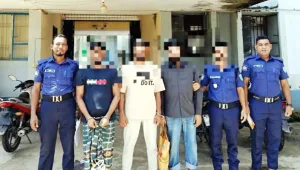
He said 11 people involved in smuggling had been arrested over the past year.
In addition, contraband goods and drugs worth Tk 2,064,751,287 had been seized. This year alone, 1,281 cattle and buffalo had been seized and handed over to the customs authorities.
He also alleged that when BGB recently took a strict stance against smuggling and illegal sand and stone extraction, vested groups began spreading false and misleading information about the force on social media.
Police Acknowledge Smuggling but Deny Illegal Payments
Sylhet Superintendent of Police Dr Chowdhury Jaber Sadek said there was no doubt that smuggling was taking place.
“We cannot deny our weaknesses. I have also received some complaints. We take action when we receive complaints. I am trying my best. However, it is not possible for us alone to stop smuggling 100 percent,” he said.
He said that once goods enter through the border, they spread in different directions, making it difficult to stop the process completely.
Following allegations, Jaintapur Police Station Inspector (Investigation) Osman Gani and Sub-Inspector Obaidul were recently transferred, he said.
Jaintapur Model Police Station OC Mahbubur Rahman Molla said similar information had also reached him.
He said police patrols had been strengthened and denied that members of the police department were involved in receiving illegal benefits or financial transactions.
He also said the allegations against police did not match reality.