In 2026, Artificial Intelligence (AI) is revolutionizing how commercial buildings, residential complexes, hospitals, airports, universities, and industrial facilities are managed. As energy costs rise and sustainability becomes a global priority, AI-powered building management systems are helping organizations optimize energy consumption, improve occupant comfort, reduce operational costs, and enhance facility performance. By integrating Machine Learning (ML), Internet of Things (IoT) sensors, cloud computing, edge computing, digital twins, computer vision, and predictive analytics, AI is enabling highly intelligent smart building management systems.
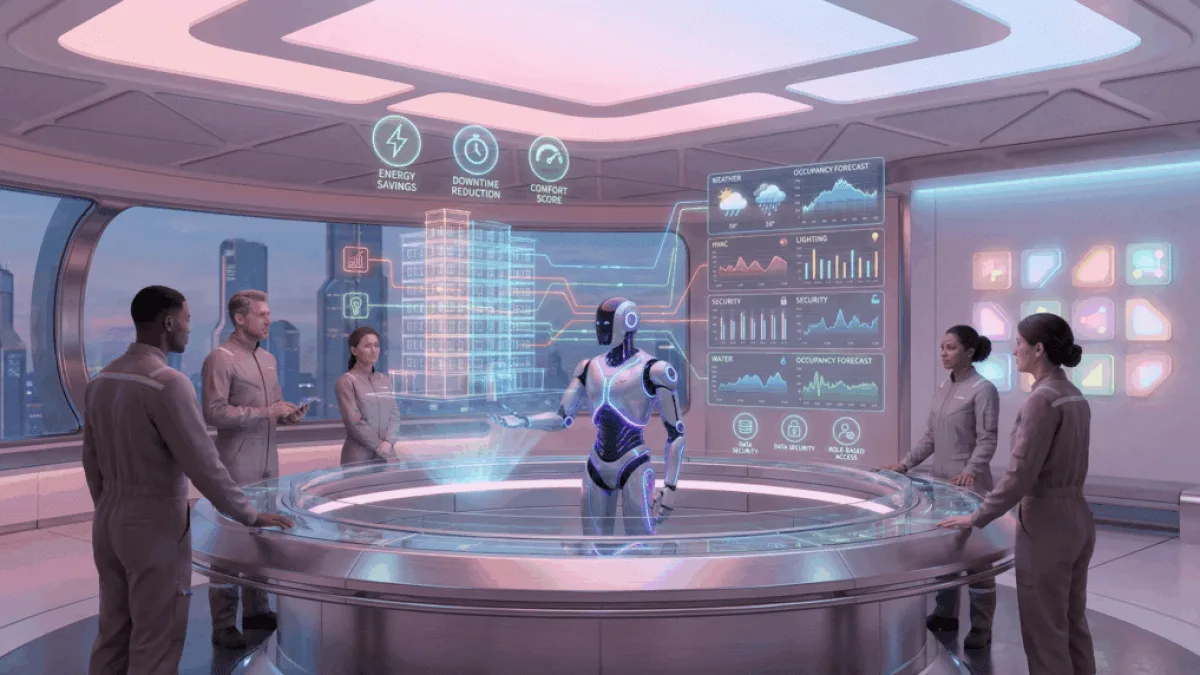
One of the most important applications of AI is energy optimization. Smart buildings continuously collect data from HVAC systems, lighting controls, occupancy sensors, weather forecasts, and electricity meters. AI analyzes this information in real time and automatically adjusts heating, cooling, ventilation, and lighting to minimize energy waste while maintaining comfortable indoor conditions.
Occupancy-based automation has become significantly more advanced through AI-powered analytics. Sensors detect the number of occupants, movement patterns, room usage, and peak activity periods. AI can automatically adjust lighting levels, temperature settings, elevator operations, and ventilation based on actual occupancy, improving both efficiency and user experience.
Predictive maintenance is another major benefit of AI in building management. Equipment such as chillers, boilers, elevators, pumps, air handling units, and electrical systems continuously generate operational data. AI analyzes vibration, temperature, energy consumption, and performance trends to identify early signs of failure before breakdowns occur, reducing maintenance costs and preventing unexpected downtime.
Indoor air quality monitoring has become increasingly important in modern buildings. AI-powered systems continuously measure carbon dioxide levels, particulate matter, humidity, temperature, and air circulation. Intelligent algorithms optimize ventilation and filtration systems to maintain healthy indoor environments while balancing energy efficiency.
Digital Twin technology is enabling facility managers to create virtual replicas of entire buildings. These digital twins receive continuous real-time data from connected systems. AI uses them to simulate energy usage, test operational changes, predict equipment performance, and evaluate renovation projects before implementing physical modifications.
Computer Vision is improving building security and operational awareness. AI-powered cameras can monitor entrances, detect unauthorized access, analyze crowd density, identify safety hazards, and support emergency response procedures while integrating with access control systems.
Edge computing supports time-sensitive building operations by processing sensor and control data locally within the facility. HVAC adjustments, security alerts, and occupancy-based automation can occur instantly without relying entirely on cloud connectivity.
Cloud computing complements edge systems by providing centralized analytics, long-term performance reporting, multi-building monitoring, and AI model training. Facility managers can access real-time dashboards showing energy usage, occupancy trends, equipment health, maintenance status, and sustainability metrics across multiple properties.
Smart water management is increasingly integrated into AI-powered buildings. Intelligent systems monitor water consumption, detect leaks, optimize irrigation, and manage wastewater recycling systems to reduce water waste and lower utility costs.
Sustainability is one of the greatest advantages of AI-driven building management. By optimizing energy consumption, improving equipment efficiency, reducing water usage, and supporting renewable energy integration, AI helps organizations lower carbon emissions and meet environmental, social, and governance (ESG) goals.
Cybersecurity has become a major priority as building systems become more connected. AI-powered security platforms monitor building automation networks, IoT devices, cloud environments, and access control systems for suspicious activity. Encrypted communications and continuous monitoring help protect critical building infrastructure from cyber threats.
Despite its many benefits, AI in smart building management still faces challenges including modernization costs, integration with legacy systems, data interoperability, workforce training, privacy concerns, and cybersecurity risks. However, advances in IoT technology, AI software, cloud platforms, and smart facility management solutions continue to accelerate adoption worldwide.
Looking toward the future, AI-powered buildings will integrate with autonomous maintenance robots, advanced digital twins, blockchain-based energy transactions, quantum optimization, and fully connected smart city ecosystems. These innovations will create more adaptive, efficient, and sustainable built environments capable of responding dynamically to occupant needs and environmental conditions.
AI in Smart Building Management 2026 represents a major milestone in the evolution of intelligent infrastructure. By combining artificial intelligence, predictive analytics, IoT sensors, digital twins, cloud computing, edge computing, computer vision, and intelligent automation, organizations can improve energy efficiency, enhance occupant comfort, reduce operational costs, strengthen security, and build smarter and more sustainable buildings for the future.