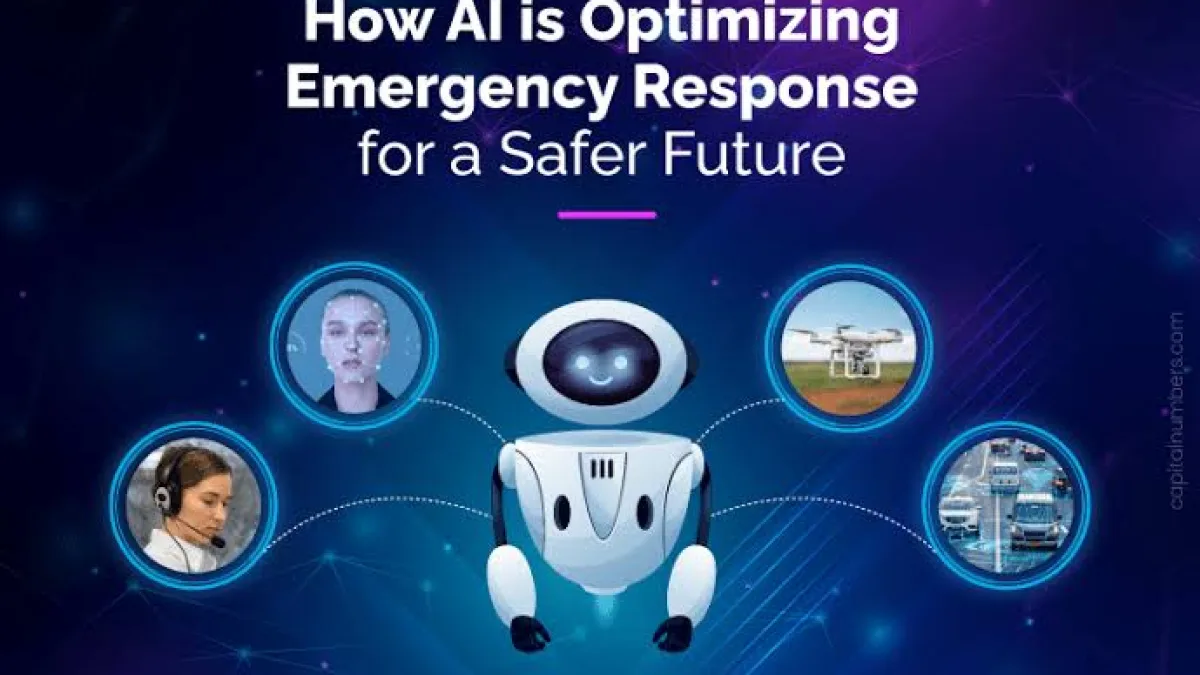
In 2026, Artificial Intelligence (AI) is becoming a critical technology for modern emergency response and disaster management. Governments, public safety agencies, healthcare networks, transportation authorities, and utility providers are increasingly adopting AI-powered systems to detect emergencies faster, coordinate responders more effectively, optimize resource allocation, and improve public safety during crises. By integrating Machine Learning (ML), Computer Vision, Internet of Things (IoT) sensors, drones, cloud computing, edge computing, predictive analytics, digital twins, and intelligent communication platforms, AI is enabling highly connected smart emergency response systems.
One of the most important applications of AI is real-time incident detection. Computer vision systems equipped with AI-powered cameras continuously monitor roads, public spaces, industrial facilities, airports, ports, and critical infrastructure for accidents, fires, hazardous spills, unauthorized intrusions, and other emergencies. Automated alerts allow emergency operations centers to respond immediately and reduce response times.
Predictive disaster management has become a major advancement in public safety. AI analyzes weather forecasts, satellite imagery, seismic data, flood patterns, wildfire conditions, and historical disaster records to identify high-risk areas before emergencies occur. Authorities can issue early warnings, prepare evacuation plans, and position emergency resources in advance.
Emergency resource optimization is another critical benefit of AI. During large-scale incidents, intelligent systems analyze traffic conditions, responder locations, hospital capacity, equipment availability, and incident severity to determine the fastest and most effective deployment of ambulances, fire units, police teams, rescue crews, and medical supplies.
Drones powered by AI are increasingly used for search and rescue operations. Equipped with thermal cameras, computer vision, and GPS navigation, drones can locate missing persons, assess disaster damage, monitor wildfire spread, inspect hazardous areas, and deliver critical information to emergency coordinators without exposing responders to unnecessary risks.
Digital Twin technology is enabling cities and agencies to create virtual replicas of transportation networks, buildings, utility systems, and public infrastructure. AI uses these digital twins to simulate emergency scenarios, evaluate evacuation strategies, identify bottlenecks, and improve disaster preparedness before real incidents occur.
Edge computing supports time-sensitive emergency operations by processing sensor and camera data locally. Fire detection systems, traffic control platforms, and public safety monitoring networks can make immediate decisions even when internet connectivity is disrupted during a disaster.
Cloud computing complements edge systems by providing centralized coordination, multi-agency communication, large-scale analytics, and AI model training. Emergency managers can access real-time dashboards showing incident locations, responder status, resource availability, weather conditions, and public safety metrics across multiple regions.
Computer Vision is improving crowd management and evacuation planning. AI-powered systems can monitor crowd density, detect panic situations, identify blocked exits, and guide authorities in directing people toward safer evacuation routes during emergencies.
Healthcare integration has become increasingly important in smart emergency response systems. AI helps hospitals predict emergency patient surges, optimize bed allocation, coordinate ambulance arrivals, and prioritize critical care resources during large-scale incidents or public health emergencies.
Cybersecurity is a major priority as emergency communication and response systems become more connected. AI-powered security platforms monitor operational networks, IoT devices, cloud environments, and public safety infrastructure for suspicious activity. Encrypted communications and continuous monitoring help protect critical emergency systems from cyber threats.
Sustainability and resilience are additional advantages of AI-driven emergency management. By improving disaster preparedness, reducing infrastructure damage, optimizing resource usage, and accelerating recovery operations, AI helps communities become more resilient while minimizing economic and environmental impacts.
Despite its many benefits, AI in emergency response still faces challenges including data integration, interoperability between agencies, privacy concerns, infrastructure costs, workforce training, regulatory compliance, and ensuring reliable communications during disasters. However, advances in AI software, IoT technology, satellite systems, cloud platforms, and edge computing continue to accelerate adoption worldwide.
Looking toward the future, AI-powered emergency response systems will integrate with autonomous rescue robots, advanced digital twins, quantum optimization, next-generation satellite monitoring, and fully connected smart city safety networks. These innovations will create faster, more adaptive, and more resilient emergency management ecosystems capable of responding to complex crises in real time.
AI in Smart Emergency Response Systems 2026 represents a major milestone in the evolution of public safety and disaster management. By combining artificial intelligence, predictive analytics, computer vision, IoT sensors, drones, digital twins, cloud computing, edge computing, and intelligent automation, governments and emergency agencies can improve incident detection, optimize response coordination, enhance disaster preparedness, strengthen public safety, and build more resilient communities for the future.