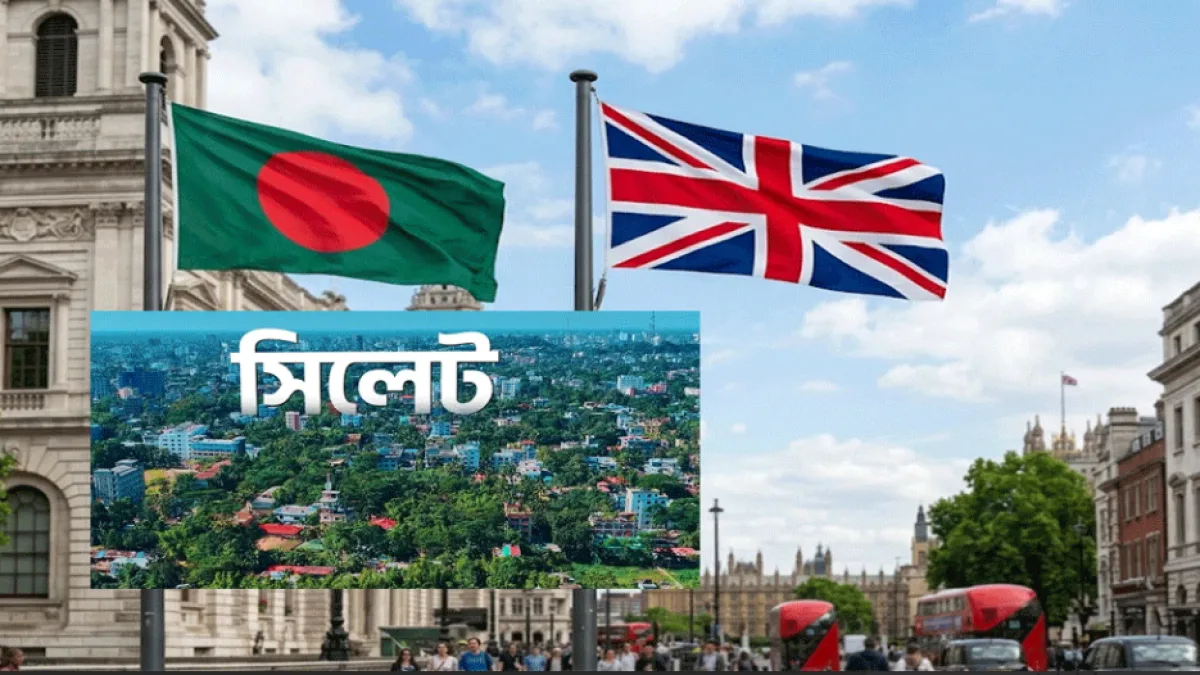
Sylhet: The overwhelming majority of Bangladeshis living in the United Kingdom are of Sylheti origin, according to recent census data and migration studies. Researchers estimate that between 90% and 95% of the more than 650,000 Bangladeshis residing in the UK trace their roots to the Sylhet region of northeastern Bangladesh.
According to the 2021 Census for England and Wales, the Bangladeshi ethnic population stands at approximately 645,000. The total rises further when Bangladeshi communities in Scotland and Northern Ireland are included. Migration researchers say that most British Bangladeshis are descendants of migrants who left various upazilas of Sylhet Division several decades ago.
Studies indicate that Sylheti migration to the UK began in the late 19th century, when Sylheti sailors found employment on British merchant ships. However, migration accelerated after the Second World War as Britain faced severe labour shortages. The subsequent arrival of spouses and children under family reunification programmes helped establish a permanent Sylheti community, which has since become the largest segment of the British Bangladeshi population.
East London remains the principal hub of the Sylheti community. Areas including Tower Hamlets, Brick Lane, Whitechapel, and Bethnal Green have long served as cultural centres for British Bangladeshis. Significant Sylheti populations also reside in Newham, Redbridge, Luton, Birmingham, Manchester, Oldham, Leeds, Glasgow, and several other cities across the UK.
Beyond their demographic presence, Sylhetis have made substantial contributions to the British economy. Experts say Sylheti entrepreneurs played a leading role in developing the UK's renowned curry industry, with a large proportion of Bangladeshi-owned restaurants operated by Sylheti business owners. They are also well represented in retail, transport, construction, real estate, healthcare, information technology, and a wide range of small and medium-sized enterprises.
Political participation among British Bangladeshis of Sylheti origin has also increased steadily. Members of the community now serve in local councils, mayoral offices, school governing bodies, and the UK Parliament. At the same time, younger generations are strengthening their presence in the legal profession, medicine, education, journalism, banking, and the civil service.
Analysts say the Sylheti language and cultural heritage continue to play a central role in shaping the identity of the British Bangladeshi community. More than a hundred mosques, Bangla-language schools, cultural organisations, and regional associations help preserve and promote the community's language, traditions, and heritage among younger generations. Widespread participation in celebrations such as the Bengali New Year (Pohela Boishakh), International Mother Language Day, and Bangladesh's Independence Day has further reinforced the visibility of British Bangladeshis within the UK's multicultural society.
Migration experts note that while the first generation of Sylheti migrants arrived primarily as labourers, British Bangladeshis of Sylheti origin have since become influential contributors to the UK's economy, business, politics, education, and broader social development.