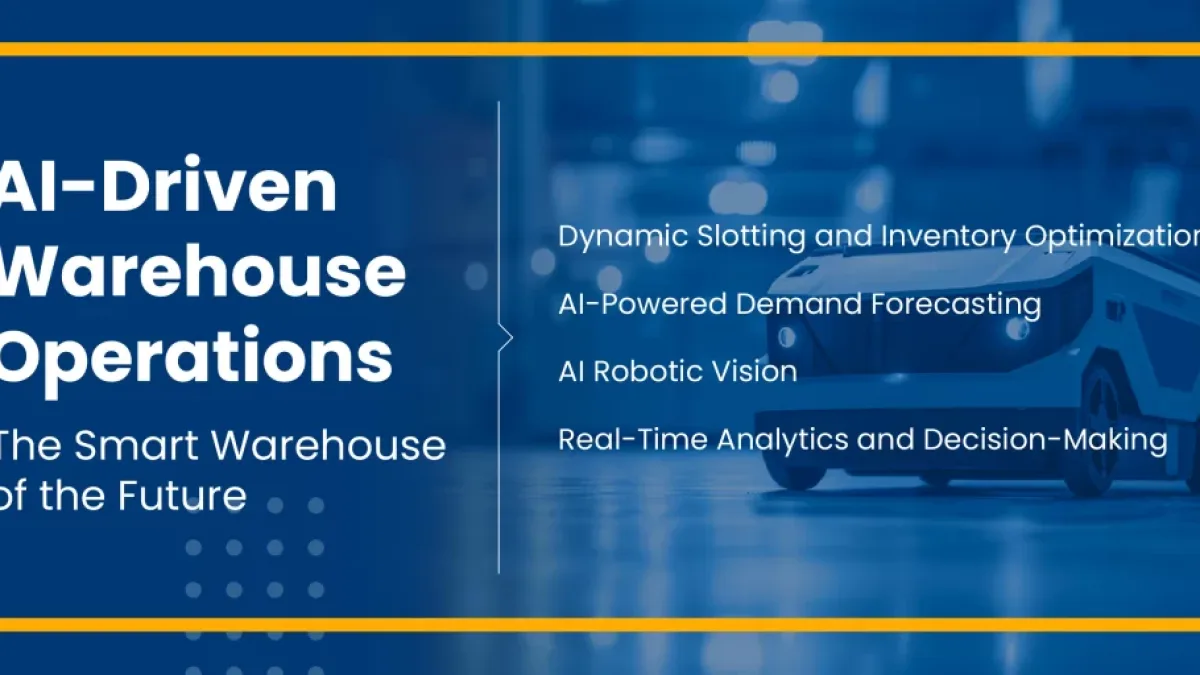
The rapid growth of e-commerce, global logistics, and digital supply chains has made warehouses more important than ever before. In 2026, AI-Powered Smart Warehousing has become a game-changing technology that enables businesses to automate warehouse operations, improve inventory accuracy, reduce operational costs, and deliver products faster than ever. By combining Artificial Intelligence (AI), Machine Learning (ML), the Internet of Things (IoT), robotics, autonomous mobile robots (AMRs), computer vision, RFID technology, cloud computing, and predictive analytics, modern warehouses are becoming smarter, faster, and more efficient.
Traditional warehouses often rely on manual inventory checks, paper-based workflows, and human-operated equipment. These methods are time-consuming, prone to errors, and difficult to scale. AI-powered smart warehouses replace these limitations with intelligent automation that continuously monitors inventory, predicts demand, optimizes storage space, and automates order fulfillment. This allows businesses to handle higher order volumes while maintaining exceptional accuracy.
One of the most significant advantages of AI-powered warehousing is intelligent inventory management. AI systems continuously analyze inventory levels, customer purchasing patterns, seasonal demand, and supplier performance to predict future stock requirements. Businesses can prevent overstocking and stock shortages while maintaining optimal inventory levels that reduce storage costs and improve customer satisfaction.
Autonomous Mobile Robots (AMRs) have become essential in modern warehouses. These AI-driven robots transport products between storage shelves, packing stations, and shipping areas without human intervention. Using LiDAR, computer vision, sensors, and real-time mapping technologies, AMRs safely navigate dynamic warehouse environments while avoiding obstacles and optimizing travel routes.
Computer vision technology further enhances warehouse automation. AI-powered cameras monitor product movement, verify inventory accuracy, detect damaged goods, and confirm correct package labeling before shipments leave the facility. Automated visual inspections significantly reduce human errors and improve quality control throughout warehouse operations.
Order fulfillment has become dramatically faster through AI optimization. Intelligent warehouse management systems determine the most efficient picking routes, assign tasks to workers and robots, and optimize packing sequences based on product size, weight, and shipping destination. This minimizes processing time while improving delivery speed and reducing operational expenses.
Predictive analytics also plays a vital role in warehouse operations. AI analyzes historical sales data, market trends, weather forecasts, promotional campaigns, and consumer behavior to forecast future demand. Warehouse managers can prepare inventory in advance, optimize staffing schedules, and improve procurement planning, reducing delays during peak shopping seasons.
Smart warehouses increasingly rely on IoT-connected devices to monitor warehouse conditions. Sensors track temperature, humidity, vibration, lighting, and equipment performance in real time. This is particularly important for industries such as pharmaceuticals, food distribution, and electronics, where environmental conditions directly impact product quality and regulatory compliance.
AI-powered predictive maintenance helps warehouse operators reduce equipment downtime. Machine learning continuously monitors conveyors, forklifts, robotic systems, and automated storage equipment to detect early signs of wear or mechanical failure. Maintenance teams receive alerts before equipment breaks down, minimizing disruptions and extending the lifespan of valuable assets.
Cloud computing enables centralized warehouse management across multiple locations. Businesses can monitor inventory, employee productivity, order processing, and equipment performance through cloud-based dashboards that provide real-time visibility into every warehouse operation. Edge computing complements cloud systems by processing time-sensitive information locally, ensuring rapid responses even when internet connectivity is limited.
Cybersecurity has become increasingly important as warehouses become more connected. AI-powered threat detection, encrypted communications, multi-factor authentication, zero-trust architecture, and continuous network monitoring help protect warehouse management systems from cyberattacks while safeguarding sensitive inventory and customer information.
Sustainability is another major benefit of AI-powered warehousing. Intelligent energy management systems optimize lighting, heating, cooling, and equipment usage based on occupancy and operational demand. AI also optimizes packaging materials, delivery routes, and warehouse layouts to reduce waste, lower fuel consumption, and minimize carbon emissions across the supply chain.
Human workers continue to play a crucial role in smart warehouses. Rather than replacing employees, AI enhances workplace productivity by automating repetitive tasks and allowing workers to focus on quality control, customer service, strategic planning, and equipment supervision. Collaborative robots, or cobots, work safely alongside warehouse employees, increasing efficiency while improving workplace safety.
Despite rapid adoption, AI-powered warehousing still faces challenges including implementation costs, workforce training, integration with legacy systems, cybersecurity concerns, and maintaining data accuracy. However, advances in robotics, AI software, cloud platforms, and 5G connectivity are making smart warehouse solutions increasingly affordable and scalable for businesses of all sizes.
Looking ahead, AI-powered warehouses will become a central component of autonomous supply chains. Future facilities will integrate digital twins, blockchain, autonomous delivery vehicles, drone inventory inspections, and generative AI assistants to create fully connected logistics ecosystems capable of managing inventory and distribution with minimal human intervention.
AI-Powered Smart Warehousing in 2026 represents the future of logistics and supply chain management. By combining artificial intelligence, robotics, predictive analytics, IoT, cloud computing, and intelligent automation, businesses can improve efficiency, reduce operational costs, increase inventory accuracy, accelerate order fulfillment, and deliver superior customer experiences in an increasingly competitive global marketplace.