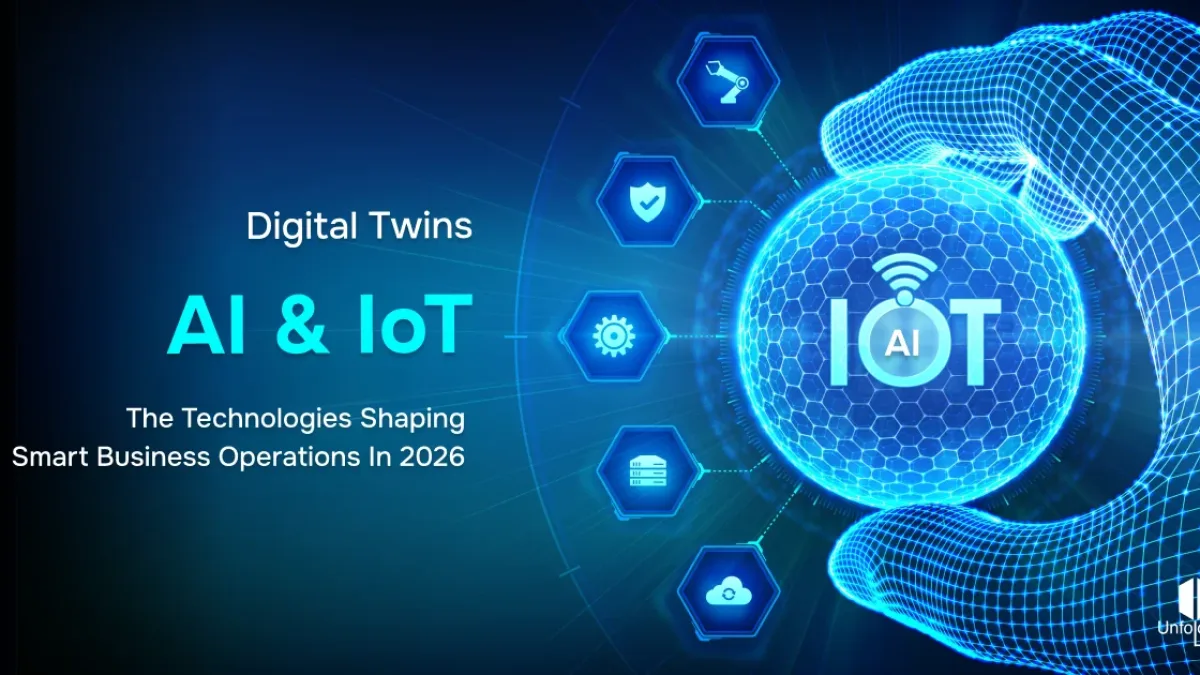
As industries continue embracing digital transformation, AI Digital Twins have emerged as one of the most revolutionary technologies of 2026. A Digital Twin is a virtual representation of a physical object, machine, building, production line, city, or even a human body that continuously receives real-time data from sensors and connected devices. When Artificial Intelligence (AI), Machine Learning (ML), the Internet of Things (IoT), cloud computing, and predictive analytics are integrated with Digital Twins, organizations gain the ability to simulate, monitor, optimize, and predict real-world performance with exceptional accuracy.
Unlike traditional simulations that rely on static data, AI-powered Digital Twins constantly update themselves using live information collected from sensors, cameras, industrial equipment, wearable devices, and connected infrastructure. This continuous synchronization enables businesses to detect problems before they occur, optimize operations, reduce costs, and improve decision-making without interrupting real-world processes.
Manufacturing is one of the biggest beneficiaries of AI Digital Twins. Smart factories create virtual models of machines, production lines, and entire facilities. AI continuously analyzes equipment performance, energy consumption, production speed, and maintenance records to predict failures before they happen. Instead of waiting for machines to break down, manufacturers can schedule predictive maintenance, reducing downtime, improving product quality, and increasing operational efficiency.
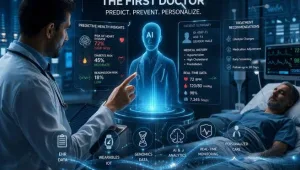
Healthcare is also experiencing a transformation through Digital Twin technology. Researchers are developing digital replicas of organs and even entire patients using medical imaging, wearable health devices, genetic information, and electronic health records. Doctors can simulate different treatment options, predict patient responses to medication, and personalize healthcare plans before beginning treatment. This approach improves medical accuracy while reducing risks associated with complex procedures.
Smart cities are increasingly adopting AI Digital Twins to improve urban planning and public services. Virtual city models integrate data from traffic systems, weather stations, public transportation, utilities, surveillance cameras, and environmental sensors. City planners can simulate traffic patterns, evaluate infrastructure projects, optimize emergency response strategies, and improve energy efficiency before implementing changes in the real world.
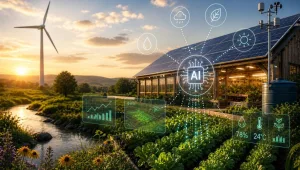
The energy sector uses AI Digital Twins to optimize renewable energy facilities, power plants, wind farms, and electrical grids. Virtual models continuously monitor equipment health, forecast maintenance requirements, and maximize energy production. Utility companies also use Digital Twins to simulate electricity demand and integrate renewable energy sources more efficiently into smart grids.
The automotive industry relies heavily on Digital Twin technology throughout the vehicle lifecycle. Engineers simulate vehicle performance, battery efficiency, crash testing, aerodynamics, and manufacturing processes before physical production begins. Autonomous vehicles also benefit from Digital Twins by testing AI driving algorithms in virtual environments under countless traffic scenarios without risking public safety.
Aerospace companies use Digital Twins to monitor aircraft engines, structural components, fuel systems, and flight operations. AI analyzes sensor data from thousands of flights to predict maintenance needs, improve fuel efficiency, and enhance passenger safety. Space agencies also simulate spacecraft systems to identify potential technical issues before missions begin.
Logistics and supply chain management have become more efficient through AI Digital Twins. Companies create virtual models of warehouses, transportation networks, ports, and distribution centers to optimize inventory management, shipping routes, warehouse layouts, and delivery schedules. Predictive analytics help businesses respond quickly to supply chain disruptions while reducing operational costs.
Construction and real estate industries use Digital Twins to monitor buildings throughout their entire lifecycle. Architects and engineers simulate structural performance, energy usage, HVAC systems, occupancy patterns, and maintenance schedules before and after construction. Smart buildings automatically adjust lighting, ventilation, and climate control based on AI analysis, improving energy efficiency and occupant comfort.
Retail organizations use Digital Twins to optimize store layouts, customer experiences, inventory management, and product placement. AI analyzes customer movement patterns, purchasing behavior, and inventory data to improve operational efficiency while increasing sales and customer satisfaction.
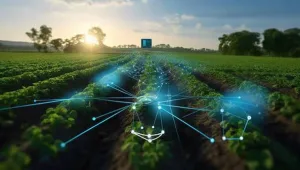
Environmental monitoring is another important application. AI-powered Digital Twins model forests, rivers, coastal regions, and agricultural land using satellite imagery, IoT sensors, and climate data. Scientists can predict floods, droughts, wildfires, and environmental changes while developing more effective conservation strategies.
Cloud computing provides the computing power needed to process massive Digital Twin datasets, while edge computing enables real-time analysis closer to physical assets. This hybrid architecture ensures low-latency decision-making for critical applications such as autonomous vehicles, industrial automation, and healthcare monitoring.
Cybersecurity plays a vital role in protecting Digital Twin ecosystems. Since Digital Twins continuously exchange operational data, organizations implement encrypted communication, identity management, secure cloud platforms, AI-powered threat detection, and zero-trust security architectures to safeguard sensitive information and maintain system integrity.
Despite rapid adoption, Digital Twin technology still faces challenges including implementation costs, interoperability between different platforms, data quality, integration with legacy systems, and workforce training. However, advances in AI, cloud infrastructure, 5G connectivity, and IoT devices are making Digital Twins increasingly accessible across industries of all sizes.
Looking ahead, AI Digital Twins will become a core technology supporting Industry 5.0, autonomous transportation, smart healthcare, sustainable energy, intelligent infrastructure, and next-generation manufacturing. Future Digital Twins will become more autonomous, capable of recommending actions, optimizing complex systems automatically, and collaborating with AI agents to manage entire business operations.
AI Digital Twins in 2026 represent a major leap toward intelligent decision-making and predictive operations. By combining artificial intelligence, real-time analytics, IoT connectivity, cloud computing, and virtual simulation, Digital Twins enable organizations to reduce risks, improve efficiency, accelerate innovation, and build smarter, more resilient systems across virtually every industry.