Artificial Intelligence has become one of the driving forces behind digital transformation, but one of the most significant technological shifts in 2026 is the rapid growth of Edge AI. Instead of relying entirely on cloud servers to process AI tasks, Edge AI enables intelligent data processing directly on devices such as smartphones, smart cameras, autonomous vehicles, industrial machines, medical equipment, drones, wearable devices, and Internet of Things (IoT) sensors. This new approach delivers faster performance, enhanced privacy, reduced latency, and greater reliability while minimizing dependence on internet connectivity.
Edge AI combines artificial intelligence with edge computing, allowing machine learning models to operate locally without constantly sending sensitive information to remote data centers. Modern AI processors, Neural Processing Units (NPUs), Tensor Processing Units (TPUs), and dedicated AI chips have become powerful enough to perform complex inference tasks directly on devices. This advancement enables real-time decision-making even in environments where internet access is slow, unstable, or unavailable.
One of the biggest advantages of Edge AI is speed. Traditional cloud AI requires data to travel from the device to a remote server before receiving a response. Although cloud computing remains powerful, network delays can affect applications that require immediate action. Edge AI eliminates this delay by processing information locally, enabling instant responses for applications such as facial recognition, voice assistants, autonomous driving, industrial automation, and medical monitoring.
Privacy is another major benefit driving Edge AI adoption. Since sensitive data remains on the device instead of being continuously uploaded to cloud servers, users gain greater control over personal information. Smartphones using Edge AI can perform facial recognition, speech processing, image enhancement, and language translation without transmitting private data across the internet. This significantly reduces privacy risks while helping organizations comply with increasingly strict data protection regulations.
The smartphone industry has embraced Edge AI faster than almost any other sector. Modern flagship devices include advanced AI processors capable of enhancing photography, improving battery optimization, translating languages in real time, summarizing documents, generating text, removing background noise during calls, and supporting intelligent personal assistants—all without requiring constant cloud connectivity. These capabilities create faster and more secure user experiences while reducing network usage.
Autonomous vehicles depend heavily on Edge AI for safe operation. Self-driving systems continuously analyze data from cameras, LiDAR, radar, ultrasonic sensors, and GPS to identify pedestrians, road signs, obstacles, and traffic conditions within milliseconds. Processing this enormous amount of information locally is essential because even minor communication delays could impact safety. Edge AI enables vehicles to make immediate driving decisions while maintaining reliable operation regardless of network conditions.
Manufacturing is experiencing a major transformation through Edge AI-powered smart factories. Industrial robots, production equipment, quality inspection cameras, and predictive maintenance systems analyze sensor data directly on-site. AI identifies equipment failures before breakdowns occur, monitors production quality, optimizes manufacturing processes, and improves workplace safety. Processing data locally also reduces bandwidth requirements and improves operational resilience.
Healthcare organizations are increasingly adopting Edge AI in medical devices and wearable technologies. Smart health monitors continuously track heart rate, blood oxygen levels, blood pressure, glucose readings, and other vital signs while analyzing data directly on wearable devices. AI can detect irregular health patterns, alert patients or healthcare providers, and support faster medical intervention without relying solely on cloud infrastructure. Medical imaging equipment also uses Edge AI to assist radiologists by identifying abnormalities more quickly.
Retail businesses benefit from Edge AI through intelligent checkout systems, inventory monitoring, customer analytics, and personalized shopping experiences. Smart cameras equipped with on-device AI detect product shortages, monitor customer traffic, improve store security, and reduce theft while processing video locally to enhance customer privacy.
The Internet of Things (IoT) ecosystem is becoming significantly more intelligent with Edge AI integration. Smart home devices such as thermostats, security cameras, voice assistants, smart appliances, and lighting systems process commands locally, providing faster automation while reducing cloud dependency. Industrial IoT devices similarly monitor machinery, environmental conditions, and infrastructure with real-time AI analysis.
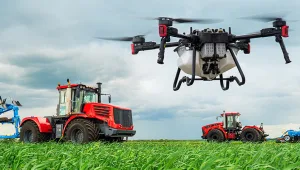
Agriculture is another sector embracing Edge AI. Autonomous tractors, crop-monitoring drones, irrigation systems, and environmental sensors analyze soil conditions, crop health, weather patterns, and pest activity directly in the field. Farmers receive immediate recommendations that improve yields while reducing water consumption and fertilizer usage.
Public safety organizations use Edge AI in surveillance systems, emergency response equipment, and disaster management operations. Intelligent cameras automatically identify accidents, detect suspicious activity, recognize fire hazards, and support emergency personnel through rapid on-device analysis. Since processing occurs locally, response times improve while reducing network congestion during emergencies.
Energy companies are deploying Edge AI across renewable energy facilities, electrical grids, and utility infrastructure. Wind turbines, solar farms, and battery storage systems continuously optimize energy production, detect equipment faults, and improve grid stability using local AI processing. This helps reduce maintenance costs while improving renewable energy efficiency.
Artificial Intelligence models running on edge devices continue improving through techniques such as model compression, quantization, federated learning, and hardware acceleration. These innovations allow sophisticated AI capabilities to operate efficiently on devices with limited power and memory. Federated learning also enables devices to improve AI models collaboratively without sharing raw user data, strengthening both privacy and performance.
5G connectivity complements Edge AI by supporting faster communication between intelligent devices and cloud services when necessary. While many AI tasks execute locally, cloud platforms continue handling large-scale model training, software updates, and advanced analytics. This hybrid architecture combines the strengths of both edge and cloud computing.
Cybersecurity remains a key priority as billions of intelligent edge devices connect to digital networks. Manufacturers implement secure boot mechanisms, encrypted storage, hardware security modules, identity verification, and AI-powered threat detection to protect edge devices from cyberattacks. Strong cybersecurity ensures that local AI processing remains reliable and trustworthy.
Despite rapid progress, Edge AI still faces challenges including hardware costs, energy efficiency, software optimization, device interoperability, and AI model management. Researchers continue developing more efficient processors, lower-power AI chips, and standardized software frameworks that simplify deployment across multiple industries.
Looking ahead, Edge AI is expected to become one of the foundational technologies supporting smart cities, autonomous transportation, precision healthcare, Industry 5.0, robotics, environmental monitoring, and next-generation consumer electronics. As AI hardware continues advancing, billions of connected devices will gain the ability to think, learn, and make intelligent decisions independently.
Edge AI in 2026 represents far more than a technological improvement—it marks a fundamental shift in how artificial intelligence is deployed across the world. By bringing intelligence directly to devices, Edge AI delivers faster performance, stronger privacy, greater reliability, and improved efficiency while enabling a new generation of intelligent applications that will shape the future of computing.