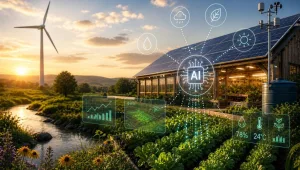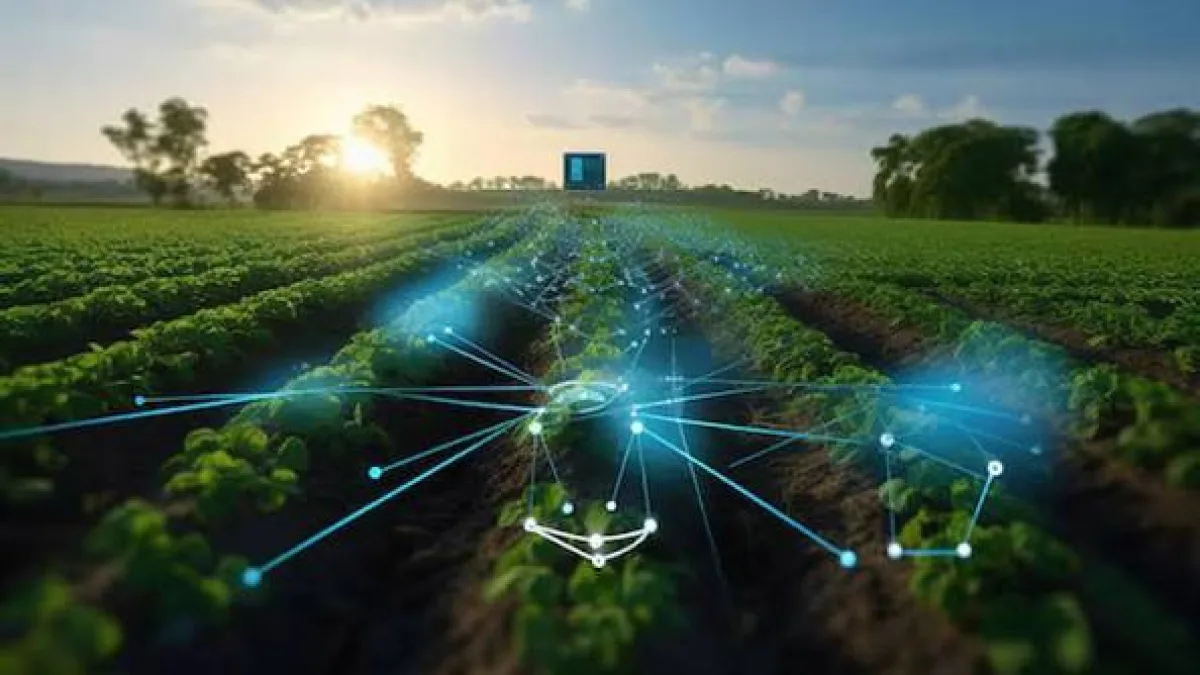
Agriculture is undergoing one of the biggest technological transformations in history, and in 2026, Artificial Intelligence (AI) in Precision Agriculture is becoming a cornerstone of modern farming. With the global population continuing to grow and climate change creating new challenges, farmers are increasingly relying on AI, the Internet of Things (IoT), drones, satellite imaging, robotics, and big data analytics to maximize crop yields while reducing costs and protecting natural resources. Precision agriculture enables farmers to make data-driven decisions that improve productivity, conserve water, minimize waste, and promote sustainable food production.
Unlike traditional farming methods that often treat entire fields uniformly, precision agriculture uses AI to analyze detailed information about soil conditions, crop health, weather patterns, and pest activity. Advanced sensors installed across farmland continuously collect data on soil moisture, temperature, nutrient levels, and environmental conditions. AI processes this information in real time and provides highly accurate recommendations for irrigation, fertilization, planting schedules, and harvesting.
One of the most significant applications of AI in agriculture is crop monitoring. Drones equipped with high-resolution cameras, multispectral sensors, and thermal imaging fly over fields to capture detailed images of crops. AI algorithms analyze these images to detect diseases, nutrient deficiencies, pest infestations, and water stress long before they become visible to the human eye. Early detection allows farmers to take immediate action, preventing crop losses and reducing the need for excessive pesticide use.
Smart irrigation systems powered by AI are helping farmers conserve one of the world's most valuable resources—water. Instead of watering entire fields equally, AI determines exactly where and when irrigation is needed based on weather forecasts, soil moisture levels, and crop growth stages. This targeted approach significantly reduces water consumption while ensuring crops receive optimal hydration.
Autonomous agricultural machinery is also transforming farming operations. AI-powered tractors, robotic harvesters, seed planters, and spraying machines can navigate fields with GPS precision, reducing labor costs and improving operational efficiency. These intelligent machines can work around the clock with minimal human supervision, making farming more productive while addressing labor shortages in many regions.
Weather forecasting has become far more accurate with AI. Machine learning models analyze historical climate data, satellite imagery, and real-time weather conditions to predict rainfall, droughts, storms, and temperature fluctuations. Farmers receive timely alerts that help them plan planting, irrigation, fertilization, and harvesting activities more effectively, reducing risks associated with unpredictable weather.
AI also plays an important role in livestock management. Smart sensors monitor the health, activity, feeding behavior, and body temperature of cattle, poultry, and other farm animals. AI can identify signs of illness or stress at an early stage, allowing farmers to provide prompt treatment and improve overall animal welfare while reducing veterinary costs.
Supply chain optimization is another major benefit of AI in agriculture. AI systems predict market demand, optimize storage conditions, manage inventory, and plan transportation routes to reduce food waste and ensure fresh products reach consumers more efficiently. Farmers can make better marketing decisions based on real-time pricing trends and consumer demand forecasts.
Environmental sustainability is one of the greatest advantages of precision agriculture. AI minimizes the overuse of fertilizers, pesticides, and water, helping reduce pollution and greenhouse gas emissions. By optimizing resource usage, farmers can lower production costs while protecting ecosystems and preserving soil health for future generations.
Cloud computing and edge AI work together to support modern farming. Cloud platforms store and analyze massive agricultural datasets, while edge computing enables local devices and sensors to process critical information instantly, even in remote areas with limited internet connectivity. This combination ensures farmers receive fast, reliable insights whenever they are needed.
Despite its many advantages, AI-powered agriculture still faces challenges. High technology costs, limited internet access in rural areas, data privacy concerns, and the need for digital skills remain barriers for some farmers. However, continued innovation, government support, and falling technology costs are making precision agriculture more accessible to farms of all sizes.
Looking ahead, AI will become an essential partner in global food production. Future farms are expected to integrate AI with autonomous robots, blockchain-based food traceability, climate-smart farming techniques, and renewable energy systems to create highly efficient and sustainable agricultural ecosystems.
AI in Precision Agriculture 2026 represents far more than advanced farming equipment—it marks a new era of intelligent agriculture where technology helps farmers produce more food with fewer resources. By combining artificial intelligence, robotics, drones, IoT, predictive analytics, and sustainable farming practices, precision agriculture is helping secure the future of global food production while protecting the environment.