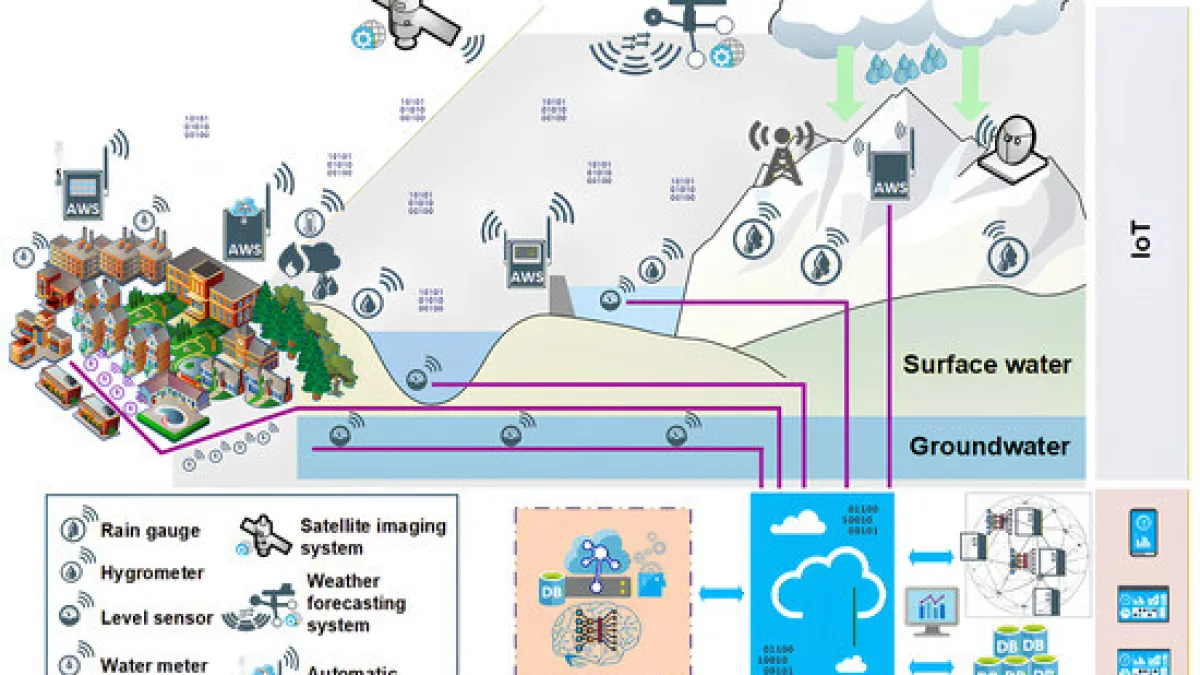
Water has become one of the world's most valuable resources, and in 2026, Artificial Intelligence (AI) in Smart Water Management is transforming how governments, utilities, industries, and agricultural organizations monitor, distribute, and conserve water. As climate change, population growth, urbanization, and aging infrastructure increase pressure on global water supplies, AI-powered technologies are helping organizations manage water more efficiently while reducing waste and ensuring long-term sustainability. By combining machine learning, the Internet of Things (IoT), cloud computing, edge computing, predictive analytics, computer vision, satellite monitoring, and digital twins, AI is creating intelligent water systems capable of making real-time decisions that improve reliability and operational efficiency.
One of the most important applications of AI in water management is smart leak detection. Water distribution networks often lose millions of liters of water every day due to hidden leaks, damaged pipelines, and aging infrastructure. AI-powered sensors continuously monitor water pressure, flow rates, and vibration patterns throughout distribution systems. Machine learning algorithms analyze this data to identify abnormal behavior that may indicate leaks, allowing utility companies to locate and repair problems before significant water loss occurs. This not only conserves valuable resources but also reduces maintenance costs and prevents infrastructure damage.
AI is also improving water quality monitoring. Smart sensors installed in rivers, reservoirs, treatment plants, and distribution systems continuously measure pH levels, temperature, turbidity, dissolved oxygen, chemical concentrations, and potential contaminants. AI analyzes these measurements in real time, detecting pollution events, contamination risks, and equipment failures much faster than traditional laboratory testing methods. Early detection helps protect public health while ensuring regulatory compliance.
Water treatment facilities are becoming increasingly automated through AI-powered optimization. Intelligent systems monitor chemical dosing, filtration performance, pump efficiency, and energy consumption to ensure water treatment processes remain efficient and cost-effective. AI automatically adjusts treatment parameters based on incoming water quality, reducing chemical usage, lowering operational costs, and improving the consistency of treated water supplied to consumers.
Predictive analytics is transforming water demand forecasting. AI analyzes historical consumption patterns, weather forecasts, seasonal trends, industrial usage, and population growth to predict future water demand with high accuracy. Utility companies can optimize reservoir levels, pumping schedules, and water distribution strategies, ensuring reliable service while minimizing energy consumption and unnecessary infrastructure expansion.
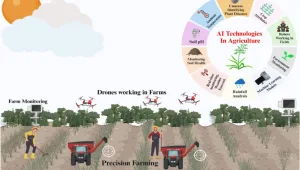
Agriculture is another major beneficiary of AI-powered water management. Smart irrigation systems use soil moisture sensors, weather data, satellite imagery, and crop growth information to determine the precise amount of water needed for each field. Rather than following fixed irrigation schedules, AI delivers water only where and when it is required. This significantly reduces water waste, improves crop health, and supports sustainable farming practices, especially in drought-prone regions.
Urban water management is becoming more intelligent through AI-driven smart city initiatives. Connected water meters provide real-time consumption data for homes, businesses, and public facilities. Consumers receive personalized insights into their water usage, while utility providers can detect unusual consumption patterns that may indicate leaks or equipment failures. Smart billing systems, automated maintenance scheduling, and customer notifications further improve service quality and operational efficiency.
Flood prediction and disaster management have also advanced with AI technology. Machine learning models analyze rainfall patterns, river levels, weather forecasts, topographical data, and satellite imagery to predict floods before they occur. Governments and emergency response agencies receive early warnings that allow them to evacuate vulnerable communities, protect infrastructure, and reduce the impact of natural disasters.
Industrial facilities rely on AI to optimize water usage across manufacturing processes. Intelligent monitoring systems identify opportunities to recycle wastewater, reduce freshwater consumption, and improve cooling system efficiency. Industries such as food processing, pharmaceuticals, energy production, and semiconductor manufacturing use AI to lower water costs while meeting strict environmental regulations.
Digital Twin technology is becoming an essential component of smart water infrastructure. Utilities create virtual replicas of pipelines, reservoirs, pumping stations, and treatment facilities that receive continuous real-time data from connected sensors. Engineers can simulate maintenance activities, predict equipment failures, optimize system performance, and evaluate infrastructure upgrades before implementing changes in the physical network.
Cloud computing provides centralized data storage and analytics for water utilities operating across multiple regions, while edge computing enables immediate processing of sensor data at remote locations. This hybrid architecture ensures rapid responses to emergencies while supporting long-term planning through advanced AI analytics.
Cybersecurity has become increasingly important as water infrastructure becomes more connected. AI-powered threat detection systems monitor industrial control networks, identify suspicious activity, detect cyberattacks, and protect critical infrastructure from unauthorized access. Zero-trust security architectures, encrypted communications, and continuous monitoring help safeguard essential public services.
Environmental sustainability remains a key benefit of AI-driven water management. By reducing water loss, improving treatment efficiency, optimizing irrigation, and supporting wastewater recycling, AI helps preserve freshwater resources while lowering energy consumption and reducing greenhouse gas emissions associated with water distribution and treatment.
Despite its many advantages, AI-powered water management still faces challenges including infrastructure modernization costs, sensor deployment, interoperability between legacy systems, cybersecurity concerns, workforce training, and ensuring reliable internet connectivity in remote areas. However, ongoing advances in AI software, IoT devices, satellite communications, and cloud infrastructure are making intelligent water management solutions increasingly affordable and scalable.
Looking toward the future, AI will play an even greater role in addressing global water challenges. Future smart water systems will integrate autonomous inspection robots, blockchain-based water tracking, advanced climate modeling, AI-driven desalination optimization, and fully automated water distribution networks capable of adapting to changing environmental conditions in real time.
AI in Smart Water Management 2026 represents a major step toward sustainable resource management. By combining artificial intelligence, IoT, predictive analytics, cloud computing, digital twins, and intelligent automation, organizations can reduce water waste, improve infrastructure reliability, strengthen environmental protection, and ensure secure access to clean water for future generations.