In 2026, Artificial Intelligence (AI) and Edge Computing are reshaping the digital world by enabling faster, smarter, and more secure data processing. Traditional cloud computing requires data to travel from devices to centralized data centers for analysis, which can introduce delays and consume significant network bandwidth. Edge computing solves this challenge by processing data closer to where it is generated—on sensors, IoT devices, smartphones, industrial machines, autonomous vehicles, and local edge servers. When combined with AI, edge computing enables real-time decision-making, lower latency, improved privacy, and greater operational efficiency across industries.
One of the biggest advantages of AI-powered edge computing is real-time intelligence. Devices equipped with AI models can analyze data instantly without waiting for cloud responses. This capability is essential for applications such as autonomous vehicles, industrial robotics, healthcare monitoring, and smart manufacturing, where milliseconds can make the difference between success and failure.
The Internet of Things (IoT) is one of the primary drivers of edge AI adoption. Billions of connected sensors generate massive volumes of data every second. Instead of sending all this information to the cloud, edge devices process only the most relevant data locally. This reduces bandwidth usage, lowers operational costs, and ensures faster responses while maintaining continuous system performance.
In smart manufacturing, AI-powered edge computing enables factories to monitor equipment performance, detect production defects, predict machine failures, and optimize manufacturing processes in real time. Cameras equipped with computer vision inspect products on assembly lines, while AI algorithms identify quality issues immediately, reducing waste and improving production efficiency.
The healthcare industry is increasingly adopting edge AI for patient monitoring and medical diagnostics. Wearable devices continuously analyze heart rate, blood oxygen levels, glucose readings, and other vital signs directly on the device. AI can detect abnormal health conditions instantly and alert healthcare professionals without relying on constant cloud connectivity, improving patient outcomes and enabling faster emergency responses.
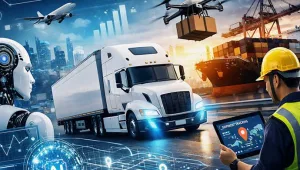
Autonomous vehicles depend heavily on edge AI for safe operation. Self-driving cars process data from cameras, LiDAR, radar, ultrasonic sensors, and GPS locally to recognize road conditions, detect pedestrians, avoid obstacles, and make split-second driving decisions. Processing information at the edge eliminates delays associated with transmitting data to remote servers, significantly improving safety.
Smart cities are becoming more efficient through edge AI. Traffic cameras, environmental sensors, public transportation systems, and intelligent streetlights process data locally to optimize traffic flow, reduce congestion, improve public safety, monitor air quality, and manage energy consumption. Edge computing allows city infrastructure to respond immediately to changing conditions while reducing dependence on centralized cloud systems.
Retail businesses are also leveraging AI-powered edge computing to improve customer experiences. Smart cameras analyze customer movement, inventory levels, and checkout activity in real time. Edge AI supports cashier-less stores, personalized promotions, theft detection, and automated inventory management while protecting customer privacy by processing sensitive information locally.
The telecommunications industry benefits significantly from edge computing, particularly with the expansion of 5G networks. AI deployed at edge locations optimizes network performance, predicts equipment failures, manages bandwidth allocation, and improves service quality for millions of connected devices. The combination of AI, edge computing, and 5G enables next-generation applications such as augmented reality, virtual reality, and industrial automation.
Cybersecurity is another critical application of edge AI. Intelligent security systems continuously monitor local devices, industrial networks, and IoT infrastructure for suspicious behavior. AI detects malware, unauthorized access attempts, unusual traffic patterns, and cyber threats in real time, allowing organizations to respond immediately before attacks spread across networks.
Energy and utility companies use edge AI to optimize smart grids, renewable energy systems, and power distribution networks. Intelligent edge devices monitor electricity demand, detect equipment faults, balance energy loads, and improve grid reliability while reducing operational costs and supporting sustainable energy management.
Cloud computing continues to play an important role alongside edge computing. While edge devices handle immediate processing and real-time analytics, cloud platforms provide long-term data storage, AI model training, enterprise reporting, and large-scale analytics. This hybrid architecture combines the speed of edge computing with the scalability of cloud infrastructure.
AI model optimization has become essential for edge deployment. Engineers develop lightweight machine learning models capable of running efficiently on devices with limited processing power and memory. Techniques such as model compression, quantization, and federated learning improve performance while maintaining high accuracy and protecting user privacy.
Despite its many benefits, AI-powered edge computing faces challenges including hardware limitations, device management complexity, cybersecurity risks, software updates, interoperability, and ensuring consistent AI performance across distributed environments. Advances in AI chips, edge processors, semiconductor technology, and intelligent orchestration platforms continue to address these challenges.
Looking toward the future, edge AI will become the foundation of Industry 5.0, smart infrastructure, autonomous transportation, precision healthcare, intelligent agriculture, connected factories, and next-generation digital services. As AI models become more efficient and edge hardware becomes more powerful, organizations will increasingly process critical information locally while delivering faster, more secure, and more reliable digital experiences.
AI in Edge Computing 2026 represents a major milestone in digital transformation. By combining artificial intelligence, edge computing, IoT, cloud computing, 5G, machine learning, computer vision, and real-time analytics, organizations can improve operational efficiency, strengthen cybersecurity, reduce latency, enhance customer experiences, and unlock new opportunities for innovation across every industry.