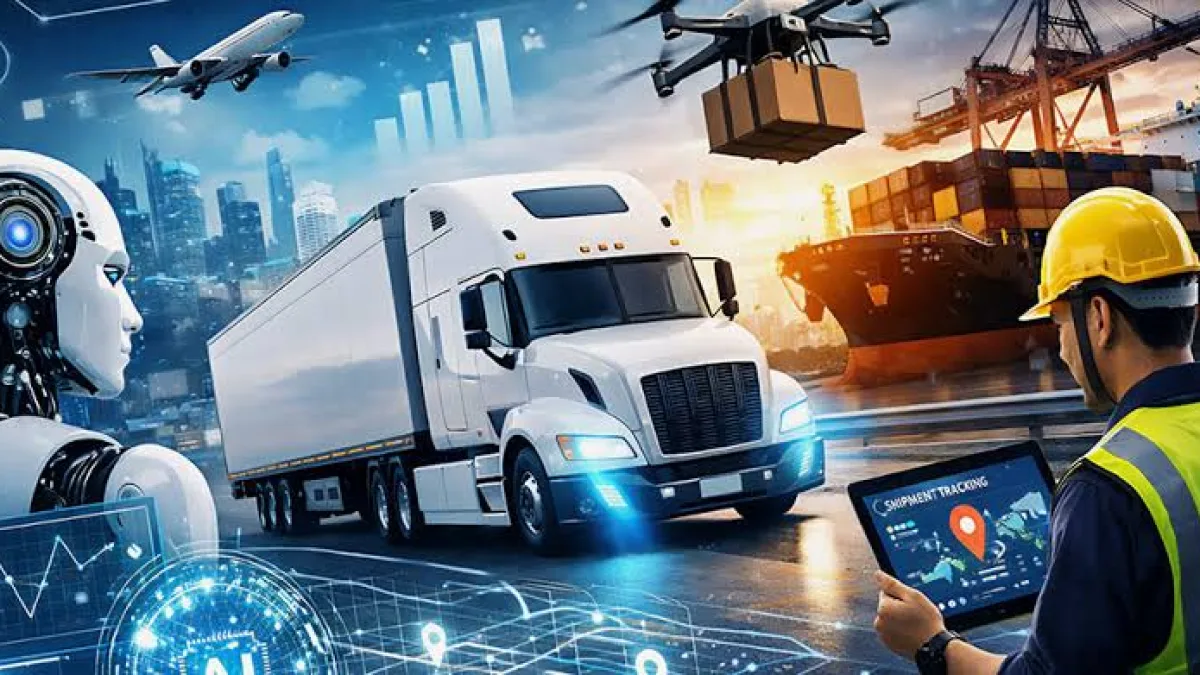
In 2026, Artificial Intelligence (AI) has become a driving force behind the transformation of the global logistics and supply chain industry. As e-commerce continues to expand and customer expectations for faster, more reliable deliveries increase, businesses are adopting AI-powered logistics solutions to improve efficiency, reduce operational costs, and enhance customer satisfaction. By integrating Machine Learning (ML), Internet of Things (IoT), Computer Vision, Robotics, Cloud Computing, Edge Computing, Digital Twins, Predictive Analytics, and Autonomous Vehicles, AI enables organizations to build intelligent supply chains capable of making real-time decisions and adapting to changing market conditions.
One of the most impactful applications of AI in logistics is intelligent route optimization. Traditional delivery planning often struggles with traffic congestion, weather disruptions, fuel costs, and changing customer demands. AI analyzes real-time GPS data, traffic reports, weather forecasts, road conditions, and delivery priorities to generate the fastest and most fuel-efficient routes. Logistics companies reduce delivery times, lower transportation expenses, and improve on-time performance while minimizing carbon emissions.
Warehouse automation has become another major advancement powered by AI. Modern fulfillment centers use autonomous mobile robots (AMRs), robotic arms, automated guided vehicles (AGVs), and computer vision systems to move inventory, pick products, pack orders, and organize storage. AI coordinates thousands of warehouse operations simultaneously, reducing human error, increasing productivity, and enabling businesses to process orders around the clock.
Demand forecasting has significantly improved through AI-powered predictive analytics. Machine learning analyzes historical sales data, seasonal trends, customer purchasing behavior, economic indicators, weather patterns, and promotional campaigns to accurately predict future demand. Companies optimize inventory levels, prevent stock shortages, reduce overstocking, and improve warehouse utilization while lowering inventory carrying costs.
Supply chain visibility has become more transparent through AI and IoT integration. Smart sensors attached to shipping containers, trucks, pallets, and cargo continuously transmit location, temperature, humidity, vibration, and handling information. AI analyzes this real-time data to monitor shipment conditions, detect delays, identify risks, and automatically notify logistics managers when corrective action is needed.
Fleet management has evolved with AI-driven predictive maintenance. Trucks, delivery vans, cargo ships, and aircraft continuously generate operational data including engine performance, tire pressure, fuel efficiency, battery health, and equipment status. AI identifies early signs of mechanical issues before failures occur, allowing maintenance teams to schedule repairs proactively and reduce costly downtime.
Computer Vision technology is improving logistics operations through automated package recognition, barcode scanning, damage detection, and inventory verification. AI-powered cameras inspect packages for defects, verify shipping labels, and ensure correct loading and unloading procedures. This minimizes shipping errors while improving operational accuracy across warehouses and distribution centers.
Autonomous delivery technologies are becoming increasingly common in logistics. AI-powered self-driving trucks, autonomous warehouse robots, sidewalk delivery robots, and drone delivery systems help businesses address labor shortages while improving delivery speed and operational efficiency. These intelligent systems navigate complex environments using sensors, LiDAR, radar, GPS, and computer vision with minimal human intervention.
AI is also transforming international shipping and freight management. Predictive analytics optimize cargo loading, shipping schedules, customs documentation, and port operations. Shipping companies reduce fuel consumption, avoid port congestion, improve vessel utilization, and enhance global trade efficiency through intelligent planning.
Digital Twin technology enables logistics providers to create virtual replicas of warehouses, transportation networks, ports, and distribution centers. AI continuously simulates operational scenarios, evaluates infrastructure performance, predicts bottlenecks, and recommends workflow improvements before implementing physical changes. This reduces operational risks while supporting continuous optimization.
Cloud computing provides centralized logistics management platforms capable of processing enormous amounts of operational data across global supply chains. Edge computing complements these systems by processing critical information locally within warehouses, vehicles, and industrial facilities, enabling immediate operational decisions even when internet connectivity is limited.
Cybersecurity has become increasingly important as logistics networks become more connected. AI-powered security platforms monitor supply chain systems, IoT devices, transportation infrastructure, and cloud environments for suspicious activities. Intelligent threat detection, encrypted communications, and Zero Trust security frameworks help protect sensitive logistics data and ensure business continuity.
Sustainability has become a strategic priority for logistics companies. AI helps reduce fuel consumption through route optimization, improves warehouse energy efficiency, minimizes packaging waste, and supports electric vehicle fleet management. Predictive analytics also optimize cargo capacity utilization, reducing unnecessary transportation and lowering greenhouse gas emissions.
Despite rapid innovation, AI-powered logistics still faces challenges including infrastructure modernization costs, cybersecurity risks, workforce reskilling, regulatory compliance, interoperability between legacy systems, and data integration across global supply chains. However, advances in AI software, robotics, 5G connectivity, cloud platforms, and autonomous transportation continue to accelerate industry adoption.
Looking toward the future, AI-powered logistics will integrate with blockchain-based supply chain tracking, autonomous freight corridors, quantum optimization, generative AI planning systems, and fully autonomous distribution centers. These technologies will create resilient, intelligent logistics ecosystems capable of adapting instantly to market changes while supporting sustainable global commerce.
AI in Smart Logistics 2026 represents the future of intelligent supply chain management. By combining artificial intelligence, robotics, IoT, predictive analytics, cloud computing, digital twins, and autonomous transportation, organizations can improve operational efficiency, strengthen supply chain resilience, reduce costs, enhance customer satisfaction, and drive the next generation of global logistics innovation.