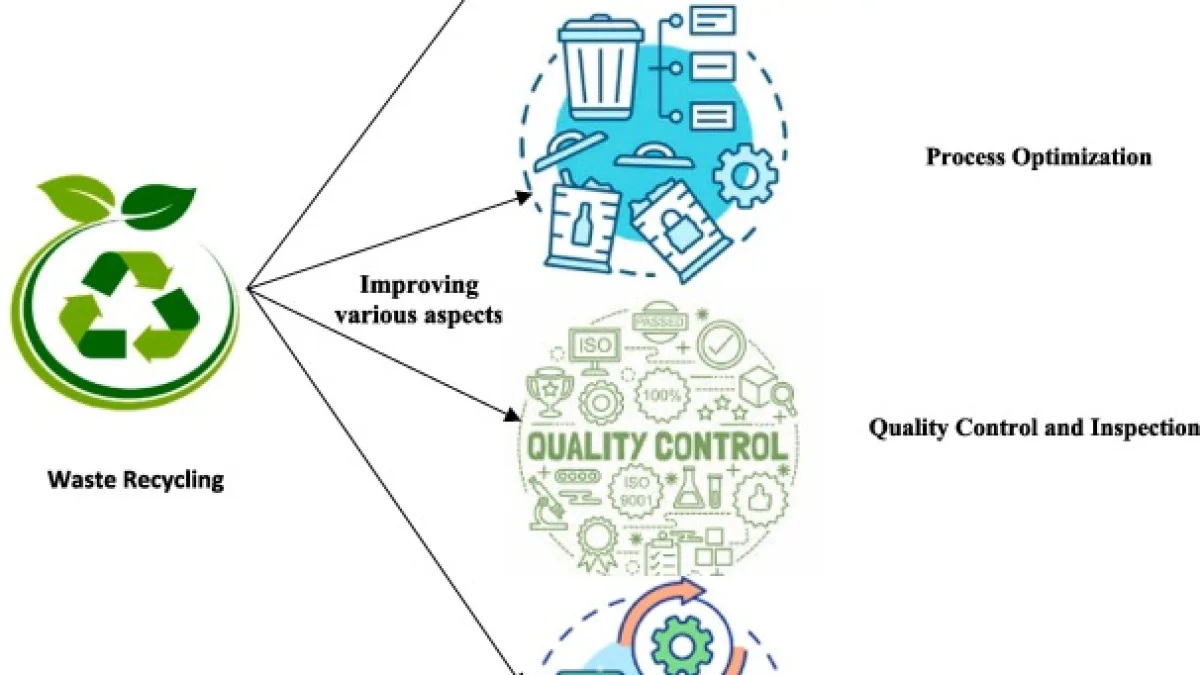
As urban populations continue to grow and environmental sustainability becomes a global priority, Artificial Intelligence (AI) in Smart Waste Management is transforming how cities, industries, and businesses handle waste in 2026. Traditional waste collection systems often rely on fixed schedules, manual sorting, and inefficient routing, leading to higher operational costs, overflowing bins, increased pollution, and excessive landfill use. AI-powered waste management combines Machine Learning (ML), Computer Vision, Internet of Things (IoT), robotics, cloud computing, edge computing, GPS tracking, and predictive analytics to create intelligent waste management systems that improve recycling efficiency, reduce environmental impact, and support the circular economy.
One of the most significant applications of AI is smart waste collection. IoT-enabled waste bins equipped with fill-level sensors continuously monitor how much waste they contain and transmit real-time data to cloud-based management systems. AI analyzes this information and automatically schedules waste collection only when necessary instead of relying on fixed routes. This reduces unnecessary fuel consumption, lowers transportation costs, decreases traffic congestion, and minimizes greenhouse gas emissions generated by waste collection vehicles.
AI is also transforming recycling through advanced computer vision technology. Modern recycling facilities use AI-powered cameras and robotic sorting systems to identify plastics, paper, glass, metals, electronics, and organic waste with remarkable speed and accuracy. Machine learning algorithms recognize materials based on shape, color, texture, and chemical composition, allowing robotic arms to separate recyclable materials more efficiently than manual sorting. This improves recycling rates while reducing contamination that often lowers the value of recycled materials.
Predictive analytics plays a crucial role in modern waste management. AI analyzes historical collection data, seasonal trends, population growth, weather conditions, and public events to forecast waste generation patterns. Municipal authorities can optimize staffing, vehicle deployment, landfill capacity, and recycling operations while preparing for periods of increased waste production such as festivals or holiday seasons.
Industrial waste management has also become more intelligent. Manufacturing facilities use AI to monitor production waste, identify opportunities for material reuse, reduce resource consumption, and optimize recycling processes. AI-driven analytics help companies lower disposal costs while supporting sustainability goals and regulatory compliance.
Smart cities increasingly integrate AI-powered waste management into broader urban infrastructure. Connected waste bins communicate with traffic systems, fleet management platforms, and municipal control centers. AI calculates the most efficient collection routes based on real-time traffic conditions, fuel efficiency, and vehicle capacity. This intelligent routing reduces operational expenses while improving public cleanliness and citizen satisfaction.
Hazardous waste management is another area benefiting from AI innovation. Computer vision and sensor technologies identify dangerous materials such as batteries, chemicals, medical waste, and electronic waste before they enter standard recycling streams. Automated detection helps prevent contamination, protects workers, and ensures hazardous materials are processed according to environmental regulations.
AI also supports the growing circular economy by helping organizations recover valuable materials from waste. Machine learning identifies recyclable components in discarded electronics, construction materials, automotive parts, and industrial equipment. Businesses can recover metals, plastics, and reusable components more efficiently, reducing dependence on raw material extraction while promoting sustainable manufacturing practices.
Public participation is improving through AI-powered mobile applications. Citizens receive personalized recycling guidance, waste disposal reminders, and information about nearby recycling centers. AI chatbots answer waste management questions, while image recognition allows users to identify recyclable items simply by taking a photo with their smartphone.
Environmental monitoring is becoming more advanced through AI. Satellites, drones, and IoT sensors detect illegal dumping, monitor landfill conditions, measure air quality, and identify pollution hotspots. Governments and environmental agencies use these insights to enforce regulations, protect ecosystems, and improve urban planning.
Robotics continues to reshape waste processing facilities. Autonomous robots transport recyclable materials, inspect waste streams, clean industrial recycling equipment, and assist workers with repetitive or hazardous tasks. AI-powered robotics improves workplace safety while increasing operational efficiency and reducing labor-intensive activities.
Cloud computing enables centralized monitoring of waste management operations across multiple cities and facilities. Managers access real-time dashboards displaying collection status, recycling performance, equipment health, fleet locations, and environmental metrics. Edge computing processes sensor data locally, allowing immediate responses to overflowing bins, equipment failures, or safety incidents even with limited internet connectivity.
Cybersecurity has become increasingly important as waste infrastructure becomes more connected. AI-powered security systems monitor networks for unauthorized access, protect IoT devices from cyber threats, and secure sensitive operational data. Strong encryption, multi-factor authentication, and continuous monitoring help maintain the reliability of smart waste management systems.
Despite its many benefits, AI-powered waste management still faces challenges including infrastructure investment, public awareness, recycling education, equipment costs, data integration, and regulatory compliance. However, advances in AI software, robotics, sensor technology, and cloud infrastructure continue to make smart waste management solutions more affordable and scalable for municipalities and private organizations.
Looking toward the future, AI-powered waste management will integrate with autonomous collection vehicles, blockchain-based recycling tracking, digital twins, advanced material recovery systems, and fully automated recycling facilities. These innovations will strengthen circular economy initiatives while reducing landfill dependence and supporting long-term environmental sustainability.
AI in Smart Waste Management 2026 represents a major advancement in sustainable urban development. By combining artificial intelligence, robotics, IoT, predictive analytics, cloud computing, and intelligent automation, organizations can reduce waste, improve recycling efficiency, lower operational costs, conserve natural resources, and build cleaner, smarter, and more sustainable communities.