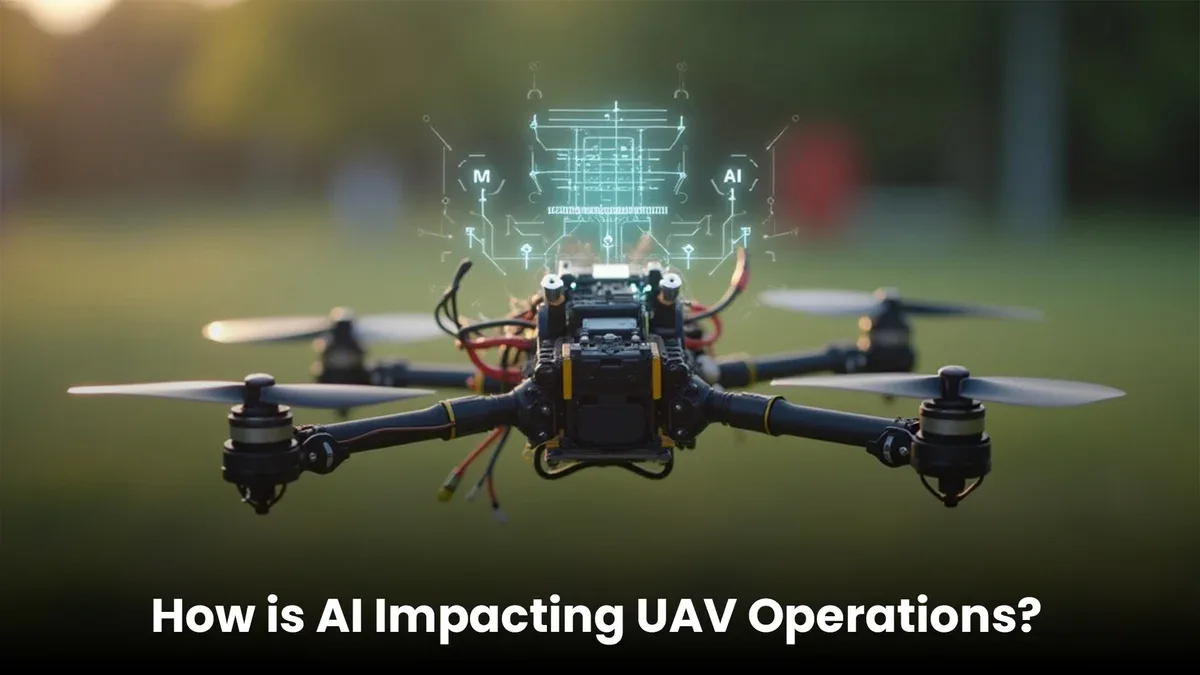
In 2026, AI-powered autonomous drones have become one of the most innovative technologies driving digital transformation across industries. By combining Artificial Intelligence (AI), Machine Learning (ML), Computer Vision, GPS navigation, LiDAR, Internet of Things (IoT), edge computing, and advanced sensors, drones are now capable of performing complex tasks with minimal human intervention. From delivering packages and inspecting infrastructure to monitoring crops and assisting emergency responders, intelligent drones are improving efficiency, reducing costs, and increasing safety across countless real-world applications.
Unlike traditional remotely controlled drones, autonomous drones can analyze their surroundings, recognize objects, avoid obstacles, plan flight paths, and make decisions in real time. AI-powered navigation systems continuously process information from onboard cameras, radar, LiDAR sensors, and GPS to ensure safe and accurate flight even in dynamic environments. These capabilities allow drones to complete missions with greater precision while reducing the need for constant human control.
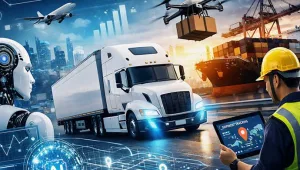
The logistics and e-commerce industries are rapidly adopting AI drones for last-mile delivery. Autonomous delivery drones transport small packages directly to customers, significantly reducing delivery times and transportation costs. AI optimizes delivery routes based on weather conditions, traffic patterns, battery life, and airspace regulations, ensuring faster and more efficient deliveries while reducing carbon emissions.
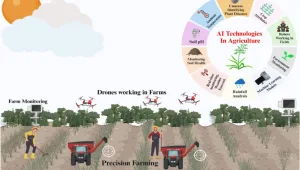
Agriculture is another industry experiencing a major transformation through AI-powered drones. Modern agricultural drones monitor crop health, analyze soil conditions, detect pests, identify nutrient deficiencies, and optimize irrigation using multispectral cameras and computer vision. Farmers receive real-time insights that enable precision farming, helping increase crop yields while reducing water consumption, fertilizer usage, and pesticide application.
Infrastructure inspection has become safer and more efficient with autonomous drones. Utility companies, construction firms, and government agencies deploy drones to inspect bridges, power lines, wind turbines, pipelines, railways, and telecommunications towers. AI automatically detects structural cracks, corrosion, equipment damage, and maintenance issues from high-resolution images, reducing inspection time while keeping workers away from hazardous environments.
Emergency response organizations rely heavily on intelligent drones during natural disasters and rescue operations. AI-powered drones equipped with thermal cameras, infrared sensors, and GPS can quickly locate missing persons, assess disaster zones, monitor wildfires, and deliver emergency supplies to inaccessible areas. Real-time aerial intelligence helps first responders make faster and more informed decisions during critical situations.
Public safety agencies also use AI drones for surveillance, traffic monitoring, crowd management, and border security. Computer vision enables drones to identify suspicious activities, monitor public events, and support law enforcement with real-time aerial situational awareness while improving operational efficiency.
Environmental monitoring has become increasingly advanced through AI drone technology. Conservation organizations use drones to monitor forests, wildlife populations, wetlands, and coastal ecosystems. AI analyzes aerial imagery to detect illegal logging, pollution, habitat destruction, and changes in biodiversity, helping researchers and governments protect natural resources more effectively.
Construction companies use autonomous drones to survey building sites, create 3D maps, measure construction progress, and inspect completed structures. AI-generated digital models improve project planning, reduce survey costs, and enable engineers to identify design issues before they become expensive construction problems.
The energy industry benefits from AI drones that inspect solar farms, offshore wind turbines, oil and gas pipelines, electrical substations, and transmission lines. Autonomous inspections reduce maintenance costs, improve worker safety, and ensure critical infrastructure remains operational through predictive maintenance.
AI-powered drones are also transforming media production, filmmaking, mapping, mining, insurance assessments, and scientific research. High-resolution aerial imaging combined with machine learning allows businesses to collect accurate data, generate detailed reports, and automate repetitive inspection tasks more efficiently than traditional methods.
Edge computing plays an important role by allowing drones to process AI algorithms directly onboard without depending on cloud connectivity. Real-time image recognition, obstacle avoidance, and navigation decisions happen instantly, making autonomous flight safer and more reliable in remote environments. Cloud platforms complement edge computing by storing flight data, training AI models, and supporting fleet management across multiple drone operations.
Cybersecurity is becoming increasingly important as commercial drone fleets expand. Organizations implement encrypted communications, secure authentication, AI-powered threat detection, and remote fleet monitoring to protect drones from unauthorized access, signal interference, and cyberattacks.
Despite rapid technological progress, AI-powered drones still face challenges including battery limitations, aviation regulations, privacy concerns, weather conditions, and air traffic integration. Ongoing advances in battery technology, AI processors, 5G connectivity, and autonomous flight software continue to improve drone capabilities while supporting broader commercial adoption.
Looking toward the future, AI-powered autonomous drones will become essential components of smart cities, intelligent logistics networks, precision agriculture, disaster management, infrastructure maintenance, and environmental conservation. Future drone ecosystems will integrate with robotics, digital twins, autonomous vehicles, and AI-driven traffic management systems to create highly connected and intelligent aerial operations.
AI-Powered Autonomous Drones in 2026 represent a major leap forward in intelligent automation. By combining artificial intelligence, computer vision, edge computing, IoT, autonomous navigation, and advanced analytics, drones are enabling safer operations, improving efficiency, reducing operational costs, and opening new opportunities for innovation across industries worldwide.