In 2026, Artificial Intelligence (AI) and Digital Twin Technology are transforming how businesses design, monitor, and optimize physical assets. A digital twin is a virtual replica of a physical object, machine, building, factory, or even an entire city that continuously receives real-time data from sensors and connected devices. When combined with AI, Machine Learning (ML), the Internet of Things (IoT), cloud computing, edge computing, and predictive analytics, digital twins become intelligent systems capable of simulating real-world conditions, predicting future outcomes, and recommending optimal actions before problems occur.
Traditional monitoring systems often provide historical reports that require engineers to manually analyze equipment performance. AI-powered digital twins go much further by continuously collecting data from sensors, cameras, GPS devices, industrial equipment, and enterprise systems. AI analyzes this information in real time, allowing organizations to detect abnormalities, forecast failures, optimize operations, and improve decision-making with remarkable accuracy.
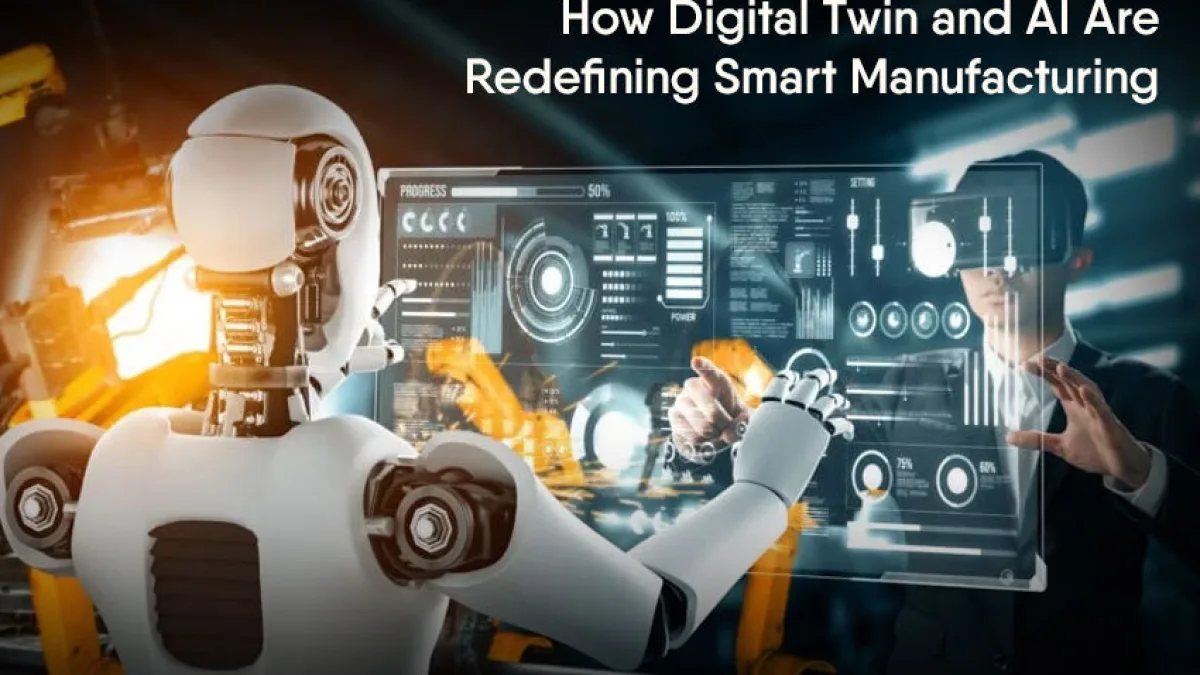
One of the biggest applications of AI-powered digital twins is smart manufacturing. Modern factories use digital twins to create virtual models of production lines, robotic systems, conveyor belts, and industrial machinery. Engineers can simulate production processes before implementing changes, helping manufacturers reduce downtime, improve product quality, optimize workflows, and minimize waste. AI continuously evaluates equipment performance and recommends operational improvements based on real-time production data.
Predictive maintenance has become one of the most valuable benefits of digital twin technology. Industrial machines generate massive amounts of operational data, including temperature, vibration, pressure, energy consumption, and motor performance. AI analyzes these patterns to detect early signs of wear or malfunction long before equipment fails. Maintenance teams receive automated alerts, enabling repairs during scheduled maintenance windows instead of reacting to costly breakdowns that interrupt production.
The healthcare industry is increasingly adopting digital twins to improve patient care and medical research. AI-powered digital twins can simulate human organs, medical devices, and even patient-specific treatment scenarios. Doctors can evaluate treatment options, predict disease progression, and personalize therapies using virtual models before applying them in real clinical settings. Hospitals also use digital twins to optimize patient flow, equipment utilization, and facility management.
Smart cities are benefiting significantly from AI-enabled digital twins. Urban planners create virtual replicas of transportation networks, utilities, buildings, and public infrastructure. AI analyzes traffic patterns, energy consumption, weather conditions, and environmental data to optimize city operations. Governments use these simulations to improve emergency response, reduce traffic congestion, enhance public transportation, and support sustainable urban development.
The energy sector is leveraging digital twins to optimize renewable energy systems, power plants, electrical grids, and utility infrastructure. AI monitors wind turbines, solar farms, hydroelectric facilities, and transmission networks in real time, identifying performance issues and recommending efficiency improvements. Predictive maintenance reduces equipment failures while maximizing energy production and minimizing operational costs.
Construction companies are using digital twins throughout the entire building lifecycle. During design, engineers simulate structural performance and construction workflows to identify potential issues before construction begins. Once buildings are operational, AI monitors HVAC systems, elevators, lighting, security systems, and energy consumption to improve efficiency, reduce maintenance expenses, and extend infrastructure lifespan.
The automotive and aerospace industries rely heavily on digital twins to improve product development and operational performance. Engineers create virtual models of vehicles, aircraft, and spacecraft to simulate real-world conditions, test safety features, optimize fuel efficiency, and evaluate component durability without building multiple physical prototypes. AI accelerates innovation while reducing development time and engineering costs.
Supply chain management has become more intelligent through digital twin technology. Organizations build virtual models of warehouses, transportation networks, suppliers, and distribution centers. AI analyzes inventory levels, shipping routes, customer demand, and logistics performance to identify bottlenecks, optimize inventory, and improve delivery efficiency. Businesses gain greater visibility across global supply chains while responding more quickly to market disruptions.
Cloud computing provides the scalable infrastructure required to store and process enormous volumes of digital twin data, while edge computing enables real-time processing near industrial equipment. This hybrid architecture allows organizations to perform immediate operational decisions locally while using cloud platforms for advanced analytics, long-term storage, and AI model training.
Cybersecurity is becoming increasingly important as digital twins connect with critical infrastructure. AI-powered security platforms monitor connected devices, industrial control systems, and enterprise networks for suspicious activity. Zero-trust architecture, encrypted communications, identity management, and continuous threat detection help protect sensitive operational data and ensure the integrity of digital twin environments.
Sustainability is another significant advantage of AI-powered digital twins. Organizations can simulate energy consumption, optimize resource utilization, reduce carbon emissions, minimize material waste, and improve environmental performance before implementing operational changes. These capabilities support corporate sustainability goals while reducing operating expenses.
Despite rapid adoption, digital twin technology still faces challenges including high implementation costs, data integration complexity, cybersecurity risks, interoperability between legacy systems, and the need for skilled professionals. However, advances in AI software, IoT sensors, cloud infrastructure, 5G connectivity, and industrial automation are making digital twin solutions increasingly accessible across industries.
Looking ahead, AI-powered digital twins will become the foundation of next-generation intelligent enterprises. Future systems will integrate autonomous robotics, generative AI, augmented reality, blockchain, quantum computing, and advanced simulation platforms to create fully autonomous industrial ecosystems capable of self-monitoring, self-optimizing, and continuous learning.
AI in Digital Twin Technology 2026 represents one of the most significant innovations driving Industry 5.0 and digital transformation. By combining artificial intelligence, IoT, predictive analytics, cloud computing, simulation technology, and intelligent automation, organizations can improve operational efficiency, reduce costs, enhance sustainability, strengthen decision-making, and accelerate innovation across manufacturing, healthcare, energy, transportation, construction, and smart city infrastructure.