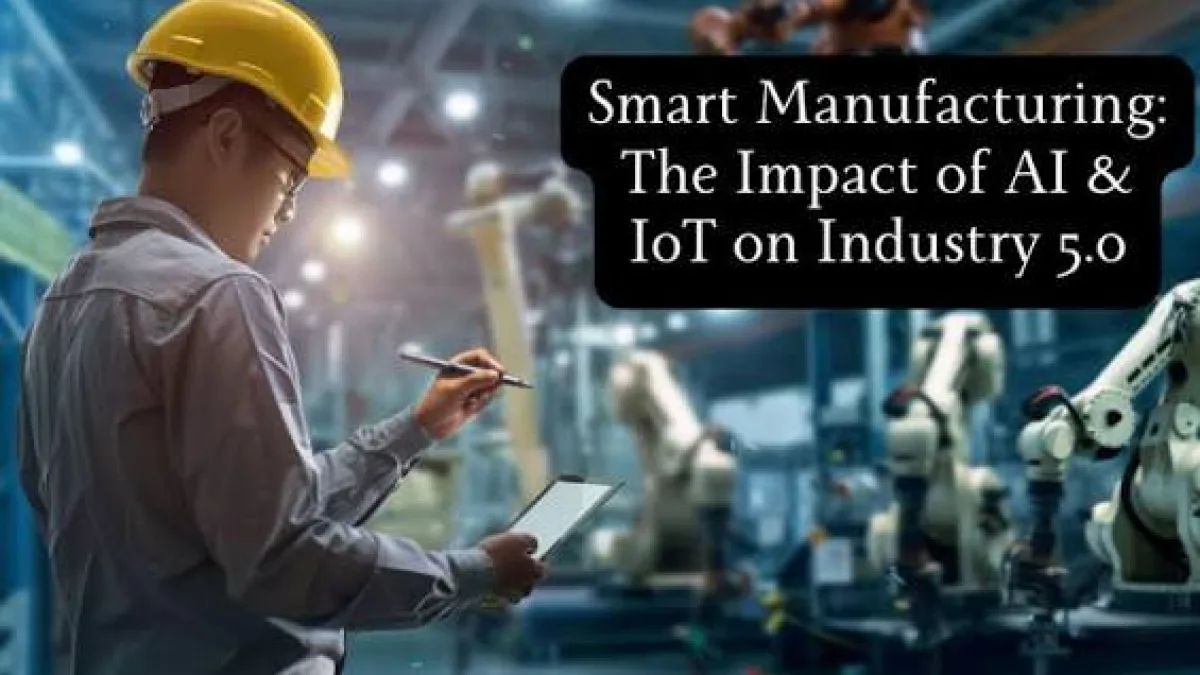
In 2026, Artificial Intelligence (AI) has become the foundation of modern smart manufacturing. Factories around the world are rapidly adopting AI-powered technologies to improve productivity, reduce operational costs, enhance product quality, and build more resilient supply chains. By combining Machine Learning (ML), Computer Vision, Internet of Things (IoT), robotics, cloud computing, edge computing, digital twins, and predictive analytics, manufacturers are transforming traditional production facilities into intelligent, highly automated environments that support the vision of Industry 5.0.
One of the most valuable applications of AI in manufacturing is predictive maintenance. Industrial machines continuously generate data related to temperature, vibration, pressure, motor performance, and energy consumption. AI analyzes these patterns in real time to detect early signs of wear or malfunction before equipment fails. Instead of relying on fixed maintenance schedules, manufacturers can perform maintenance only when necessary, reducing downtime, extending equipment lifespan, and lowering repair costs.
Quality control has also been transformed through AI-powered computer vision systems. High-speed cameras installed on production lines inspect products for defects such as scratches, misalignments, cracks, incorrect assembly, and packaging errors. Machine learning algorithms identify even tiny defects that may be difficult for human inspectors to detect, improving product consistency while reducing waste and customer complaints.
AI-driven industrial automation enables robots and collaborative robots (cobots) to perform complex manufacturing tasks with greater flexibility. Unlike traditional robots that follow fixed instructions, AI-powered robots can adapt to changing production requirements, recognize objects, and safely work alongside human employees. This improves efficiency while allowing workers to focus on higher-value tasks such as process optimization, innovation, and supervision.
Production planning and scheduling have become significantly more intelligent through AI. Manufacturing systems analyze customer orders, inventory levels, machine availability, workforce capacity, and supply chain conditions to optimize production schedules automatically. AI can prioritize urgent orders, minimize changeover times, and maximize equipment utilization, helping factories respond quickly to changing market demands.
Supply chain resilience is another major benefit of AI-powered manufacturing. Machine learning models monitor supplier performance, transportation delays, raw material availability, weather disruptions, and geopolitical risks. AI predicts potential supply chain bottlenecks and recommends alternative sourcing strategies before production is affected.
Digital Twin technology plays a critical role in smart manufacturing. Manufacturers create virtual replicas of machines, production lines, and entire factories that receive continuous real-time data from connected sensors. AI simulates different operating scenarios, predicts performance issues, and tests process improvements before implementing changes in the physical factory. This reduces operational risk while accelerating innovation.
Energy management has become increasingly important as manufacturers pursue sustainability goals. AI analyzes electricity consumption, equipment efficiency, production schedules, and utility pricing to optimize energy usage across the factory. Intelligent systems automatically adjust lighting, HVAC systems, and machine operations to reduce energy waste and lower carbon emissions.
Edge computing enhances manufacturing operations by processing AI workloads directly on factory equipment or local servers. Time-sensitive tasks such as defect detection, robot control, and machine monitoring can be performed instantly without depending entirely on cloud connectivity. Cloud platforms complement edge systems by providing large-scale data storage, advanced analytics, and AI model training.
Worker safety has improved through AI-powered monitoring systems. Computer vision can detect unsafe behaviors, missing protective equipment, hazardous conditions, and restricted-area violations in real time. Automated alerts help prevent accidents while supporting workplace safety compliance.
Despite its advantages, AI in smart manufacturing still faces challenges including implementation costs, cybersecurity risks, workforce training, integration with legacy equipment, and data standardization. However, advances in AI software, industrial IoT devices, robotics, 5G connectivity, and cloud infrastructure continue to accelerate adoption across manufacturers of all sizes.
Looking toward the future, AI-powered manufacturing will integrate with autonomous supply chains, generative AI design tools, quantum optimization, advanced robotics, and fully connected smart factories. These technologies will create highly adaptive production environments capable of continuous learning, self-optimization, and real-time collaboration across global manufacturing networks.
AI in Smart Manufacturing 2026 represents a major step toward the future of industrial innovation. By combining artificial intelligence, predictive analytics, robotics, IoT, digital twins, cloud computing, and intelligent automation, manufacturers can improve efficiency, reduce costs, enhance product quality, strengthen supply chain resilience, and build more sustainable and competitive operations in the era of Industry 5.0.