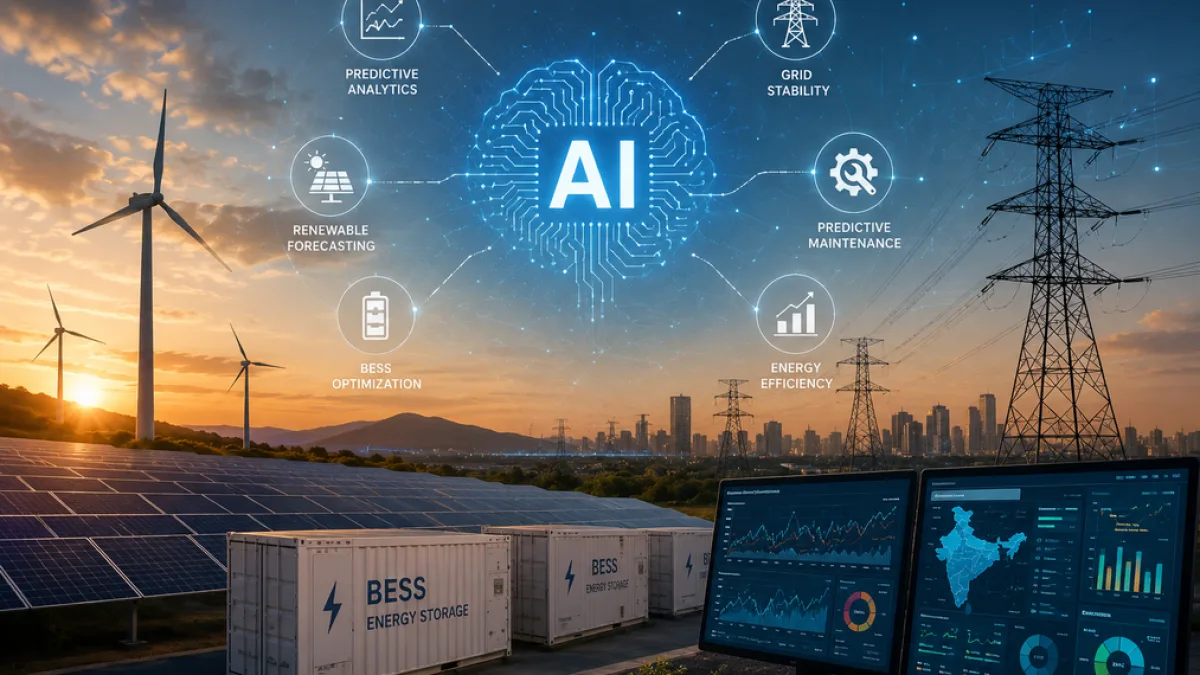
In 2026, Artificial Intelligence (AI) is playing a critical role in the evolution of smart energy storage systems. As renewable energy sources such as solar and wind become increasingly important, efficient energy storage is essential for maintaining grid stability and ensuring reliable electricity supply. AI-powered battery management systems, predictive analytics, IoT sensors, cloud computing, edge computing, and digital twins are helping utilities, businesses, and energy providers optimize storage performance, reduce costs, and accelerate the transition to a sustainable energy future.
One of the most important applications of AI is advanced battery management. AI continuously monitors battery temperature, charge levels, voltage, current flow, and degradation patterns. Machine learning algorithms analyze this data to optimize charging and discharging cycles, extending battery lifespan while improving energy efficiency.
Grid stability has become a major challenge as renewable energy generation fluctuates throughout the day. AI-powered energy storage systems predict electricity demand, renewable generation levels, and grid conditions in real time. Intelligent algorithms automatically store excess energy during periods of high renewable production and release it when demand increases.
Predictive maintenance is another significant benefit of AI in energy storage. Battery systems generate large amounts of operational data that AI analyzes to identify early signs of failure. Utilities can perform maintenance before problems occur, reducing downtime and improving system reliability.
Renewable energy integration is becoming more efficient through AI. Solar farms and wind farms use AI to forecast power generation based on weather conditions, satellite imagery, and historical performance data. Energy storage systems then adjust charging strategies to maximize the use of clean energy while minimizing dependence on fossil-fuel backup power.
Electric vehicle (EV) charging infrastructure is increasingly connected to AI-powered storage networks. Intelligent charging systems analyze electricity prices, grid demand, renewable availability, and user behavior to optimize charging schedules. This reduces stress on the grid and lowers charging costs for consumers.
Digital Twin technology is helping energy providers simulate battery performance under different operating conditions. Virtual models of storage facilities receive real-time sensor data, allowing AI to predict future performance, evaluate expansion plans, and optimize operational strategies before implementing physical changes.
Edge computing enables storage systems to make rapid local decisions without relying entirely on cloud connectivity. Battery controllers can respond instantly to grid fluctuations, voltage changes, and emergency conditions, improving overall system responsiveness.
Cloud computing complements edge systems by providing large-scale analytics, long-term data storage, fleet-wide monitoring, and AI model training. Energy operators can manage multiple storage facilities through centralized dashboards that provide real-time insights into performance and capacity.
Cybersecurity has become increasingly important as energy storage infrastructure becomes more connected. AI-powered security systems monitor networks for suspicious activity, detect potential cyber threats, and protect critical energy infrastructure through encrypted communications and continuous monitoring.
Sustainability is one of the greatest advantages of AI-driven energy storage. By improving battery efficiency, reducing energy waste, optimizing renewable integration, and extending equipment lifespan, AI helps lower greenhouse gas emissions and supports global climate goals.
Despite its many benefits, AI in energy storage still faces challenges including high implementation costs, battery material constraints, cybersecurity risks, integration with legacy grid infrastructure, and the need for skilled energy and AI professionals. However, advances in battery technology, AI software, cloud platforms, and smart grid systems continue to accelerate adoption.
Looking toward the future, AI-powered energy storage will integrate with autonomous energy markets, blockchain-based energy trading, vehicle-to-grid systems, quantum optimization, and fully decentralized smart grids. These innovations will create highly resilient energy ecosystems capable of balancing renewable generation, storage, and consumption in real time.
AI in Smart Energy Storage 2026 represents a major milestone in the transformation of global energy infrastructure. By combining artificial intelligence, predictive analytics, IoT, digital twins, cloud computing, edge computing, and intelligent battery management, organizations can improve grid reliability, maximize renewable energy utilization, reduce operational costs, and build a cleaner, more sustainable energy future.