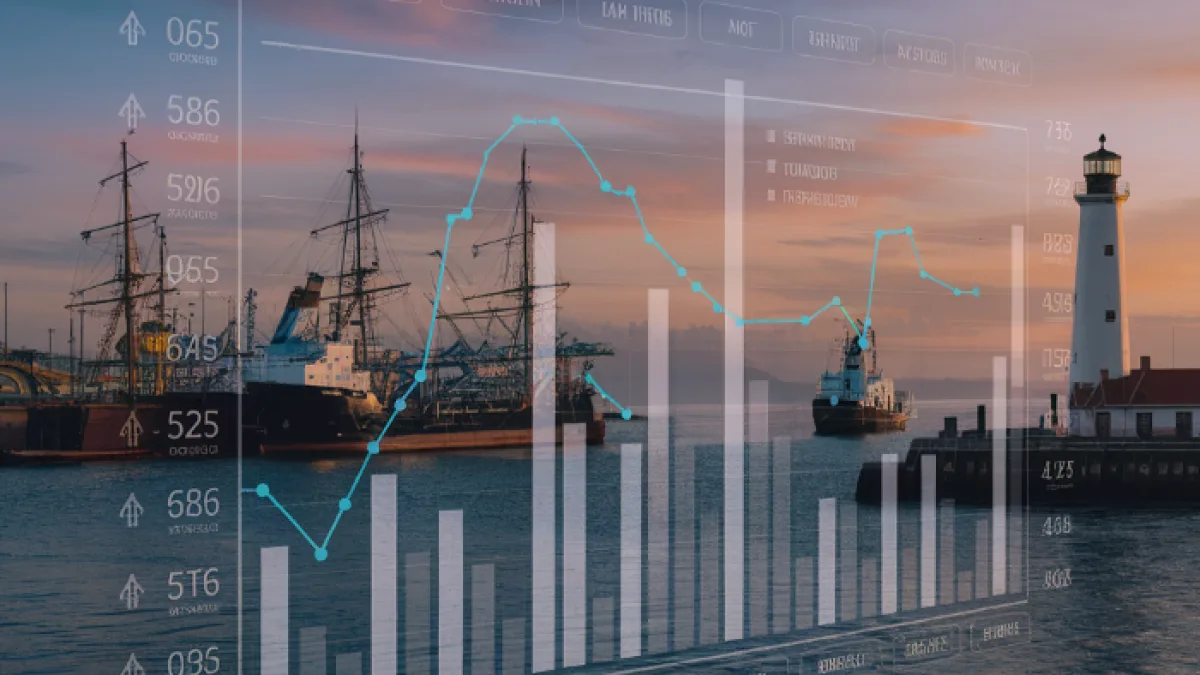
In 2026, Artificial Intelligence (AI) is reshaping the maritime industry by enabling smarter ports, more efficient shipping operations, and highly connected global logistics networks. As international trade continues to grow, ports are under increasing pressure to handle larger cargo volumes while reducing delays, operating costs, and environmental impact. By integrating Machine Learning (ML), Internet of Things (IoT), Computer Vision, autonomous equipment, cloud computing, edge computing, digital twins, predictive analytics, and smart logistics systems, AI is driving the evolution of smart ports and maritime logistics.
One of the most important applications of AI is port traffic management. AI analyzes vessel schedules, weather conditions, tidal data, berth availability, and cargo handling capacity to optimize ship arrivals and departures. Intelligent scheduling reduces waiting times, minimizes port congestion, and improves overall operational efficiency.
Container handling automation has become a major advancement in modern ports. AI-powered cranes, autonomous trucks, and robotic systems can move containers with minimal human intervention. Computer vision and sensor technologies help equipment identify containers, avoid obstacles, and optimize movement paths, increasing productivity while reducing operational errors.
Predictive maintenance is another significant benefit of AI in maritime logistics. Port cranes, conveyor systems, forklifts, and other heavy equipment continuously generate operational data. AI analyzes vibration, temperature, motor performance, and usage patterns to detect early signs of wear before failures occur, reducing downtime and maintenance costs.
Computer Vision is transforming cargo inspection and security operations. AI-powered cameras automatically read container numbers, verify cargo labels, detect damaged containers, monitor restricted areas, and identify suspicious activities in real time. This improves security, accelerates customs processing, and enhances cargo traceability.
Digital Twin technology is enabling ports to create virtual replicas of terminals, warehouses, shipping lanes, and logistics infrastructure. AI uses these digital twins to simulate vessel traffic, cargo flows, equipment utilization, and emergency scenarios, helping operators optimize capacity and evaluate infrastructure investments before implementing physical changes.
Supply chain visibility has improved significantly through AI-powered maritime platforms. IoT sensors attached to containers and vessels provide real-time data on location, temperature, humidity, vibration, and handling conditions. AI analyzes this information to predict delays, monitor cargo quality, and notify stakeholders of potential disruptions.
Route optimization is helping shipping companies reduce fuel consumption and improve delivery performance. AI evaluates weather forecasts, ocean currents, port congestion, fuel prices, and vessel performance to recommend the most efficient shipping routes. This lowers transportation costs while reducing greenhouse gas emissions.
Edge computing supports time-sensitive maritime operations by processing sensor and camera data directly within port facilities and vessels. Autonomous equipment, security systems, and cargo monitoring platforms can make immediate decisions without relying entirely on cloud connectivity.
Cloud computing complements edge systems by providing centralized fleet management, cargo tracking, operational analytics, and AI model training. Shipping companies and port authorities can monitor multiple ports and vessels through unified dashboards that provide real-time insights into performance and logistics operations.
Cybersecurity has become increasingly important as maritime infrastructure becomes more connected. AI-powered security platforms monitor vessel networks, port systems, IoT devices, and cloud environments for suspicious activity. Encrypted communications and continuous monitoring help protect critical maritime operations from cyber threats.
Sustainability is one of the greatest advantages of AI-driven port management. By optimizing vessel schedules, reducing idle time, improving cargo handling efficiency, and minimizing fuel consumption, AI helps lower emissions and supports the development of greener maritime transportation systems.
Despite its advantages, AI in maritime logistics still faces challenges including infrastructure modernization costs, interoperability between international systems, workforce training, data standardization, regulatory compliance, and cybersecurity risks. However, advances in autonomous technologies, 5G connectivity, cloud platforms, and smart logistics software continue to accelerate adoption across the global shipping industry.
Looking toward the future, AI-powered ports will integrate with autonomous ships, blockchain-based trade documentation, quantum optimization, drone inspections, and fully connected global logistics ecosystems. These innovations will create faster, safer, and more sustainable maritime supply chains capable of adapting to real-time market conditions.
AI in Smart Ports and Maritime Logistics 2026 represents a major milestone in the digital transformation of global trade. By combining artificial intelligence, predictive analytics, computer vision, autonomous equipment, digital twins, cloud computing, edge computing, and intelligent logistics, ports and shipping companies can improve efficiency, reduce costs, strengthen supply chain resilience, enhance security, and build more sustainable maritime operations for the future.