In 2026, Artificial Intelligence (AI) is revolutionizing the construction industry by making projects smarter, safer, faster, and more cost-efficient. Construction companies are increasingly adopting AI-powered technologies to optimize building design, improve project planning, enhance worker safety, reduce material waste, and accelerate project completion. By integrating Machine Learning (ML), Computer Vision, Internet of Things (IoT), Building Information Modeling (BIM), robotics, drones, cloud computing, edge computing, digital twins, and predictive analytics, AI is driving the next generation of smart construction.
One of the most important applications of AI in construction is intelligent project planning. AI analyzes historical project data, labor availability, weather forecasts, material costs, and supply chain conditions to create optimized construction schedules. Predictive analytics helps project managers identify potential delays before they occur, allowing teams to adjust resources and timelines proactively.
Building design optimization has become more advanced through AI-powered generative design tools. Architects and engineers can input project requirements such as budget, energy efficiency goals, structural constraints, and space utilization needs. AI then generates multiple design alternatives that maximize performance, reduce costs, and improve sustainability.
Computer Vision is transforming construction site monitoring. AI-powered cameras continuously analyze job sites to track progress, verify completed work, detect safety hazards, and identify deviations from approved plans. Automated visual inspections help ensure quality control while reducing the need for time-consuming manual site checks.
Worker safety has significantly improved through AI-driven monitoring systems. Computer vision can detect whether workers are wearing protective equipment, entering restricted areas, or engaging in unsafe behavior. Real-time alerts help prevent accidents and improve compliance with safety regulations.
Construction robotics is becoming increasingly common in large projects. AI-powered robots can perform tasks such as bricklaying, welding, concrete finishing, material transportation, and structural inspection. These robots improve precision, reduce repetitive labor, and increase productivity while supporting human workers.
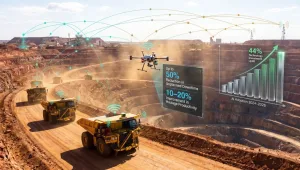
Drones equipped with AI are widely used for surveying, mapping, and progress tracking. High-resolution aerial images are analyzed by machine learning algorithms to measure earthwork volumes, monitor site conditions, inspect structures, and generate accurate 3D models. This improves decision-making while reducing surveying costs.
Digital Twin technology is emerging as a powerful tool in smart construction. Virtual replicas of buildings and infrastructure receive real-time data from sensors embedded in the structure. AI uses these digital twins to monitor structural health, predict maintenance needs, optimize energy usage, and simulate future performance scenarios.
Predictive maintenance extends beyond completed buildings to construction equipment as well. AI analyzes vibration, temperature, fuel consumption, and operational data from cranes, excavators, loaders, and other machinery to predict failures before they occur. This reduces equipment downtime and lowers maintenance expenses.
Sustainable construction is another major benefit of AI adoption. Intelligent systems optimize material usage, reduce waste, improve energy efficiency, and support the selection of environmentally friendly building materials. AI can also analyze building performance data to help achieve green building certifications and sustainability targets.
Cloud computing enables real-time collaboration between architects, engineers, contractors, suppliers, and project owners. AI-powered cloud platforms centralize project data, drawings, schedules, budgets, and progress reports, improving communication and reducing errors across distributed construction teams.
Edge computing supports time-sensitive construction applications by processing sensor and camera data directly on-site. Safety alerts, equipment monitoring, and quality inspections can be performed instantly without relying entirely on cloud connectivity.
Cybersecurity has become increasingly important as construction projects become more connected. AI-powered security systems monitor project networks, IoT devices, BIM platforms, and cloud environments for suspicious activity. Encrypted communications and continuous monitoring help protect sensitive project data.
Despite its advantages, AI in construction still faces challenges including implementation costs, workforce training, integration with legacy systems, data standardization, and regulatory compliance. However, advances in AI software, robotics, drone technology, cloud platforms, and digital construction tools continue to accelerate adoption across the industry.
Looking toward the future, AI-powered construction will integrate with autonomous machinery, advanced robotics, blockchain-based project management, smart city infrastructure, and fully connected digital twin ecosystems. These innovations will create more resilient, sustainable, and efficient construction environments capable of adapting to changing project conditions in real time.
AI in Smart Construction 2026 represents a major milestone in the digital transformation of the construction industry. By combining artificial intelligence, computer vision, robotics, drones, predictive analytics, digital twins, cloud computing, and intelligent automation, construction companies can improve safety, reduce costs, enhance quality, accelerate project delivery, and build smarter and more sustainable infrastructure for the future.