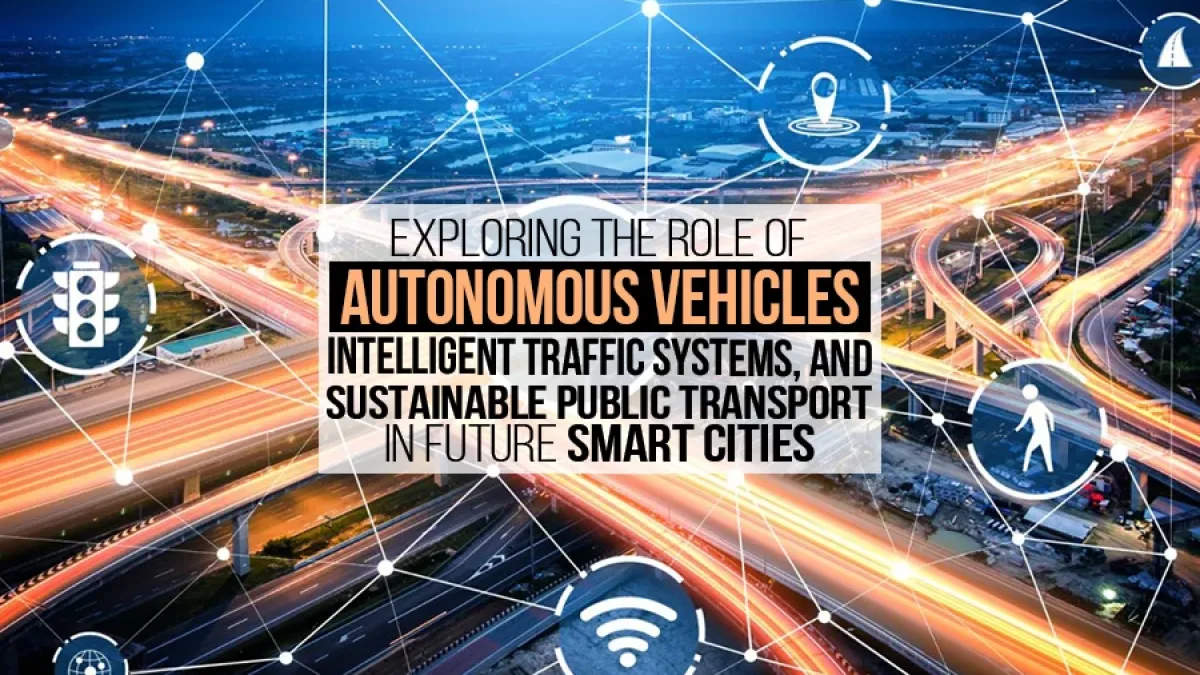
In 2026, Artificial Intelligence (AI) is reshaping transportation systems around the world. From autonomous vehicles and intelligent traffic management to smart public transit and connected infrastructure, AI is helping cities reduce congestion, improve safety, lower emissions, and create more efficient mobility networks. By integrating Machine Learning (ML), Computer Vision, Internet of Things (IoT), edge computing, cloud platforms, predictive analytics, digital twins, and 5G connectivity, transportation systems are becoming increasingly intelligent and responsive.
One of the most significant applications of AI is real-time traffic management. Traditional traffic systems rely on fixed signal timings, but AI-powered systems continuously analyze traffic flow, vehicle density, accidents, weather conditions, and road closures. Intelligent traffic lights automatically adjust signal timings to reduce congestion, shorten travel times, and improve fuel efficiency.
Autonomous vehicles are another major advancement driven by AI. Self-driving cars, delivery vehicles, and autonomous shuttles use computer vision, LiDAR, radar, GPS, and machine learning algorithms to detect obstacles, recognize road signs, monitor surrounding traffic, and make driving decisions in real time. AI enables vehicles to navigate complex urban environments while improving safety and reducing human error.
Public transportation systems are becoming smarter through AI-powered optimization. Transit agencies use predictive analytics to forecast passenger demand, optimize bus and train schedules, manage fleet deployment, and reduce overcrowding. Real-time monitoring helps operators respond quickly to delays, service disruptions, and changing commuter patterns.
Fleet management has also been transformed by AI. Logistics companies, ride-sharing platforms, and public transit operators use intelligent systems to optimize routes, monitor vehicle health, reduce fuel consumption, and improve maintenance planning. Predictive maintenance identifies potential mechanical issues before breakdowns occur, minimizing downtime and repair costs.
AI-powered computer vision improves road safety by detecting accidents, wrong-way drivers, pedestrians, cyclists, and hazardous conditions. Smart cameras installed on roads and intersections provide real-time alerts to traffic control centers and emergency responders, enabling faster incident management and reducing secondary accidents.
Electric vehicle (EV) infrastructure is increasingly integrated with AI. Intelligent charging networks analyze electricity demand, renewable energy availability, traffic patterns, and user behavior to optimize charging schedules. AI helps balance grid loads, reduce charging costs, and improve the utilization of charging stations.
Smart parking systems are another important innovation. AI-powered sensors and cameras detect available parking spaces and guide drivers through mobile apps or digital signage. This reduces the time spent searching for parking, lowers fuel consumption, and decreases urban traffic congestion.
Digital Twin technology is helping cities simulate transportation networks before implementing infrastructure changes. Virtual models of roads, intersections, transit systems, and parking facilities receive real-time data from connected sensors. AI analyzes different scenarios to predict traffic impacts, optimize road designs, and improve urban mobility planning.
Edge computing enables transportation systems to process critical data locally. Autonomous vehicles, traffic signals, and roadside sensors can make immediate decisions without relying entirely on cloud connectivity. Cloud platforms complement edge systems by providing large-scale analytics, long-term data storage, and AI model training.
Cybersecurity has become a major priority as transportation infrastructure becomes more connected. AI-powered threat detection monitors vehicle networks, traffic control systems, charging stations, and transit platforms for suspicious activity. Encrypted communications, identity management, and continuous monitoring help protect critical transportation systems from cyber threats.
Sustainability is one of the greatest benefits of AI-driven transportation. By optimizing traffic flow, improving public transit efficiency, supporting electric vehicles, and reducing unnecessary fuel consumption, AI helps lower greenhouse gas emissions and improve urban air quality.
Despite rapid progress, AI in transportation still faces challenges including regulatory compliance, infrastructure modernization costs, data privacy concerns, interoperability between systems, and ensuring the safety of autonomous vehicles. However, advances in AI software, sensors, 5G networks, and smart infrastructure continue to accelerate adoption.
Looking toward the future, AI-powered transportation will integrate with autonomous delivery drones, connected smart cities, blockchain-based mobility services, quantum optimization, and fully autonomous public transit networks. These innovations will create safer, cleaner, and more efficient transportation ecosystems capable of adapting to real-time conditions.
AI in Smart Transportation 2026 represents a major step toward the future of mobility. By combining artificial intelligence, computer vision, IoT, predictive analytics, digital twins, edge computing, and intelligent automation, cities and transportation providers can improve safety, reduce congestion, lower emissions, enhance public transit services, and build smarter, more sustainable transportation networks.
In 2026, Artificial Intelligence (AI) is reshaping transportation systems around the world. From autonomous vehicles and intelligent traffic management to smart public transit and connected infrastructure, AI is helping cities reduce congestion, improve safety, lower emissions, and create more efficient mobility networks. By integrating Machine Learning (ML), Computer Vision, Internet of Things (IoT), edge computing, cloud platforms, predictive analytics, digital twins, and 5G connectivity, transportation systems are becoming increasingly intelligent and responsive.
One of the most significant applications of AI is real-time traffic management. Traditional traffic systems rely on fixed signal timings, but AI-powered systems continuously analyze traffic flow, vehicle density, accidents, weather conditions, and road closures. Intelligent traffic lights automatically adjust signal timings to reduce congestion, shorten travel times, and improve fuel efficiency.
Autonomous vehicles are another major advancement driven by AI. Self-driving cars, delivery vehicles, and autonomous shuttles use computer vision, LiDAR, radar, GPS, and machine learning algorithms to detect obstacles, recognize road signs, monitor surrounding traffic, and make driving decisions in real time. AI enables vehicles to navigate complex urban environments while improving safety and reducing human error.
Public transportation systems are becoming smarter through AI-powered optimization. Transit agencies use predictive analytics to forecast passenger demand, optimize bus and train schedules, manage fleet deployment, and reduce overcrowding. Real-time monitoring helps operators respond quickly to delays, service disruptions, and changing commuter patterns.
Fleet management has also been transformed by AI. Logistics companies, ride-sharing platforms, and public transit operators use intelligent systems to optimize routes, monitor vehicle health, reduce fuel consumption, and improve maintenance planning. Predictive maintenance identifies potential mechanical issues before breakdowns occur, minimizing downtime and repair costs.
AI-powered computer vision improves road safety by detecting accidents, wrong-way drivers, pedestrians, cyclists, and hazardous conditions. Smart cameras installed on roads and intersections provide real-time alerts to traffic control centers and emergency responders, enabling faster incident management and reducing secondary accidents.
Electric vehicle (EV) infrastructure is increasingly integrated with AI. Intelligent charging networks analyze electricity demand, renewable energy availability, traffic patterns, and user behavior to optimize charging schedules. AI helps balance grid loads, reduce charging costs, and improve the utilization of charging stations.
Smart parking systems are another important innovation. AI-powered sensors and cameras detect available parking spaces and guide drivers through mobile apps or digital signage. This reduces the time spent searching for parking, lowers fuel consumption, and decreases urban traffic congestion.
Digital Twin technology is helping cities simulate transportation networks before implementing infrastructure changes. Virtual models of roads, intersections, transit systems, and parking facilities receive real-time data from connected sensors. AI analyzes different scenarios to predict traffic impacts, optimize road designs, and improve urban mobility planning.
Edge computing enables transportation systems to process critical data locally. Autonomous vehicles, traffic signals, and roadside sensors can make immediate decisions without relying entirely on cloud connectivity. Cloud platforms complement edge systems by providing large-scale analytics, long-term data storage, and AI model training.
Cybersecurity has become a major priority as transportation infrastructure becomes more connected. AI-powered threat detection monitors vehicle networks, traffic control systems, charging stations, and transit platforms for suspicious activity. Encrypted communications, identity management, and continuous monitoring help protect critical transportation systems from cyber threats.
Sustainability is one of the greatest benefits of AI-driven transportation. By optimizing traffic flow, improving public transit efficiency, supporting electric vehicles, and reducing unnecessary fuel consumption, AI helps lower greenhouse gas emissions and improve urban air quality.
Despite rapid progress, AI in transportation still faces challenges including regulatory compliance, infrastructure modernization costs, data privacy concerns, interoperability between systems, and ensuring the safety of autonomous vehicles. However, advances in AI software, sensors, 5G networks, and smart infrastructure continue to accelerate adoption.
Looking toward the future, AI-powered transportation will integrate with autonomous delivery drones, connected smart cities, blockchain-based mobility services, quantum optimization, and fully autonomous public transit networks. These innovations will create safer, cleaner, and more efficient transportation ecosystems capable of adapting to real-time conditions.
AI in Smart Transportation 2026 represents a major step toward the future of mobility. By combining artificial intelligence, computer vision, IoT, predictive analytics, digital twins, edge computing, and intelligent automation, cities and transportation providers can improve safety, reduce congestion, lower emissions, enhance public transit services, and build smarter, more sustainable transportation networks.
In 2026, Artificial Intelligence (AI) is reshaping transportation systems around the world. From autonomous vehicles and intelligent traffic management to smart public transit and connected infrastructure, AI is helping cities reduce congestion, improve safety, lower emissions, and create more efficient mobility networks. By integrating Machine Learning (ML), Computer Vision, Internet of Things (IoT), edge computing, cloud platforms, predictive analytics, digital twins, and 5G connectivity, transportation systems are becoming increasingly intelligent and responsive.
One of the most significant applications of AI is real-time traffic management. Traditional traffic systems rely on fixed signal timings, but AI-powered systems continuously analyze traffic flow, vehicle density, accidents, weather conditions, and road closures. Intelligent traffic lights automatically adjust signal timings to reduce congestion, shorten travel times, and improve fuel efficiency.
Autonomous vehicles are another major advancement driven by AI. Self-driving cars, delivery vehicles, and autonomous shuttles use computer vision, LiDAR, radar, GPS, and machine learning algorithms to detect obstacles, recognize road signs, monitor surrounding traffic, and make driving decisions in real time. AI enables vehicles to navigate complex urban environments while improving safety and reducing human error.
Public transportation systems are becoming smarter through AI-powered optimization. Transit agencies use predictive analytics to forecast passenger demand, optimize bus and train schedules, manage fleet deployment, and reduce overcrowding. Real-time monitoring helps operators respond quickly to delays, service disruptions, and changing commuter patterns.
Fleet management has also been transformed by AI. Logistics companies, ride-sharing platforms, and public transit operators use intelligent systems to optimize routes, monitor vehicle health, reduce fuel consumption, and improve maintenance planning. Predictive maintenance identifies potential mechanical issues before breakdowns occur, minimizing downtime and repair costs.
AI-powered computer vision improves road safety by detecting accidents, wrong-way drivers, pedestrians, cyclists, and hazardous conditions. Smart cameras installed on roads and intersections provide real-time alerts to traffic control centers and emergency responders, enabling faster incident management and reducing secondary accidents.
Electric vehicle (EV) infrastructure is increasingly integrated with AI. Intelligent charging networks analyze electricity demand, renewable energy availability, traffic patterns, and user behavior to optimize charging schedules. AI helps balance grid loads, reduce charging costs, and improve the utilization of charging stations.
Smart parking systems are another important innovation. AI-powered sensors and cameras detect available parking spaces and guide drivers through mobile apps or digital signage. This reduces the time spent searching for parking, lowers fuel consumption, and decreases urban traffic congestion.
Digital Twin technology is helping cities simulate transportation networks before implementing infrastructure changes. Virtual models of roads, intersections, transit systems, and parking facilities receive real-time data from connected sensors. AI analyzes different scenarios to predict traffic impacts, optimize road designs, and improve urban mobility planning.
Edge computing enables transportation systems to process critical data locally. Autonomous vehicles, traffic signals, and roadside sensors can make immediate decisions without relying entirely on cloud connectivity. Cloud platforms complement edge systems by providing large-scale analytics, long-term data storage, and AI model training.
Cybersecurity has become a major priority as transportation infrastructure becomes more connected. AI-powered threat detection monitors vehicle networks, traffic control systems, charging stations, and transit platforms for suspicious activity. Encrypted communications, identity management, and continuous monitoring help protect critical transportation systems from cyber threats.
Sustainability is one of the greatest benefits of AI-driven transportation. By optimizing traffic flow, improving public transit efficiency, supporting electric vehicles, and reducing unnecessary fuel consumption, AI helps lower greenhouse gas emissions and improve urban air quality.
Despite rapid progress, AI in transportation still faces challenges including regulatory compliance, infrastructure modernization costs, data privacy concerns, interoperability between systems, and ensuring the safety of autonomous vehicles. However, advances in AI software, sensors, 5G networks, and smart infrastructure continue to accelerate adoption.
Looking toward the future, AI-powered transportation will integrate with autonomous delivery drones, connected smart cities, blockchain-based mobility services, quantum optimization, and fully autonomous public transit networks. These innovations will create safer, cleaner, and more efficient transportation ecosystems capable of adapting to real-time conditions.
AI in Smart Transportation 2026 represents a major step toward the future of mobility. By combining artificial intelligence, computer vision, IoT, predictive analytics, digital twins, edge computing, and intelligent automation, cities and transportation providers can improve safety, reduce congestion, lower emissions, enhance public transit services, and build smarter, more sustainable transportation networks.