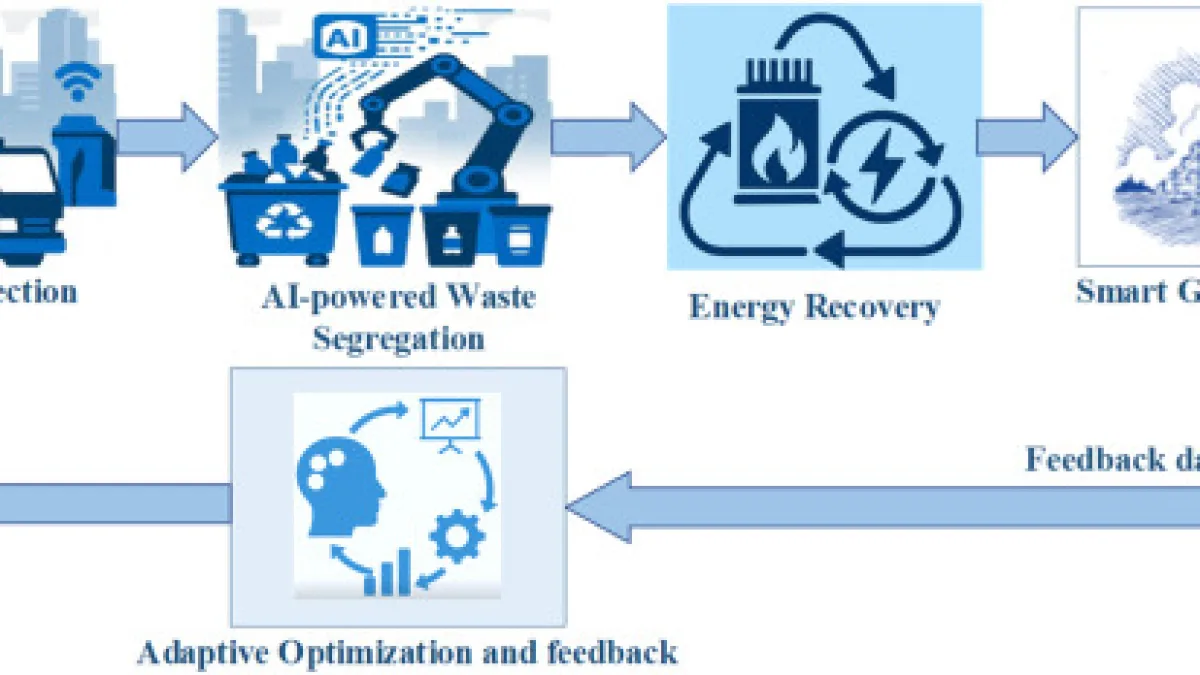
In 2026, Artificial Intelligence (AI) is playing a major role in transforming waste management into a valuable source of renewable energy. As cities and industries seek sustainable alternatives to landfilling and fossil-fuel dependence, AI-powered waste-to-energy systems are helping operators improve waste sorting, optimize energy production, reduce emissions, and support the circular economy. By integrating Machine Learning (ML), Computer Vision, Internet of Things (IoT) sensors, robotics, cloud computing, edge computing, predictive analytics, and digital twins, AI is creating highly intelligent smart waste-to-energy facilities.
One of the most important applications of AI is automated waste sorting. Computer vision systems equipped with AI-powered cameras can identify plastics, paper, metals, organic waste, and hazardous materials in real time. Robotic sorting systems separate recyclable materials before energy recovery, improving recycling rates and ensuring that only suitable waste streams enter waste-to-energy processes.
Energy production optimization has become significantly more efficient through AI. Waste-to-energy plants continuously generate operational data related to combustion temperature, fuel composition, steam pressure, turbine performance, and emissions. Machine learning algorithms analyze this information to optimize combustion efficiency, maximize electricity generation, and reduce fuel variability challenges.
Predictive maintenance is another major benefit of AI in waste-to-energy operations. Boilers, turbines, conveyors, shredders, and emission control systems are monitored continuously through IoT sensors. AI identifies early signs of wear, corrosion, vibration abnormalities, and equipment degradation before failures occur, reducing downtime and maintenance costs.
Emission monitoring has become more advanced with AI-powered analytics. Sensors continuously measure carbon dioxide, nitrogen oxides, sulfur compounds, particulate matter, and other pollutants. AI analyzes these readings in real time and automatically adjusts plant operations to maintain compliance with environmental regulations while minimizing emissions.
Digital Twin technology is enabling operators to create virtual replicas of waste-to-energy plants. These digital twins receive continuous real-time data from connected equipment. AI uses them to simulate operating conditions, evaluate process improvements, predict performance outcomes, and optimize energy recovery before implementing physical changes.
Smart logistics is improving waste collection and delivery operations. AI analyzes waste generation patterns, traffic conditions, vehicle capacity, and plant processing schedules to optimize transportation routes and ensure a steady supply of feedstock for energy production.
Edge computing supports time-sensitive control functions by processing sensor data directly within the facility. Combustion control systems, safety monitoring platforms, and emission management equipment can make immediate adjustments without relying entirely on cloud connectivity.
Cloud computing complements edge systems by providing centralized analytics, long-term operational reporting, multi-site monitoring, and AI model training. Plant operators can access real-time dashboards showing energy output, equipment health, waste throughput, and environmental performance.
Sustainability is one of the greatest advantages of AI-driven waste-to-energy systems. By diverting waste from landfills, recovering energy from non-recyclable materials, optimizing plant efficiency, and reducing greenhouse gas emissions, AI helps support renewable energy generation and circular economy initiatives.
Cybersecurity has become increasingly important as waste-to-energy facilities become more connected. AI-powered security platforms monitor industrial control systems, IoT devices, cloud environments, and operational networks for suspicious activity. Encrypted communications and continuous monitoring help protect critical energy infrastructure.
Despite its benefits, AI in waste-to-energy systems still faces challenges including high implementation costs, integration with legacy equipment, data quality management, workforce training, regulatory compliance, and cybersecurity risks. However, advances in AI software, industrial IoT, robotics, cloud platforms, and smart energy technologies continue to accelerate adoption.
Looking toward the future, AI-powered waste-to-energy facilities will integrate with autonomous waste collection vehicles, blockchain-based waste tracking, advanced carbon capture systems, quantum optimization, and fully connected circular economy networks. These innovations will create more efficient, cleaner, and more sustainable waste processing ecosystems.
AI in Smart Waste-to-Energy Systems 2026 represents a major milestone in the evolution of sustainable energy infrastructure. By combining artificial intelligence, predictive analytics, computer vision, IoT sensors, digital twins, cloud computing, edge computing, and intelligent automation, waste-to-energy operators can improve efficiency, maximize renewable energy recovery, reduce emissions, lower operational costs, and contribute to a cleaner and more sustainable future.