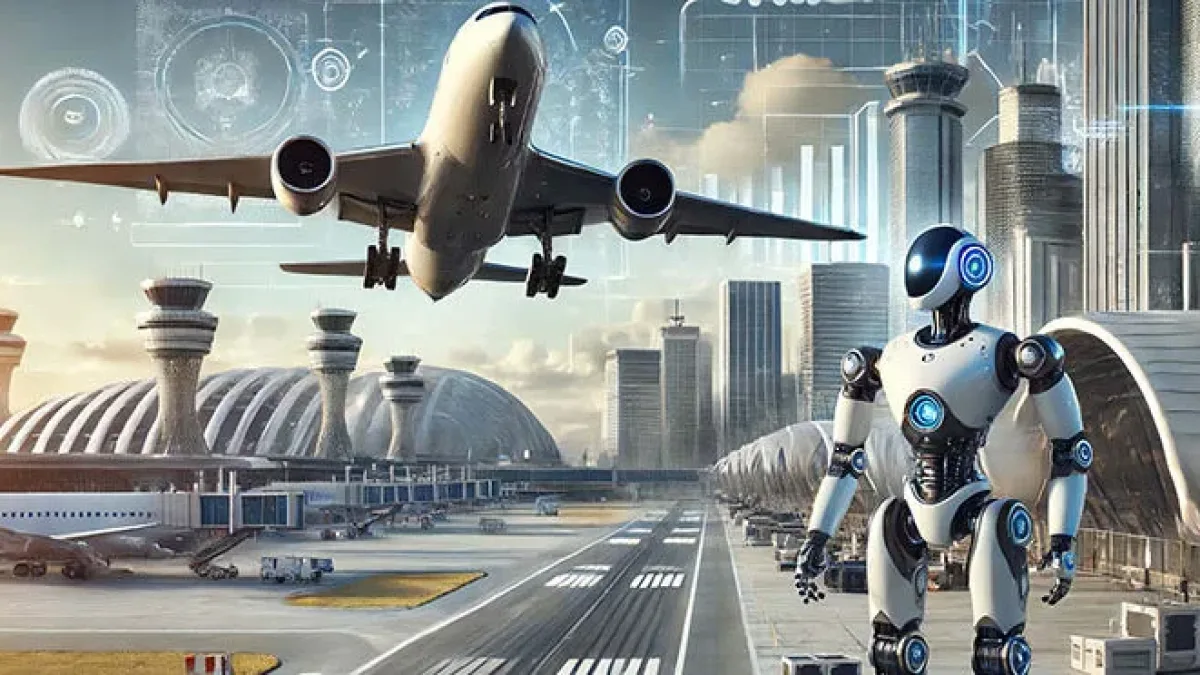
In 2026, Artificial Intelligence (AI) is transforming airports into highly connected, intelligent transportation hubs. As global air travel continues to recover and expand, airports face increasing pressure to improve passenger experience, enhance security, reduce delays, optimize operations, and lower environmental impact. By integrating Machine Learning (ML), Computer Vision, Internet of Things (IoT) sensors, cloud computing, edge computing, predictive analytics, digital twins, robotics, and autonomous systems, AI is driving the next generation of smart airport operations.
One of the most visible applications of AI is passenger experience optimization. AI-powered systems analyze passenger flow, check-in activity, security queue lengths, boarding schedules, and terminal congestion in real time. Airports can dynamically allocate staff, open additional checkpoints, and adjust boarding processes to reduce waiting times and improve overall traveler satisfaction.
Biometric identification has become increasingly common in smart airports. Computer vision and facial recognition technologies enable faster check-in, security verification, and boarding procedures. AI-powered identity systems help streamline passenger processing while maintaining high security standards.
Security screening has been significantly enhanced through AI-driven computer vision. Intelligent scanning systems automatically detect prohibited items, identify suspicious objects, and assist security personnel in analyzing X-ray images with greater accuracy. AI reduces false alarms while improving threat detection capabilities.
Air traffic management is another major area benefiting from AI. Machine learning algorithms analyze flight schedules, weather conditions, runway availability, aircraft movements, and airspace congestion to optimize takeoffs and landings. This helps reduce delays, improve fuel efficiency, and increase airport capacity.
Predictive maintenance is helping airports manage critical infrastructure such as baggage handling systems, escalators, jet bridges, runway lighting, and ground support equipment. AI analyzes vibration, temperature, energy consumption, and operational data to detect potential failures before they occur, reducing downtime and maintenance costs.
Smart baggage handling has become more efficient through AI-powered tracking and automation. IoT sensors and computer vision systems monitor baggage movement throughout the airport, helping identify misplaced luggage, optimize routing, and improve delivery accuracy.
Digital Twin technology is enabling airports to create virtual replicas of terminals, runways, taxiways, and operational systems. AI uses these digital twins to simulate passenger flow, emergency scenarios, infrastructure upgrades, and traffic management strategies before implementing changes in the physical airport.
Energy management is becoming increasingly important as airports pursue sustainability goals. AI analyzes lighting, HVAC systems, occupancy patterns, and energy demand to optimize power consumption across terminals and airport facilities, reducing operational costs and carbon emissions.
Edge computing supports time-sensitive airport applications by processing sensor and camera data locally. Security systems, baggage monitoring platforms, and operational control systems can make immediate decisions without relying entirely on cloud connectivity.
Cloud computing complements edge systems by providing centralized analytics, multi-airport monitoring, long-term data storage, and AI model training. Airport operators can access real-time dashboards showing passenger volumes, flight performance, equipment health, and operational efficiency.
Cybersecurity has become a major priority as airport infrastructure becomes more connected. AI-powered security platforms monitor operational networks, IoT devices, passenger systems, and cloud environments for suspicious activity. Encrypted communications and continuous monitoring help protect critical aviation infrastructure.
Sustainability is one of the greatest advantages of AI-driven airport management. By optimizing aircraft movements, reducing taxi times, improving energy efficiency, and supporting electric ground vehicles, AI helps lower fuel consumption and greenhouse gas emissions across airport operations.
Despite its many benefits, AI in airport operations still faces challenges including infrastructure modernization costs, data privacy concerns, regulatory compliance, interoperability between aviation systems, workforce training, and cybersecurity risks. However, advances in AI software, 5G connectivity, cloud platforms, and smart aviation technologies continue to accelerate adoption worldwide.
Looking toward the future, AI-powered airports will integrate with autonomous ground vehicles, advanced air mobility systems, blockchain-based passenger verification, quantum optimization, and fully connected smart city transportation networks. These innovations will create faster, safer, and more sustainable aviation ecosystems.
AI in Smart Airport Operations 2026 represents a major milestone in the digital transformation of the aviation industry. By combining artificial intelligence, predictive analytics, computer vision, IoT sensors, digital twins, cloud computing, edge computing, and intelligent automation, airports can improve passenger experience, enhance security, reduce delays, optimize operations, strengthen sustainability efforts, and build more resilient aviation infrastructure for the future.