In 2026, Artificial Intelligence (AI) is revolutionizing the food processing industry by improving product quality, increasing operational efficiency, reducing waste, and strengthening food safety. As consumer demand for safe, high-quality, and sustainably produced food continues to grow, manufacturers are adopting AI-powered technologies to optimize production lines, automate inspections, predict equipment failures, and manage complex supply chains. By integrating Machine Learning (ML), Computer Vision, Internet of Things (IoT) sensors, robotics, cloud computing, edge computing, predictive analytics, and digital twins, AI is creating highly intelligent smart food processing facilities.
One of the most important applications of AI is automated quality control. Computer vision systems equipped with high-speed cameras continuously inspect food products for defects such as discoloration, contamination, incorrect sizing, damaged packaging, and foreign objects. AI can detect issues that may be difficult for human inspectors to identify, improving product consistency and reducing the risk of unsafe products reaching consumers.
Food safety monitoring has become significantly more advanced through AI-powered analytics. Sensors installed throughout processing facilities measure temperature, humidity, microbial conditions, equipment sanitation, and environmental factors. AI analyzes this data in real time to identify potential contamination risks and ensure compliance with food safety regulations.
Predictive maintenance is helping manufacturers manage critical equipment such as mixers, conveyors, ovens, refrigeration systems, and packaging machines. AI evaluates vibration, temperature, motor performance, and energy consumption to predict failures before they occur, reducing downtime and preventing costly production interruptions.
Production optimization is another major benefit of AI in food processing. Machine learning analyzes ingredient quality, processing conditions, production schedules, and demand forecasts to optimize manufacturing parameters. This helps improve yield, reduce waste, and maintain consistent product quality across large-scale operations.
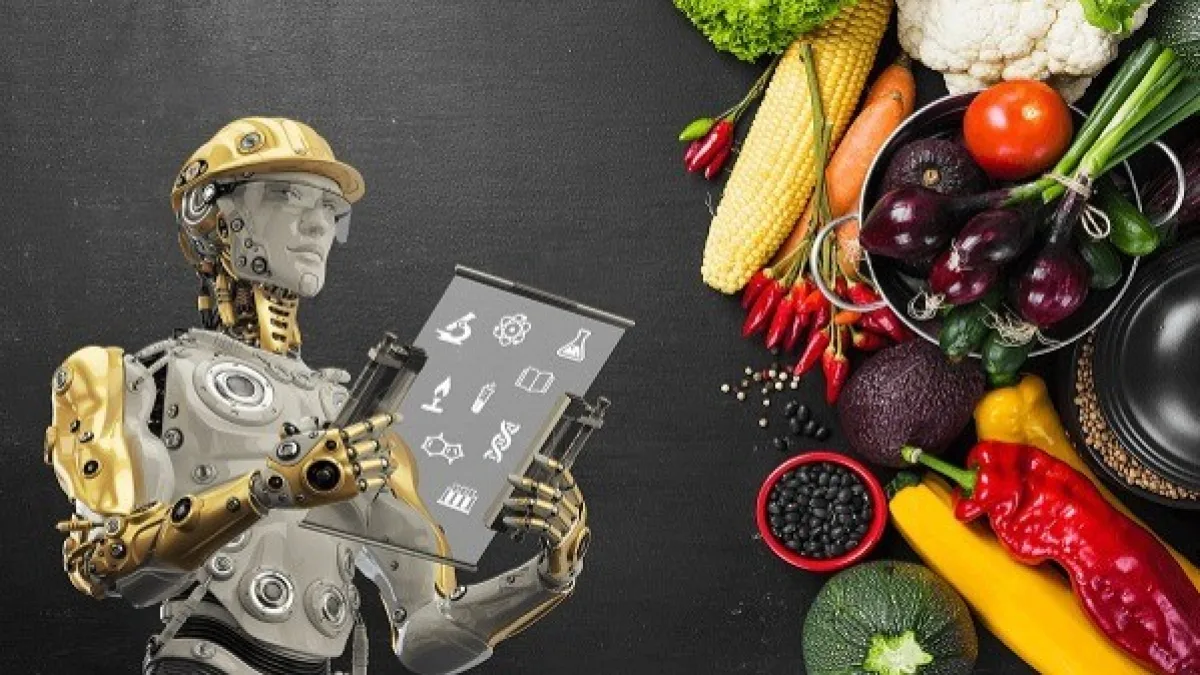
Robotics and automation are becoming increasingly common in smart food factories. AI-powered robots can sort products, package items, palletize shipments, and perform repetitive tasks with high precision. Collaborative robots (cobots) work safely alongside human employees, increasing productivity while reducing labor-intensive activities.
Demand forecasting enables food manufacturers to align production with market needs. AI analyzes historical sales data, seasonal trends, promotional campaigns, consumer behavior, and economic indicators to predict future demand. This helps manufacturers optimize inventory levels and reduce excess production.
Digital Twin technology is enabling food processors to create virtual replicas of production lines, storage facilities, and processing equipment. AI uses these digital twins to simulate operational scenarios, evaluate process improvements, predict bottlenecks, and optimize resource utilization before implementing physical changes.
Edge computing supports time-sensitive processing applications by analyzing sensor and camera data directly on the factory floor. Quality inspections, safety monitoring, and equipment control systems can make immediate decisions without relying entirely on cloud connectivity.
Cloud computing complements edge systems by providing centralized analytics, long-term data storage, multi-site monitoring, and AI model training. Food manufacturers can access real-time dashboards showing production performance, quality metrics, equipment health, and energy consumption across multiple facilities.
Sustainability is one of the greatest advantages of AI-driven food processing. By optimizing ingredient usage, reducing spoilage, improving energy efficiency, and minimizing packaging waste, AI helps manufacturers lower operational costs and reduce environmental impact.
Cybersecurity has become increasingly important as food processing infrastructure becomes more connected. AI-powered security platforms monitor industrial control systems, IoT devices, cloud environments, and operational networks for suspicious activity. Encrypted communications and continuous monitoring help protect critical food production systems.
Despite its many benefits, AI in food processing still faces challenges including implementation costs, integration with legacy equipment, workforce training, data quality management, regulatory compliance, and cybersecurity risks. However, advances in AI software, industrial IoT, robotics, cloud platforms, and smart manufacturing technologies continue to accelerate adoption across the food industry.
Looking toward the future, AI-powered food processing facilities will integrate with autonomous material handling systems, blockchain-based traceability, advanced digital twins, quantum optimization, and fully connected smart supply chain ecosystems. These innovations will create safer, more efficient, and more sustainable food production networks.
AI in Smart Food Processing 2026 represents a major milestone in the digital transformation of food manufacturing. By combining artificial intelligence, predictive analytics, computer vision, IoT sensors, digital twins, cloud computing, edge computing, and intelligent automation, food manufacturers can improve quality, strengthen food safety, reduce waste, optimize operations, lower energy consumption, and deliver safer and more sustainable products to consumers worldwide.