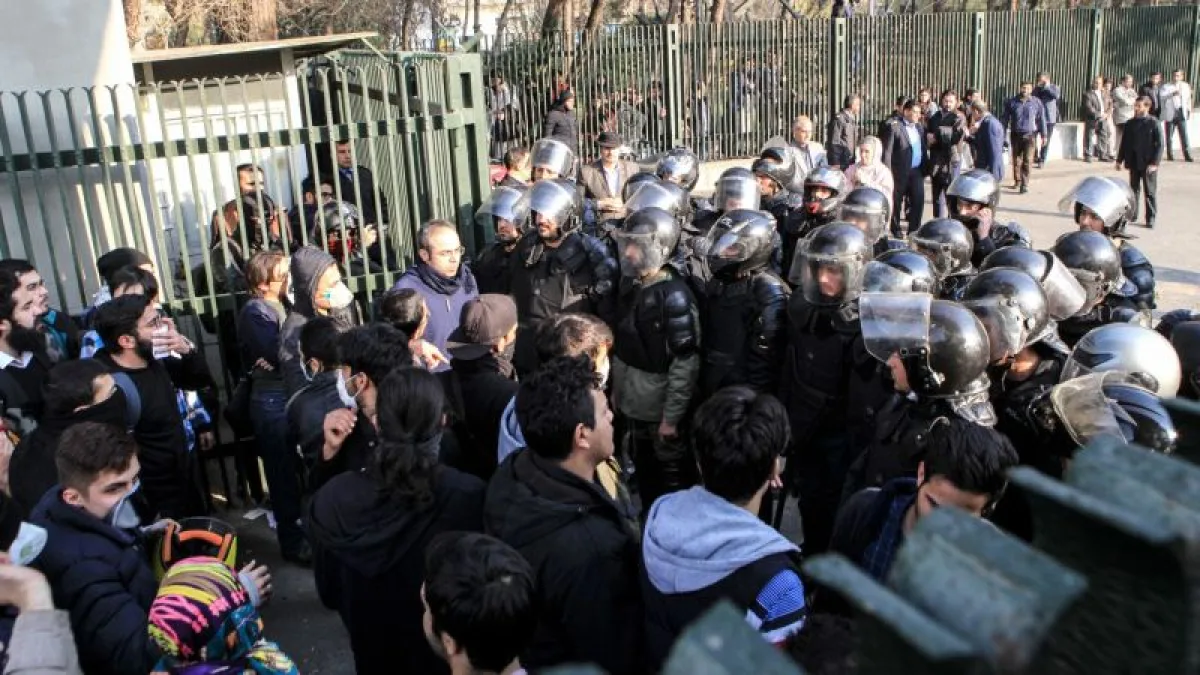
Students in Tehran staged anti-government demonstrations during memorial gatherings held for those killed in recent nationwide protests, according to local and diaspora-based Iranian media reports on Saturday.
The events marked the 40th day of mourning for victims of the unrest — a significant milestone in Shiite tradition — and drew both government critics and supporters into tense confrontations at several universities in the Iranian capital.
Clashes Reported at Sharif University of Technology
Video footage from Tehran’s Sharif University of Technology was independently verified by Agence France-Presse (AFP). The footage shows heated exchanges and physical scuffles breaking out among groups within a crowd. Protesters could be heard shouting “shameless” in Persian during the altercation.
Additional footage aired by the Persian-language channel Iran International, which operates from abroad, showed demonstrators chanting anti-government slogans inside the university campus.
Reports suggest that supporters of Iran’s religious leadership and anti-government protesters faced off during the gatherings.
Renewed Demonstrations After January Unrest
Iran’s latest wave of protests escalated on January 8 and 9, when demonstrations reached a peak across multiple cities. While exact casualty figures remain disputed, thousands are believed to have died during the unrest.
Under Shiite mourning customs, the 40th day after a person’s death is marked by public remembrance. This week’s gatherings were organized to honor those killed during the protests, prompting renewed demonstrations in Tehran and other cities.
Local media outlets reported that students assembled at several universities in the capital on Saturday to commemorate the victims.
Economic Crisis Triggered Initial Protests
The nationwide protests began in December amid mounting economic hardship and long-standing financial difficulties in Iran. What started as economic grievances quickly evolved into broader anti-government demonstrations.
Security forces responded with force, and human rights organizations have accused authorities of using lethal measures to suppress dissent.
Disputed Death Toll
Iranian authorities have acknowledged that more than 3,000 people were killed during the unrest. Officials have described the violence as the result of “terrorist activities” allegedly instigated by foreign adversaries.
However, the U.S.-based human rights organization HRANA reports that more than 7,000 people have been killed in the recent anti-government movement, the majority of them protesters. Independent verification of the full death toll remains difficult, and some observers believe the actual number could be higher.
Protest Slogans Disrupt “Silent Vigil”
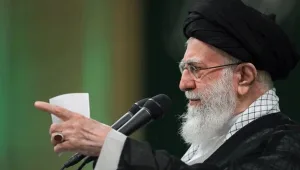
According to Iran’s semi-official Fars News Agency, students had initially planned a “peaceful and silent sit-in” to commemorate the victims. However, the event reportedly turned confrontational after chants of “Down with dictatorship” were heard — a slogan widely interpreted as referring to Iran’s Supreme Leader.
A video published by Fars showed a group of individuals holding Iranian flags confronting another group of masked demonstrators. Some people in suits appeared to intervene, attempting to separate opposing sides.
Both groups were seen holding photographs of individuals reportedly killed during the recent unrest.
Rising Tensions Amid Nuclear Pressure
The renewed protests come at a time of heightened international pressure on Iran over its nuclear program. The United States has increased military deployments near Iran and continues to push for a new nuclear agreement.
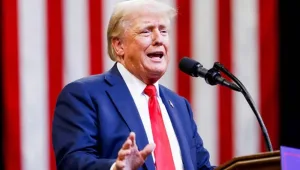
Previously, U.S. President Donald Trump sharply criticized Tehran’s handling of the protests and warned that military action could be considered if repression continued.
The convergence of domestic unrest and geopolitical tensions has further complicated Iran’s political landscape.