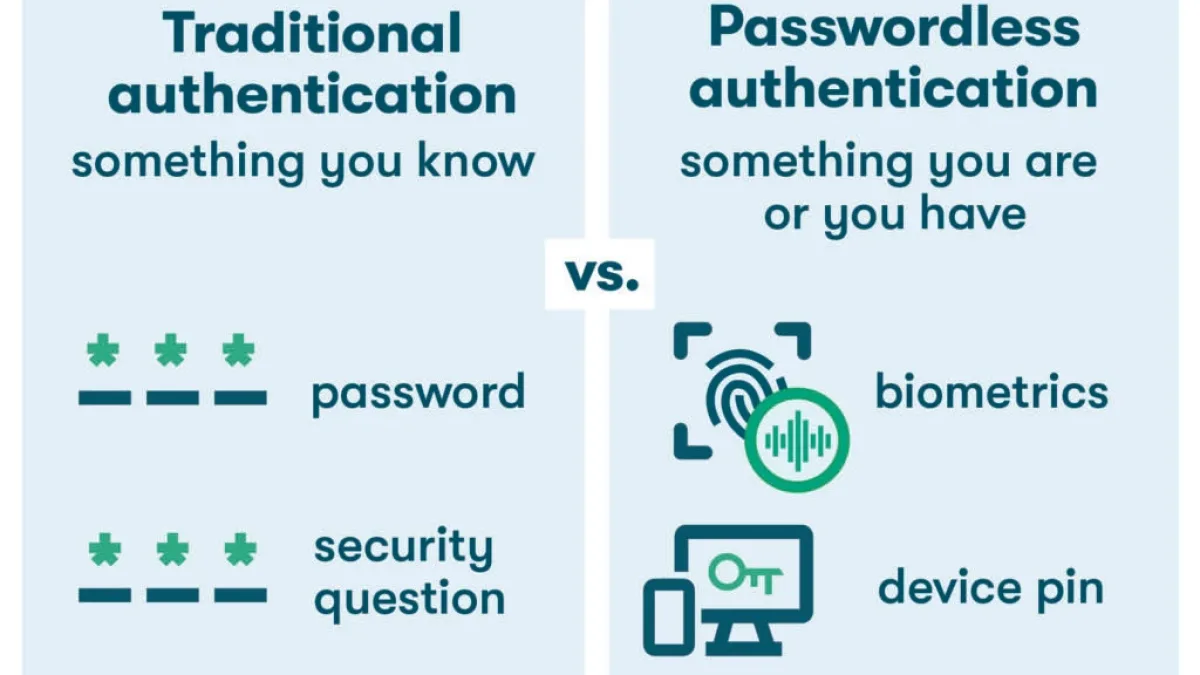
As cyber threats continue to evolve, traditional passwords are becoming one of the weakest links in digital security. Weak passwords, password reuse, phishing attacks, and data breaches expose millions of users and businesses to cybercriminals every year. In 2026, biometric authentication has emerged as one of the most effective solutions to these challenges. By replacing passwords with unique biological characteristics, biometric security offers faster, safer, and more convenient authentication for individuals and organizations.
Biometric authentication verifies a person's identity using unique physical or behavioral traits. Unlike passwords that can be forgotten, stolen, or guessed, biometric identifiers are extremely difficult to duplicate. Modern systems use technologies such as fingerprint recognition, facial recognition, iris scanning, voice recognition, palm vein scanning, and behavioral biometrics to provide highly secure access to devices, applications, financial accounts, and physical locations.
One of the biggest reasons biometric authentication is growing rapidly is convenience. Users no longer need to remember dozens of complex passwords for different services. A quick fingerprint scan or facial recognition instantly grants secure access without compromising user experience. This not only improves convenience but also reduces the number of password-related support requests for businesses.
Smartphones continue to drive widespread adoption of biometric technology. Most premium and mid-range devices now include fingerprint sensors or advanced facial recognition systems. These features allow users to unlock their phones, authorize payments, access banking apps, and securely store sensitive information within seconds.
Financial institutions have become major adopters of biometric authentication. Banks and fintech companies increasingly use fingerprint verification, facial recognition, and voice authentication to protect customer accounts. These technologies reduce fraud, prevent unauthorized access, and simplify secure online banking experiences. Biometric verification also strengthens identity confirmation during digital account opening and loan applications.
Healthcare organizations are using biometrics to improve both security and patient care. Hospitals can accurately identify patients before treatment, reducing medical errors and protecting confidential health records. Healthcare professionals can securely access electronic medical records without relying on easily forgotten passwords, ensuring both efficiency and compliance with privacy regulations.
Government agencies are also expanding the use of biometric identification. Digital passports, national identity cards, border security systems, and immigration checkpoints increasingly rely on facial recognition and fingerprint verification. Automated border control systems reduce waiting times while strengthening national security and preventing identity fraud.
Businesses are integrating biometric authentication into workplace security as well. Employees can access offices, secure facilities, computer systems, and confidential documents using fingerprint or facial recognition instead of physical access cards or passwords. This minimizes unauthorized entry while improving operational efficiency.
Behavioral biometrics represents one of the newest developments in digital security. Instead of relying solely on physical characteristics, these systems analyze user behavior such as typing rhythm, mouse movements, touchscreen interactions, walking patterns, and device handling habits. Because these behaviors are difficult to imitate, behavioral biometrics provides an additional layer of continuous authentication without interrupting users.
Artificial intelligence has significantly improved biometric accuracy. AI algorithms continuously learn to distinguish genuine users from fraudulent attempts while adapting to natural changes in appearance, voice, or behavior. For example, facial recognition systems can accurately recognize users even if they wear glasses, grow a beard, or age over time.
Multi-factor authentication is becoming increasingly powerful when combined with biometrics. Rather than depending on a single security method, organizations combine fingerprint verification with device authentication, location analysis, or one-time verification codes. This layered approach provides significantly stronger protection against cyberattacks.
Despite its advantages, biometric authentication also presents important privacy considerations. Biometric information is highly sensitive and cannot be changed like a password if compromised. Organizations must securely encrypt biometric templates, minimize data collection, and comply with international privacy regulations to maintain user trust.
Liveness detection has become an essential security feature in modern biometric systems. Advanced sensors can determine whether a fingerprint, face, or iris belongs to a real person rather than a photograph, video, or artificial replica. This helps prevent spoofing attacks and increases authentication reliability.
Cloud computing is also enhancing biometric authentication. Secure cloud platforms enable users to authenticate across multiple devices while maintaining consistent security standards. Organizations can centrally manage authentication policies while ensuring encrypted communication between devices and cloud services.
As remote work continues to expand, biometric authentication plays an increasingly important role in protecting distributed workforces. Employees accessing corporate systems from home or while traveling can securely verify their identities without relying solely on passwords that may be vulnerable to phishing attacks.
Looking toward the future, biometric security is expected to become even more sophisticated. Continuous authentication systems may verify users throughout their entire session instead of only during login. Wearable devices could monitor physiological signals such as heartbeat patterns, enabling passive identity verification without requiring active user interaction.
The integration of artificial intelligence, blockchain technology, and decentralized digital identity platforms may further strengthen biometric authentication while giving individuals greater control over their personal information. Instead of sharing biometric data directly with every service, future identity systems may verify users while preserving privacy through advanced cryptographic methods.
Biometric authentication is no longer simply an alternative to passwords—it is becoming the foundation of modern digital identity. As organizations continue investing in stronger cybersecurity, passwordless authentication will play a critical role in protecting personal information, financial assets, healthcare records, and enterprise systems. In 2026 and beyond, biometric technology is shaping a future where digital security is both stronger and more convenient than ever before.