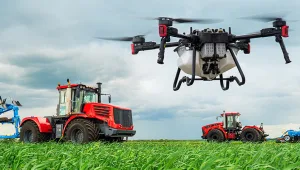
Artificial Intelligence has experienced remarkable growth over the past decade, but one of the biggest technological shifts in 2026 is the rapid adoption of Edge AI. Instead of relying entirely on cloud servers for processing, Edge AI allows artificial intelligence models to run directly on local devices such as smartphones, laptops, smart cameras, autonomous vehicles, drones, industrial robots, wearable devices and Internet of Things (IoT) sensors. This approach significantly improves speed, privacy, reliability and efficiency while reducing dependence on constant internet connectivity.
Traditionally, AI applications collected user data and sent it to cloud servers where machine learning models processed the information before sending results back to users. While this method remains useful for many large-scale applications, it introduces network latency, higher bandwidth costs and privacy concerns. Edge AI solves these challenges by moving intelligence closer to where data is generated.
One of the most important advantages of Edge AI is ultra-low latency. Since data is processed locally, devices can respond almost instantly without waiting for cloud communication. This capability is essential for applications such as autonomous driving, industrial automation, medical equipment, augmented reality and security surveillance where even milliseconds can make a significant difference.
Privacy has become another major reason why organizations are adopting Edge AI. Users today are increasingly concerned about how personal information is collected and stored online. With Edge AI, sensitive information such as facial recognition data, voice commands, medical information and financial transactions can remain on the device instead of being uploaded to external servers. This greatly reduces privacy risks while helping organizations comply with increasingly strict data protection regulations.
Smartphones are among the largest beneficiaries of Edge AI technology. Modern mobile processors now include dedicated Neural Processing Units (NPUs) capable of running sophisticated AI models directly on the device. Features such as real-time language translation, intelligent photography, voice assistants, image enhancement, spam detection and offline AI chat capabilities all benefit from on-device processing. Users experience faster performance while consuming less mobile data.
The automotive industry is another major adopter of Edge AI. Self-driving systems require immediate decision-making based on information from cameras, radar, LiDAR sensors and GPS. Sending this data to cloud servers would introduce unacceptable delays. Edge AI enables vehicles to recognize pedestrians, traffic signs, road conditions and surrounding vehicles in real time, improving both safety and driving efficiency.
Healthcare applications are also expanding rapidly. Hospitals and wearable medical devices use Edge AI to continuously monitor patients' vital signs, detect abnormalities and alert healthcare professionals instantly when emergency conditions arise. Portable diagnostic equipment can analyze medical images, heart rhythms and other clinical data without relying on internet access, making healthcare more accessible in remote regions.
Manufacturing industries are implementing Edge AI for predictive maintenance and quality control. Smart sensors installed on factory equipment continuously analyze vibration, temperature and operational performance. AI algorithms detect early signs of mechanical failure before breakdowns occur, reducing downtime and maintenance costs while improving productivity.
Retail businesses are using Edge AI to enhance customer experiences. Intelligent cameras can analyze store traffic, monitor inventory levels and optimize product placement without transmitting customer data to external servers. Self-checkout systems powered by Edge AI improve transaction speed while reducing fraud and operational costs.
Smart home technology continues evolving through Edge AI integration. Security cameras can distinguish between family members, visitors, pets and potential intruders without sending video footage to cloud servers. Smart speakers understand voice commands locally, reducing response time while improving user privacy. Home automation systems can intelligently manage lighting, heating and energy consumption based on user behavior.
Industrial Internet of Things (IIoT) is becoming increasingly dependent on Edge AI. Manufacturing plants, energy facilities and logistics companies deploy thousands of connected sensors generating enormous volumes of operational data. Processing this information locally reduces bandwidth usage while enabling real-time monitoring, predictive maintenance and autonomous decision-making across industrial environments.
Energy efficiency represents another major advantage. Transmitting large volumes of data to cloud servers consumes considerable network resources and electricity. By processing information locally, Edge AI minimizes data transmission, reduces cloud infrastructure costs and lowers overall energy consumption. This makes Edge AI particularly attractive for battery-powered devices such as drones, wearable technology and remote IoT sensors.
Despite these advantages, Edge AI also presents several technical challenges. AI models must be optimized to operate efficiently on devices with limited processing power, memory and battery capacity. Developers continue designing smaller, faster and more energy-efficient neural networks capable of delivering high performance on compact hardware.
Cybersecurity remains a critical consideration. Since Edge AI devices process sensitive information locally, manufacturers must implement strong encryption, secure boot mechanisms, hardware-level security and continuous software updates to protect devices against cyber threats. As Edge AI adoption grows, security will remain one of the highest priorities for developers and manufacturers.
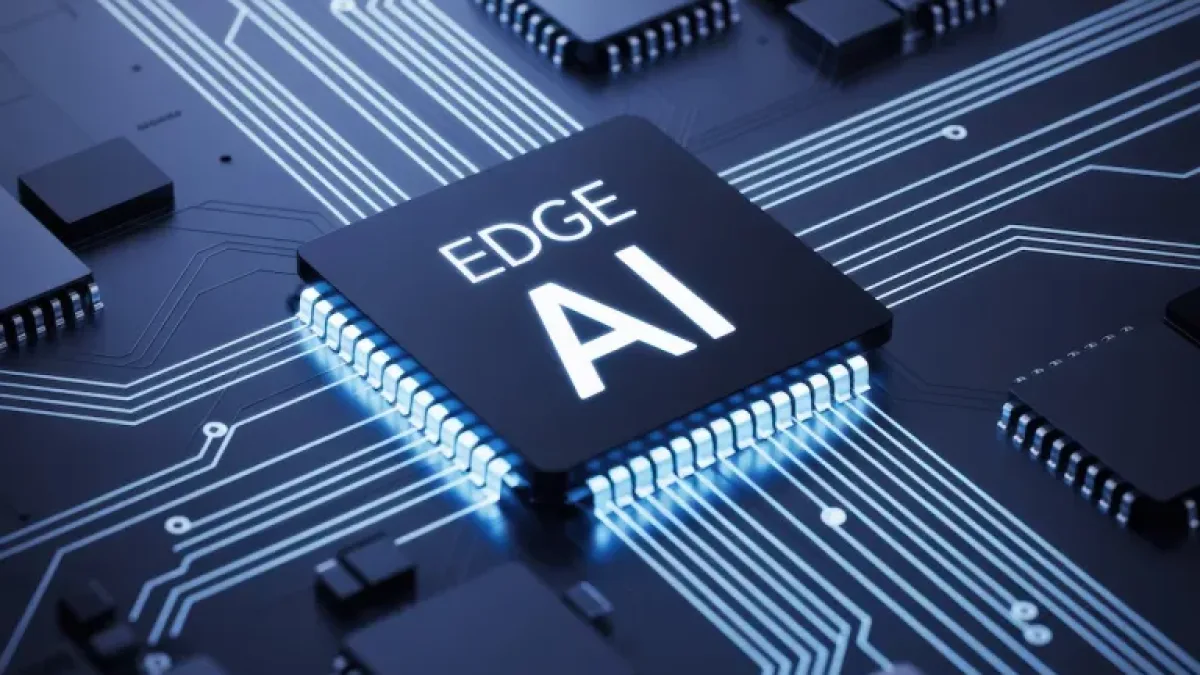
Artificial intelligence hardware is advancing rapidly. New generations of AI chips specifically designed for edge computing provide significantly higher performance while consuming less power. Semiconductor manufacturers continue investing heavily in dedicated AI accelerators that enable increasingly sophisticated machine learning applications on consumer and industrial devices.
5G connectivity further enhances Edge AI capabilities by enabling faster communication between edge devices and cloud infrastructure when necessary. While most processing occurs locally, cloud resources remain valuable for large-scale model training, software updates and centralized analytics. This hybrid architecture combines the strengths of both edge computing and cloud computing.
Businesses adopting Edge AI benefit from improved operational efficiency, lower infrastructure costs, enhanced customer experiences and stronger data privacy. Organizations across healthcare, finance, manufacturing, transportation and retail increasingly recognize Edge AI as a strategic investment for digital transformation initiatives.
Looking ahead, Edge AI is expected to become one of the defining technologies of the next decade. As processors become more powerful and AI models more efficient, intelligent capabilities will be embedded into nearly every connected device. From autonomous robots and smart factories to wearable health monitors and intelligent transportation systems, Edge AI will enable faster, safer and more reliable decision-making without relying entirely on cloud infrastructure.
Edge AI represents a fundamental evolution in artificial intelligence architecture. By bringing intelligence directly to devices, organizations can achieve greater speed, privacy, efficiency and resilience while unlocking new possibilities across virtually every industry. As digital transformation accelerates, Edge AI will continue shaping the future of smart technology and connected ecosystems worldwide