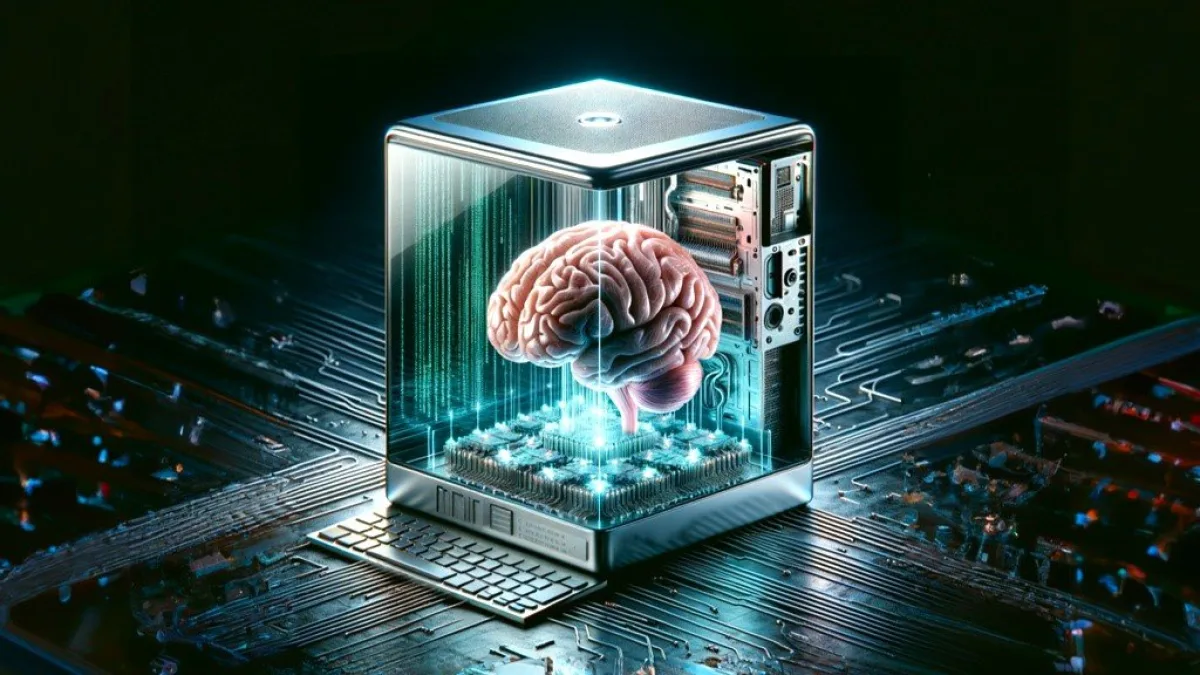
Artificial intelligence is evolving at an extraordinary pace, but one of the biggest challenges facing modern AI is energy consumption. Large AI models require enormous computing power, specialized processors, and massive data centers that consume significant amounts of electricity. As organizations continue deploying AI across industries, researchers are searching for more efficient ways to build intelligent systems. One of the most promising solutions in 2026 is Neuromorphic Computing, a revolutionary computing architecture inspired by the structure and operation of the human brain.
Unlike traditional processors that execute instructions sequentially, neuromorphic chips imitate the way biological neurons communicate through electrical signals known as spikes. Instead of continuously processing every piece of information, these chips activate only when necessary, dramatically reducing energy consumption while maintaining high-speed performance. This brain-inspired approach enables intelligent systems to perform complex tasks with much lower power requirements than conventional processors.
Neuromorphic computing combines neuroscience, artificial intelligence, semiconductor engineering, and cognitive computing to create processors capable of learning, adapting, and making decisions in real time. Rather than relying solely on cloud computing infrastructure, these processors can operate directly on edge devices such as autonomous robots, drones, wearable devices, smart sensors, and self-driving vehicles.
One of the greatest advantages of neuromorphic computing is exceptional energy efficiency. Traditional AI servers often require powerful GPUs that consume hundreds of watts of electricity. Neuromorphic processors can perform similar pattern-recognition tasks while consuming only a fraction of that energy. This makes them particularly attractive for battery-powered devices that require continuous intelligence without frequent charging.
Artificial intelligence applications are expected to benefit significantly from neuromorphic hardware. Image recognition, speech processing, natural language understanding, and object detection can all be accelerated through brain-inspired processing. Since these chips process information more similarly to biological brains, they can react faster while minimizing computational overhead.
Autonomous vehicles represent one of the most important applications of neuromorphic computing. Self-driving cars continuously analyze information from cameras, radar, LiDAR sensors, GPS, and environmental sensors. Processing this enormous volume of data using traditional hardware requires substantial computing resources. Neuromorphic processors enable vehicles to recognize pedestrians, traffic signs, obstacles, and changing road conditions with lower latency and improved energy efficiency, helping increase both safety and driving performance.
Robotics is another industry rapidly adopting neuromorphic technology. Intelligent robots operating in factories, warehouses, hospitals, and public environments must react instantly to changing surroundings. Brain-inspired processors allow robots to learn from experience, recognize objects, navigate unfamiliar environments, and interact more naturally with humans while consuming minimal power.
Healthcare is emerging as another promising area for neuromorphic computing. Medical devices equipped with brain-inspired chips can continuously monitor patient health, analyze physiological signals, detect abnormalities, and support early diagnosis without relying on cloud-based processing. Wearable health monitors become more efficient, extending battery life while improving real-time medical analysis.
Smart cities are also expected to benefit from neuromorphic technology. Traffic management systems, surveillance cameras, environmental monitoring stations, and public safety infrastructure generate enormous amounts of data every second. Instead of transmitting all information to centralized data centers, neuromorphic edge devices can process data locally, reducing network congestion while enabling faster decision-making.
Industrial automation continues to expand through Industry 4.0 initiatives. Smart factories deploy thousands of sensors monitoring production equipment, machine performance, and environmental conditions. Neuromorphic processors analyze this information locally, enabling predictive maintenance, automated quality control, and real-time process optimization while lowering energy consumption across manufacturing operations.
Cybersecurity applications are also advancing through neuromorphic computing. Brain-inspired AI systems can recognize unusual network behavior, detect cyber threats, and identify anomalies much faster than traditional rule-based security software. Because these processors continuously learn from evolving attack patterns, they improve their defensive capabilities over time while maintaining efficient resource utilization.
Edge computing and neuromorphic computing complement each other perfectly. Instead of sending sensitive information to remote cloud servers, intelligent devices process information locally. This improves privacy, reduces latency, lowers bandwidth costs, and enables AI applications to continue functioning even without reliable internet connectivity.
Consumer electronics are beginning to integrate neuromorphic capabilities as well. Future smartphones, augmented reality glasses, smart cameras, hearing aids, and wearable devices may use brain-inspired processors to deliver more intelligent experiences while dramatically extending battery life. Features such as voice recognition, language translation, image enhancement, and personalized recommendations can all become faster and more efficient.
Despite its enormous potential, neuromorphic computing remains an emerging technology. Designing hardware that accurately mimics biological neural networks presents significant engineering challenges. Researchers continue improving chip architectures, programming frameworks, learning algorithms, and software development tools needed for widespread commercial adoption.
Artificial intelligence software must also evolve to fully utilize neuromorphic hardware. Traditional deep learning frameworks were designed for conventional CPUs and GPUs. New algorithms specifically optimized for spiking neural networks are being developed to unlock the full capabilities of brain-inspired processors.
Governments, universities, and leading technology companies continue investing heavily in neuromorphic research. As AI workloads become increasingly demanding, brain-inspired computing offers a sustainable path toward more efficient, scalable, and intelligent systems capable of supporting future innovations across healthcare, transportation, robotics, manufacturing, finance, and scientific research.
Looking toward the future, neuromorphic computing may fundamentally change how artificial intelligence is designed and deployed. Instead of relying solely on massive cloud infrastructure, intelligent systems will increasingly operate independently on compact, energy-efficient hardware capable of learning continuously from their environment. This shift will accelerate the development of autonomous machines, smart infrastructure, advanced robotics, and next-generation AI applications.
Neuromorphic computing in 2026 represents more than simply another processor architecture—it marks the beginning of a new generation of intelligent computing inspired by nature itself. As research progresses and commercial adoption increases, brain-inspired chips are expected to become one of the most influential technologies powering the future of artificial intelligence.